Clear Sky Science · en
Pituitary lesions in captive chimpanzees (Pan troglodytes): clinical presentation and histologic characterization
Why Pituitary Problems in Chimpanzees Matter
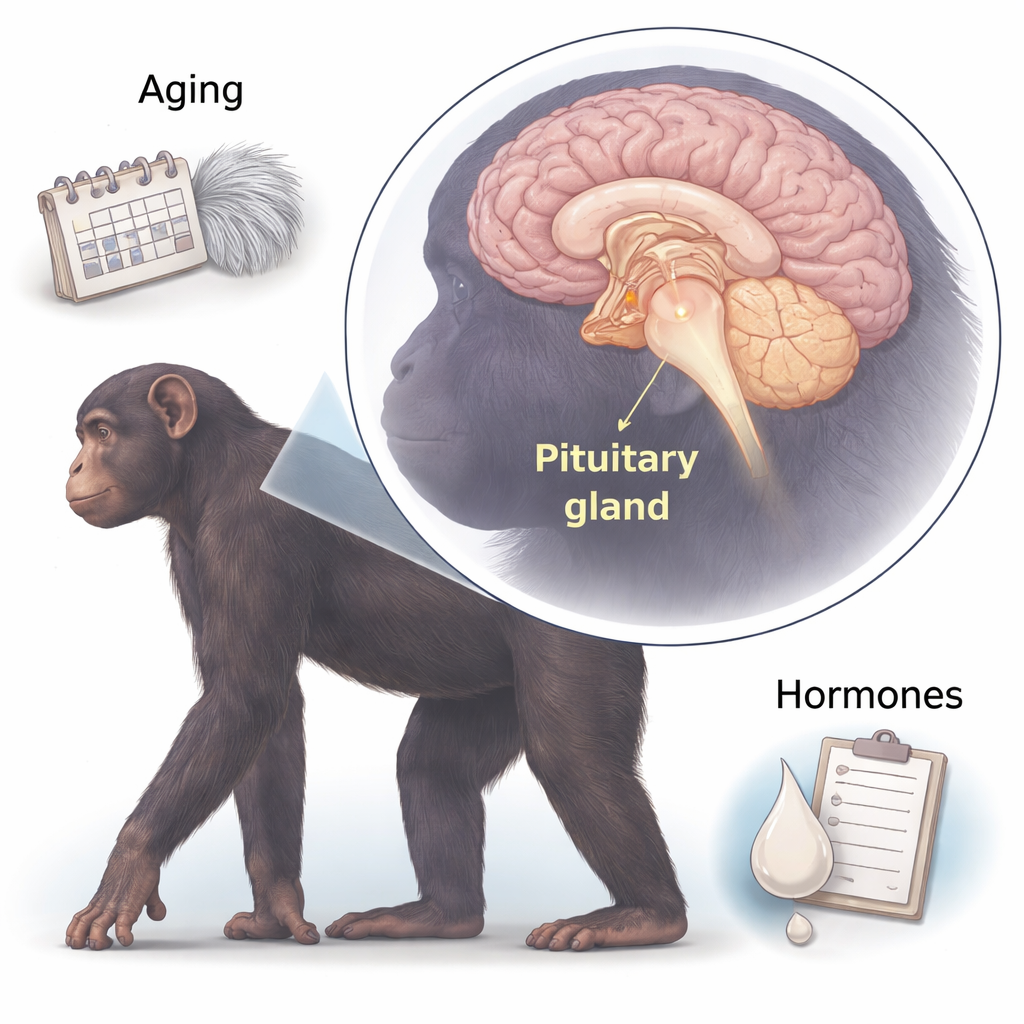
The pituitary gland is a tiny control center at the base of the brain that helps regulate growth, reproduction, stress, and many other body functions. In humans, pituitary tumors can cause serious but sometimes treatable hormonal diseases. This study looks at similar problems in our close relatives, captive chimpanzees, to understand how often these lesions occur, what they look like, and how they might affect the animals’ health—and how keepers and veterinarians might better detect and treat them.
A Tiny Gland with Big Jobs
The pituitary gland sits in a bony cradle called the sella turcica and releases hormones into the bloodstream that act on distant organs, helping keep the body in balance and regulating reproduction. When something goes wrong in this gland, changes can be subtle, like shifts in weight or blood pressure, or dramatic, such as milk production in an animal that is not nursing. Pituitary lesions used to be classified mainly by how they looked under the microscope, but this did not reliably predict how aggressive they would be. Human medicine recently adopted a newer name—pituitary neuroendocrine tumors, or PitNETs—to better reflect their behavior, and this study applies that modern framework to chimpanzees.
Searching Records from an Aging Ape Community
Researchers examined 37 years of medical and post-mortem records from 90 retired research chimpanzees living at a specialized care center in Texas. The animals were housed in social groups, provided with standard primate diets and veterinary care, and followed under strict animal welfare guidelines. The team looked for any chimpanzee with a pituitary lesion found at necropsy, then re-examined tissue samples using special stains and antibody-based tests to tell apart simple overgrowth (hyperplasia) from true tumors and to see which hormones the abnormal cells produced, including prolactin, growth hormone, thyroid-stimulating hormone, and adrenocorticotropic hormone (ACTH).
What the Team Found in the Pituitary
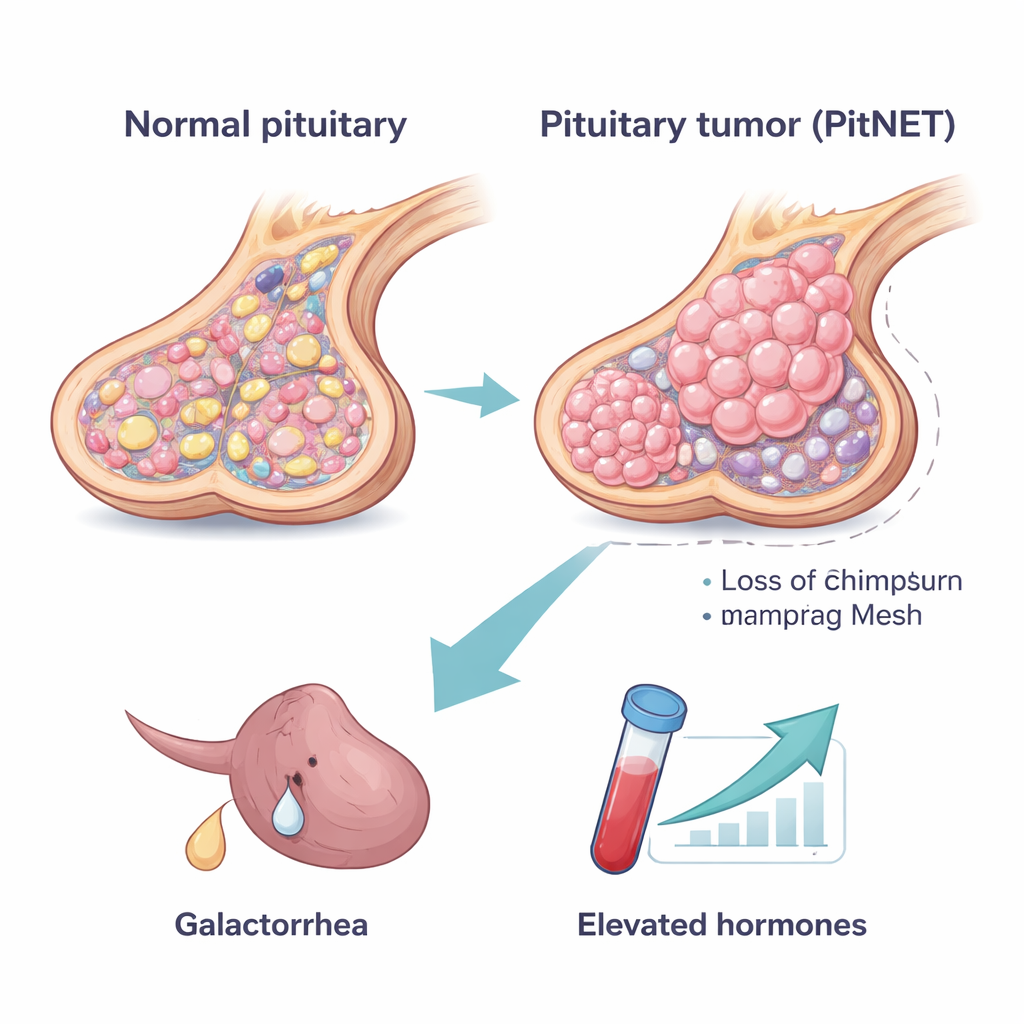
Pituitary lesions were surprisingly common: 18 of 90 chimpanzees—about 20 percent—had some kind of abnormality. The affected animals were mostly older (median age 44 years) and predominantly female. The lesions fell into three main categories: small cysts filled with fluid (4 cases), hyperplastic overgrowths (5 cases), and PitNETs (9 cases). The cysts were tiny and did not seem to cause obvious illness. Hyperplastic lesions and PitNETs often looked alike to the naked eye, as tan nodules bulging from one side of the gland, so the team relied on a fine mesh-like stain called reticulin to show whether the supporting framework of the gland was preserved (suggesting hyperplasia) or lost (indicating a tumor.
Hormones, Milk Production, and Hidden Tumors
Some lesions were “functional,” meaning they actively secreted hormones that altered the chimpanzees’ bodies. Five animals showed breast enlargement and milk discharge (galactorrhea) along with clearly elevated levels of prolactin in the blood. These chimps turned out to have either prolactin-producing tumors or overgrowths of cells that make both growth hormone and prolactin. The highest prolactin level seen—over 4,000 ng/mL—came from a chimp with a large prolactin-secreting PitNET pushing upward on the brain. Most tumors, however, produced ACTH, the hormone that stimulates the adrenal glands and is associated with Cushing’s disease in humans and dogs. While the chimpanzees had signs such as obesity, muscle wasting, and high blood pressure that could fit that diagnosis, the study’s retrospective nature meant the authors could not definitively prove those tumors were driving full-blown hormone syndromes.
What This Means for Chimpanzee Care
Overall, the study suggests that older captive chimpanzees develop pituitary lesions, including hormone-secreting tumors, at rates and with patterns that resemble those seen in humans. Because most of these lesions were discovered only after death, the authors argue that earlier diagnosis—using imaging scans and blood hormone tests—could open the door to medical treatments already used in people, such as dopamine-boosting drugs for prolactin tumors or hormone-blocking medicines for Cushing’s-like disease. Detecting and managing these small but powerful gland problems while chimpanzees are still alive could meaningfully improve their health and welfare in long-term care.
Citation: Hensel, M.E., Dysart, S., Royal, J. et al. Pituitary lesions in captive chimpanzees (Pan troglodytes): clinical presentation and histologic characterization. Sci Rep 16, 7585 (2026). https://doi.org/10.1038/s41598-026-37605-9
Keywords: chimpanzee health, pituitary tumors, hormones, endocrine disease, captive primates