Clear Sky Science · en
Lipid metabolism and gallstone disease risk: a multicenter study
Why Gallstones Matter Beyond a Belly Ache
Gallstones are often dismissed as a minor cause of stomach pain, but they can lead to serious problems such as liver damage, infections, and even diabetes. At the same time, many people know their “cholesterol numbers” from routine checkups but are unsure what they really mean. This large study of more than half a million adults in China connects these two worlds, showing how different types of blood fats relate to the chance of developing gallstone disease—and suggesting that some familiar “bad” numbers may not behave the way we expect when it comes to stones in the gallbladder.
A Massive Health Check Snapshot
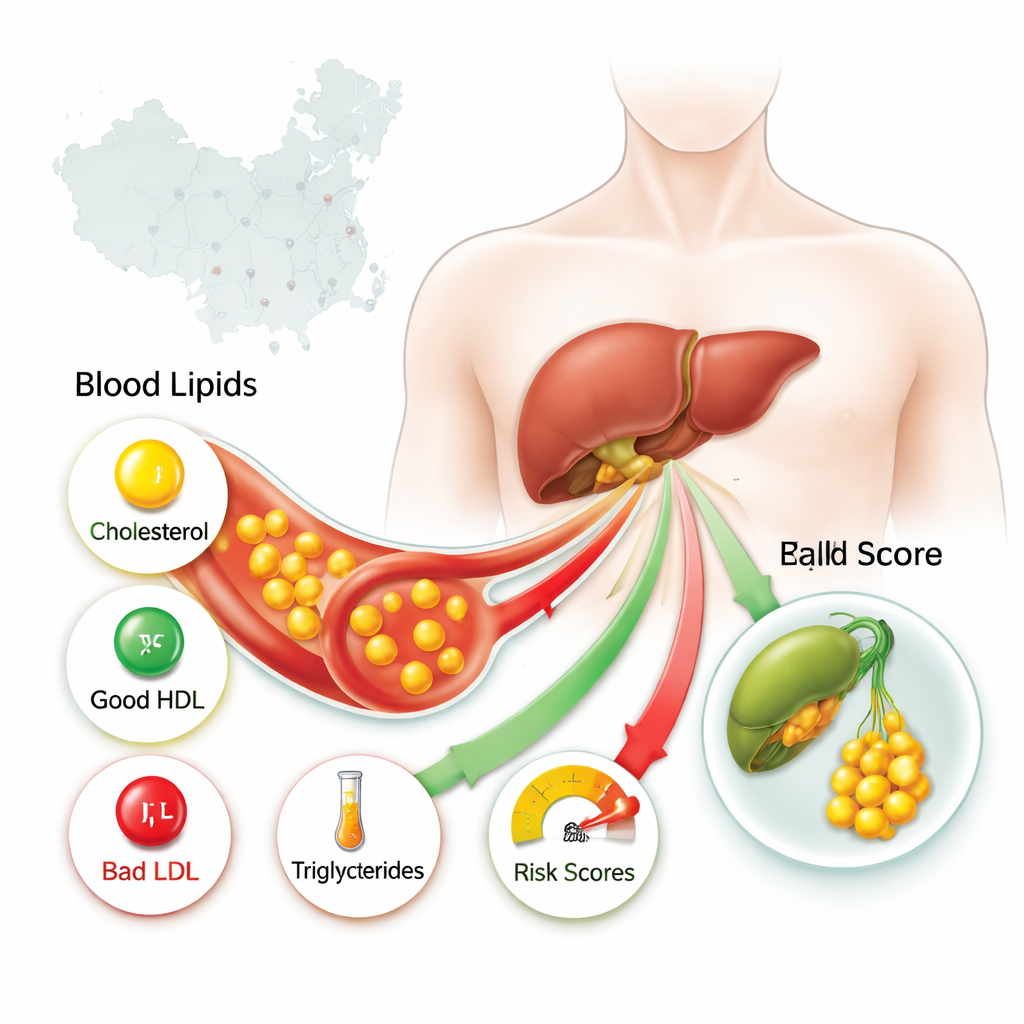
Researchers drew on health examination data from four major hospitals in China, covering 580,935 adults who underwent abdominal ultrasound scans and blood tests between 2015 and 2020. About 7.4 percent were found to have gallstone disease, either visible stones in the gallbladder or a history of gallbladder removal because of stones. Alongside ultrasound findings, the team collected information on age, sex, weight, blood pressure, liver and kidney function, blood sugar, and a detailed set of blood fat measurements. This allowed them to look far beyond simple “high cholesterol,” and to separate the influences of different lipid measures from other health conditions that might muddy the picture.
Looking at Fats From Many Angles
The authors examined both traditional blood fats—total cholesterol, triglycerides, “good” HDL cholesterol, and “bad” LDL cholesterol—and several newer combined indexes that reflect how harmful a person’s overall fat profile may be. These include non-HDL cholesterol (everything except HDL) and four atherogenic scores with names like Castelli risk index and atherogenic index of plasma. Using statistical models that adjusted for age, sex, body mass index, fatty liver, high blood pressure, kidney stones, and abnormal blood sugar, they compared people with and without gallstones at each hospital, then pooled the results in a meta-analysis to get an overall picture.
Surprising Patterns in Cholesterol and Stones
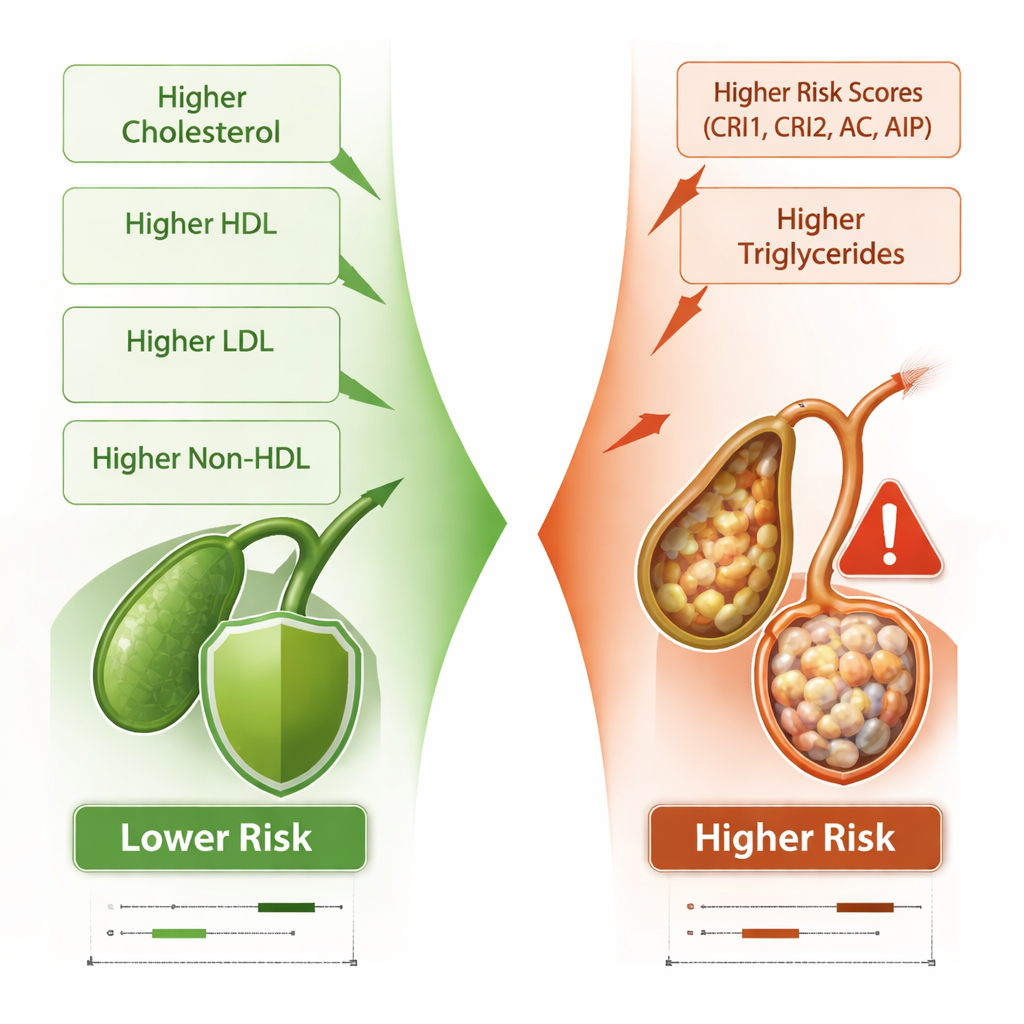
The pooled results challenge the simple idea that higher cholesterol always means higher gallstone risk. People with higher total cholesterol, higher HDL, higher LDL, and higher non-HDL cholesterol actually had a lower chance of having gallstone disease. In contrast, the composite “risk” scores that combine several lipid measures told a different story: the Castelli indexes, atherogenic coefficient, and atherogenic index of plasma were all clearly linked with a higher likelihood of gallstones. Triglycerides on their own were not strongly tied to gallstones overall, but did appear to matter more in older adults and women. When the team separated people who still had their gallbladder from those who had undergone gallbladder removal, they found that the pattern of lipid–stone links was not identical, hinting that surgery and long-term metabolic changes may reshape the risk landscape.
Testing the Strength of the Evidence
Because very large studies can still give misleading answers if results wobble as more data are added, the researchers went a step further and used a method called trial sequential analysis. This technique tracks how convincing the combined evidence becomes as each new group of participants is included. For all nine lipid measures, the analysis showed that the study had already reached enough information to draw stable conclusions: the curves for each marker crossed strict statistical boundaries, suggesting that additional similar studies are unlikely to reverse the basic patterns found here. Sensitivity checks that removed people with obesity, fatty liver, or very high blood sugar produced nearly the same results, reinforcing that the signals are not driven by one particular subgroup.
What This Means for Everyday Health
For non-specialists, the main takeaway is that not all “cholesterol numbers” behave the same way when it comes to gallstones. While higher levels of standard cholesterol readings were linked with fewer stones in this cross-sectional snapshot, certain combined lipid scores that capture an overall “unhealthy fat pattern” were clearly tied to higher gallstone risk. In practical terms, this work suggests that routine blood tests already used for heart disease screening could also help flag people at higher risk for gallstones, especially when interpreted using these composite scores rather than single numbers alone. Future long-term studies will be needed to prove cause and effect, but for now, maintaining a balanced lifestyle that supports healthy blood fats—through diet, physical activity, and medical care when needed—appears to be a sensible step toward protecting both your heart and your gallbladder.
Citation: Jiang, Y., Wang, C., Lou, Y. et al. Lipid metabolism and gallstone disease risk: a multicenter study. Sci Rep 16, 6530 (2026). https://doi.org/10.1038/s41598-026-37603-x
Keywords: gallstones, cholesterol, blood lipids, metabolic health, gallbladder disease