Clear Sky Science · en
The magnitude and population burden of educational inequalities in adverse birth outcomes
Why the First Moments of Life Reflect Social Gaps
What happens around the time a baby is born can echo through an entire lifetime, shaping health, development, and opportunity. This study asks a simple but powerful question: in a wealthy country with universal health insurance like the Netherlands, do babies whose mothers have less education still face higher risks at birth—and how big is the impact on the whole population?
Looking Across Nearly All Births in a Country
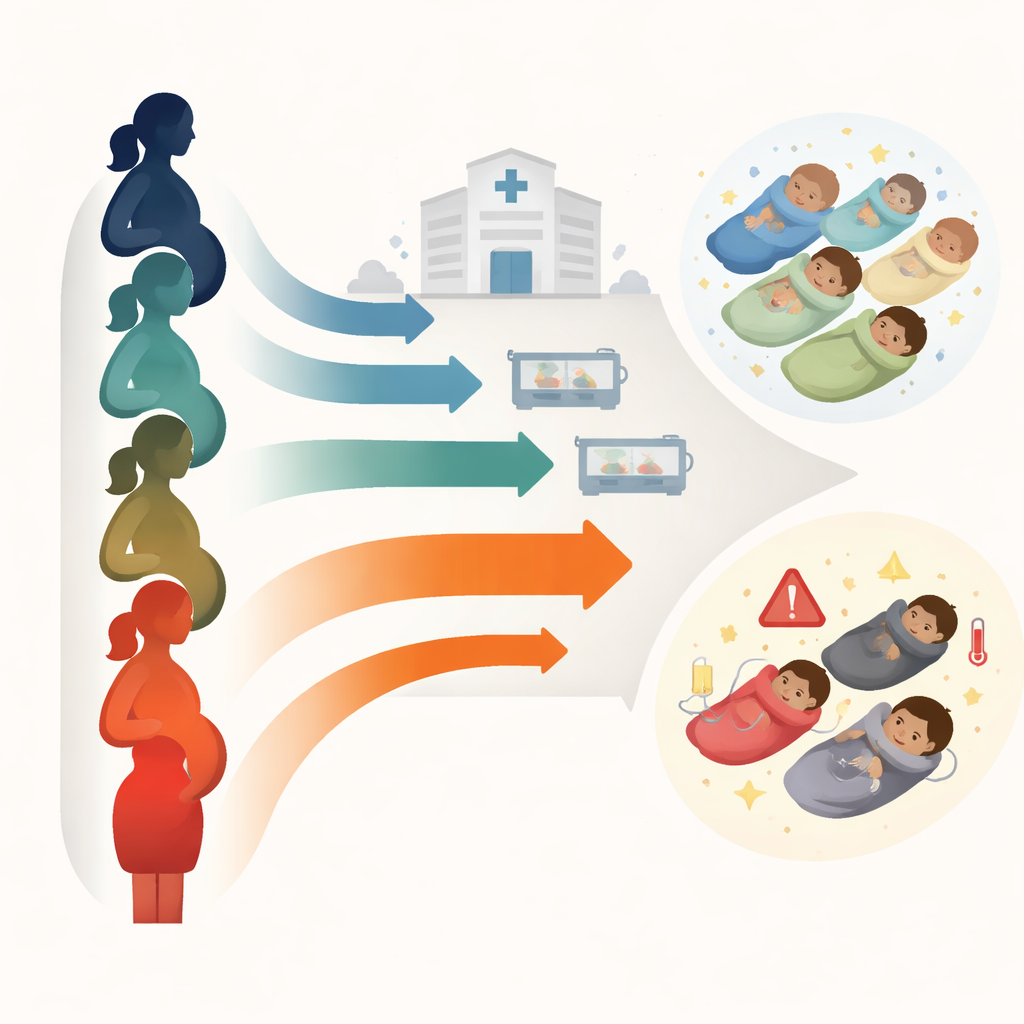
The researchers analyzed detailed records for more than 639,000 single births in the Netherlands between 2016 and 2019. Because the data come from routine national registries, they capture almost every birth in the country. Each mother was grouped into one of five education levels, from only primary schooling to a master’s degree or higher. The team then examined a broad set of serious birth outcomes: stillbirth, death in the first month of life, premature birth, babies that were unusually small for their gestational age, low Apgar scores (a quick check of newborn well-being), admission to a neonatal intensive care unit, and severe congenital anomalies.
A Steady Downward Step with Each Level of Schooling
The main pattern was starkly consistent: with every step down the education ladder, bad outcomes became more common. Overall, about one in six births had at least one adverse outcome. Among mothers with a master’s degree or higher, roughly 13 to 14 percent of births were affected; in the group with only primary education, this rose to about 21 percent. For the most tragic outcomes—stillbirth and death in the first month—the differences were especially large. Babies of the least educated mothers were nearly three times as likely to be stillborn and more than twice as likely to die shortly after birth as babies of the most educated mothers.
Common Problems, Middle Groups, and the “Prevention Paradox”
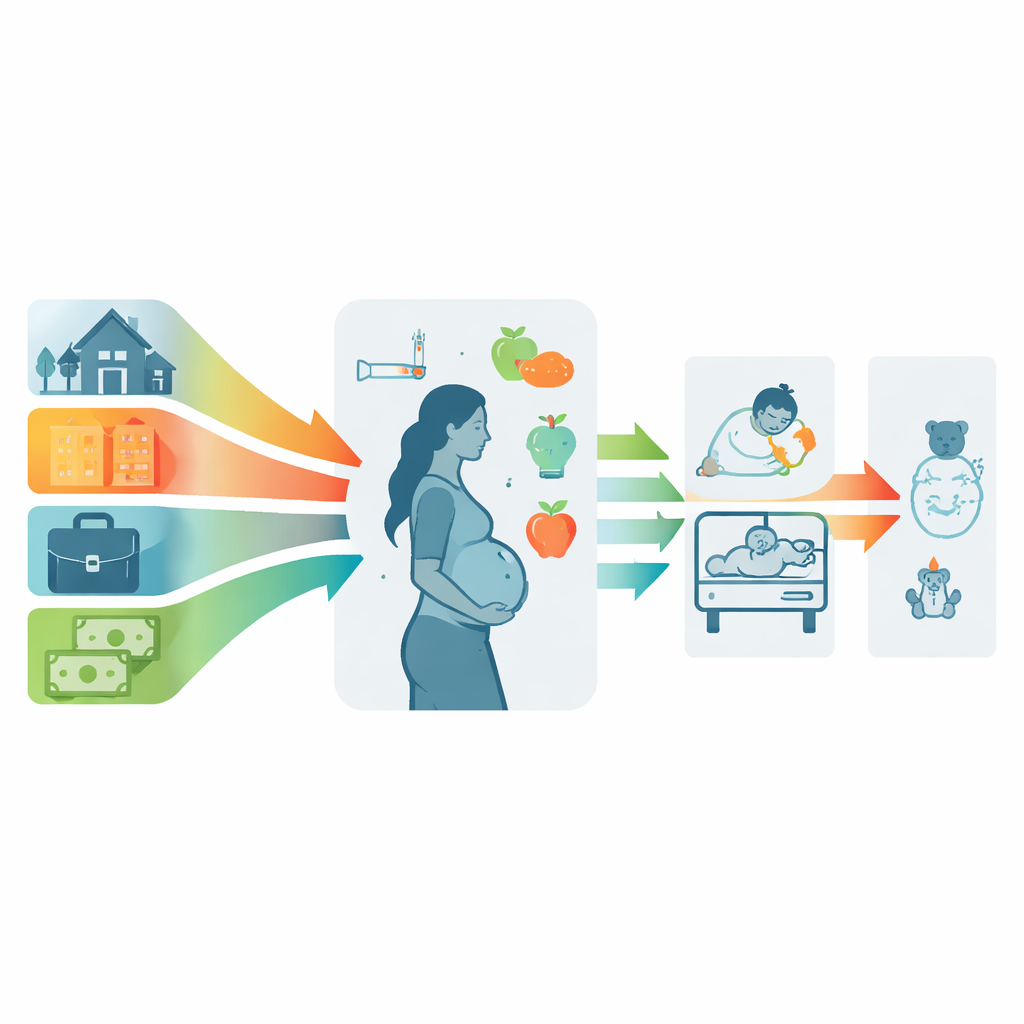
Not all problems were as rare as stillbirth. Conditions like being born too early or too small were much more frequent, affecting several percent of all babies. Here, the relative differences between education groups were more modest—typically a 30 to 80 percent higher risk in the lowest versus highest group—but because these issues are common, they contributed many more cases overall. An important insight is that the lowest-educated mothers form only a small share of the population. The largest share of adverse outcomes linked to inequality actually occurred among mothers in the middle education group, who face only moderately higher risks but are very numerous. This illustrates a classic “prevention paradox”: most cases come from the broad middle, not only from those at the very highest risk.
How Much Could Be Avoided?
The researchers estimated what would happen if every education group had the same birth outcome rates as the highest-educated women. In that scenario, they found that about one third of stillbirths and neonatal deaths could be prevented nationwide. For more frequent problems like prematurity and being small for gestational age, roughly one in six cases could be avoided. When translated into actual numbers, this means hundreds of fewer deaths and thousands fewer serious complications every year. Interestingly, when they took into account that higher-educated women tend to have children later and have fewer children—factors that can increase certain risks—the size of the inequalities became even more apparent.
Why This Matters for Families and Society
The study shows that educational inequalities in birth outcomes are not confined to a small, very disadvantaged group; they extend across the whole society in a smooth gradient. Because early-life problems affect children’s later health, learning, and chances in life, these gaps help transmit advantage and disadvantage from one generation to the next. The authors argue that the biggest health gains will come from strategies that improve conditions across the full spectrum of education—reducing poverty and problem debt, curbing smoking and air pollution, and designing healthier neighborhoods—rather than focusing only on the very poorest. In short, levelling the playing field for expectant parents could prevent many tragedies at birth and promote fairer life chances for future generations.
Citation: Schreuder, A., van Klaveren, D., van Dijk, R.M.K. et al. The magnitude and population burden of educational inequalities in adverse birth outcomes. Sci Rep 16, 8280 (2026). https://doi.org/10.1038/s41598-026-37601-z
Keywords: birth outcomes, educational inequality, maternal health, social determinants, Netherlands