Clear Sky Science · en
In vitro assessment of Cowpea cv. GIZA-18 forage grown from low-pressure radiofrequency plasma-treated seeds under salt stress
Turning Harsh Soils into Productive Fields
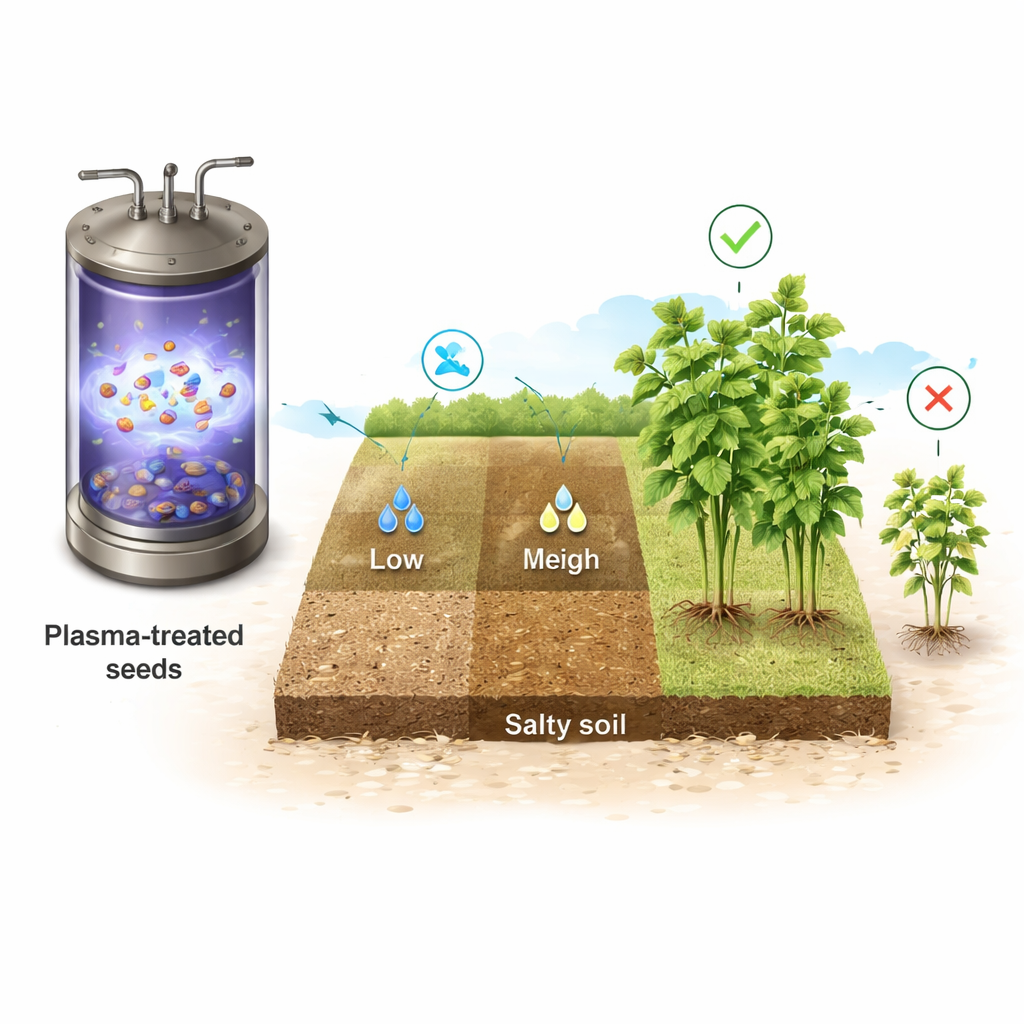
Across many dry regions of the world, especially in places like Egypt’s Nile Delta, rising soil salinity is quietly eating away at food production. Salty soils stunt crops and lower the quality of animal feed, threatening both farmers’ incomes and the meat and milk their livestock can produce. This study explores an unusual high-tech helper for this problem: using a gentle “cold” plasma treatment on cowpea seeds to help the plants thrive in salty fields while producing more nutritious forage for farm animals.
A New Spark for Old Seeds
The researchers focused on cowpea, a hardy legume already valued in hot, dry regions for its protein-rich leaves and its ability to improve soil fertility. They tested a low-pressure radiofrequency plasma device, which creates a glow of reactive particles around seeds without heating or burning them. Cowpea seeds of the GIZA-18 variety were exposed to this plasma for 0, 1, 2, or 3 minutes in early tests, and then for 0, 1, or 2 minutes in full field trials. The treated and untreated seeds were grown in soils with three different salt levels, from nearly normal to strongly saline, to see whether this brief exposure could improve emergence, growth, and forage quality.
Better Seedlings and Bigger Harvests
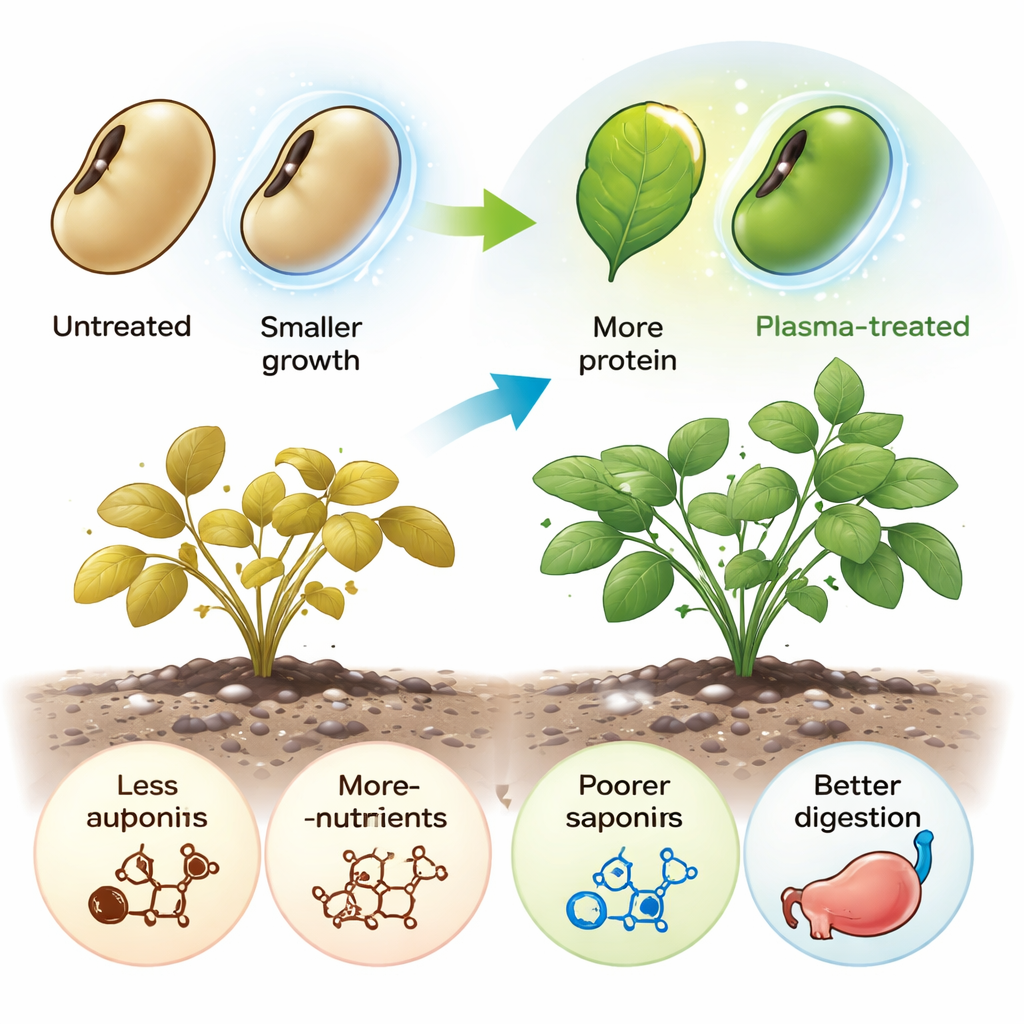
Under controlled “wire house” conditions, plasma-treated seeds produced greener, longer, and heavier seedlings than untreated ones. These early gains carried over to real fields. In two growing seasons, plants from plasma-treated seeds had more leaves, greater fresh weight, and higher forage yield across all salinity levels. A one-minute treatment was particularly effective under moderate salt stress, boosting forage yield by about half in the first season and more than doubling it in the second compared with untreated seeds. Even in strongly saline soil, both one- and two-minute treatments substantially increased yield, suggesting plasma priming helps cowpea establish and keep growing where salt would normally hold it back.
Cleaner Feed and Easier Digestion for Livestock
The team also examined how the forage would perform inside a ruminant’s stomach, using in vitro tests that mimic digestion in animals like sheep and cattle. Plasma-treated cowpea, especially from seeds exposed for one minute, showed higher breakdown of dry matter and fiber, meaning animals could extract more nutrients from each bite. At the same time, the treatment cut back compounds known as anti-nutritional factors—tannins and saponins—that can reduce feed intake and interfere with digestion. A one-minute exposure lowered tannins by roughly 16 percent and saponins by nearly half compared with untreated plants. Under high salinity, plasma-treated plants also had higher crude protein content, improving their value as a protein source for livestock.
Subtle Changes in Fermentation, Not Just More Gas
While the plasma-primed forage was easier to break down, it did not simply produce more fermentation gas in the tests. In fact, one-minute treatments tended to reduce gas production per unit of dry matter, even as digestibility improved. This pattern suggests a shift toward more efficient microbial use of the feed—more of the plant material going into useful products, such as microbial protein and energy-rich fatty acids, and less being lost as gas. The researchers also found that plasma exposure influenced ammonia and fermentation by-products in complex ways that depended on salt level and exposure time, pointing to a fine balance between improving nutrient release and avoiding excessive protein breakdown.
What This Means for Farmers and Food Security
For non-specialists, the main message is straightforward: a quick, carefully controlled plasma “rinse” of cowpea seeds before planting can help the crop cope with salty soils while producing more and better-quality forage. A one-minute treatment emerged as the best compromise, reliably improving seedling vigor, increasing yield under stress, reducing harmful anti-nutritional compounds, and enhancing how completely animals can digest the resulting feed. Although questions remain about the detailed biology and how to scale up the technology on farms, this work points to cold plasma as a promising tool to squeeze more nutrition out of marginal lands—supporting livestock, and ultimately people, in regions where every kilogram of forage counts.
Citation: Shokry, M.H., Saudy, H.S., Gouda, G.F. et al. In vitro assessment of Cowpea cv. GIZA-18 forage grown from low-pressure radiofrequency plasma-treated seeds under salt stress. Sci Rep 16, 7385 (2026). https://doi.org/10.1038/s41598-026-37598-5
Keywords: cowpea forage, salt-affected soils, cold plasma seed treatment, livestock nutrition, seed priming