Clear Sky Science · en
Dietary exposure assessment and risk characterization of aflatoxin $$\hbox {B}_1$$ in cereal grains consumed in Somalia
Why hidden poisons in staple foods matter
Maize and sorghum are everyday foods in Somalia, filling bowls at nearly every meal. Yet these same grains can carry a dangerous hitchhiker: aflatoxin B1, a poison made by certain molds that can damage the liver and cause cancer. This study set out to answer a simple but crucial question for Somali families and policymakers: based on how much maize and sorghum people actually eat, how high is their daily exposure to this toxin, and how urgent is the need for action?
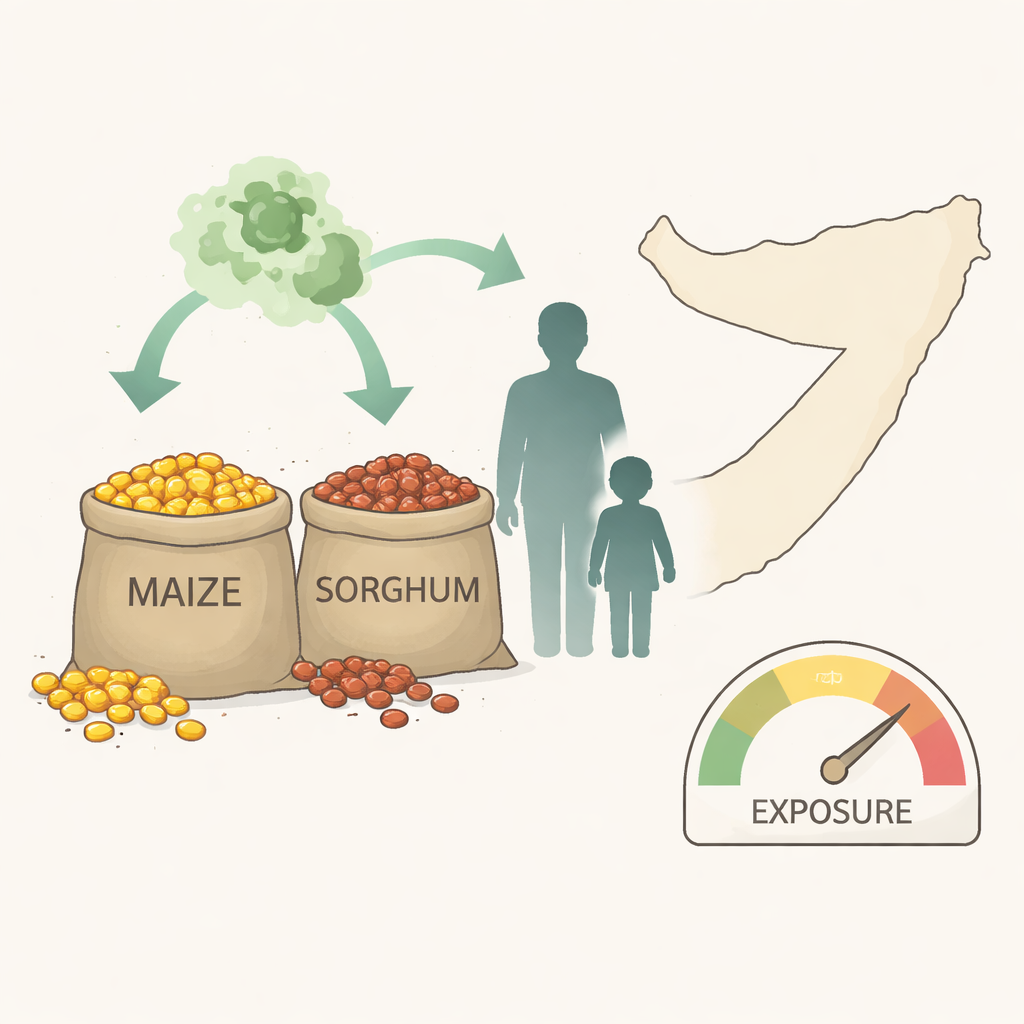
A toxic threat from common molds
Aflatoxin B1 is produced by fungi that grow easily on grains stored in warm, humid conditions. International health agencies class it as a proven cause of liver cancer in humans and link long-term exposure to liver damage, weakened immunity, and poor growth in children. There is no known safe intake level, so experts recommend keeping exposure as low as possible. Many countries monitor and regulate aflatoxin in food, but in Somalia regular dietary surveys and nationwide testing systems are still limited, making it hard to judge the true scale of the problem.
Using household data to estimate exposure
Because Somalia does not yet have detailed food-intake diaries for individuals, the researchers used an alternative source: the 2022 Somalia Integrated Household Budget Survey, which records how much food households purchase or consume. They combined these consumption figures for maize and sorghum with earlier laboratory measurements of aflatoxin B1 in cereal samples from Somali markets. By assuming average body weights for adults and children, they calculated people’s probable daily intake of the toxin under different scenarios, from typical to high grain consumption and from lower to higher contamination levels.
Maize as the main source, children at higher risk
The analysis showed that maize, especially white maize, was by far the largest contributor to aflatoxin exposure. Even under middle-of-the-road contamination assumptions, the estimated daily doses for both adults and children were very high. When these doses were compared with an internationally accepted reference point for liver cancer risk, the resulting “margin of exposure” values were tiny—far below the level that global expert bodies consider of low concern. Children’s margins of exposure were several times smaller than adults’, reflecting their lower body weight and making them the most vulnerable group.
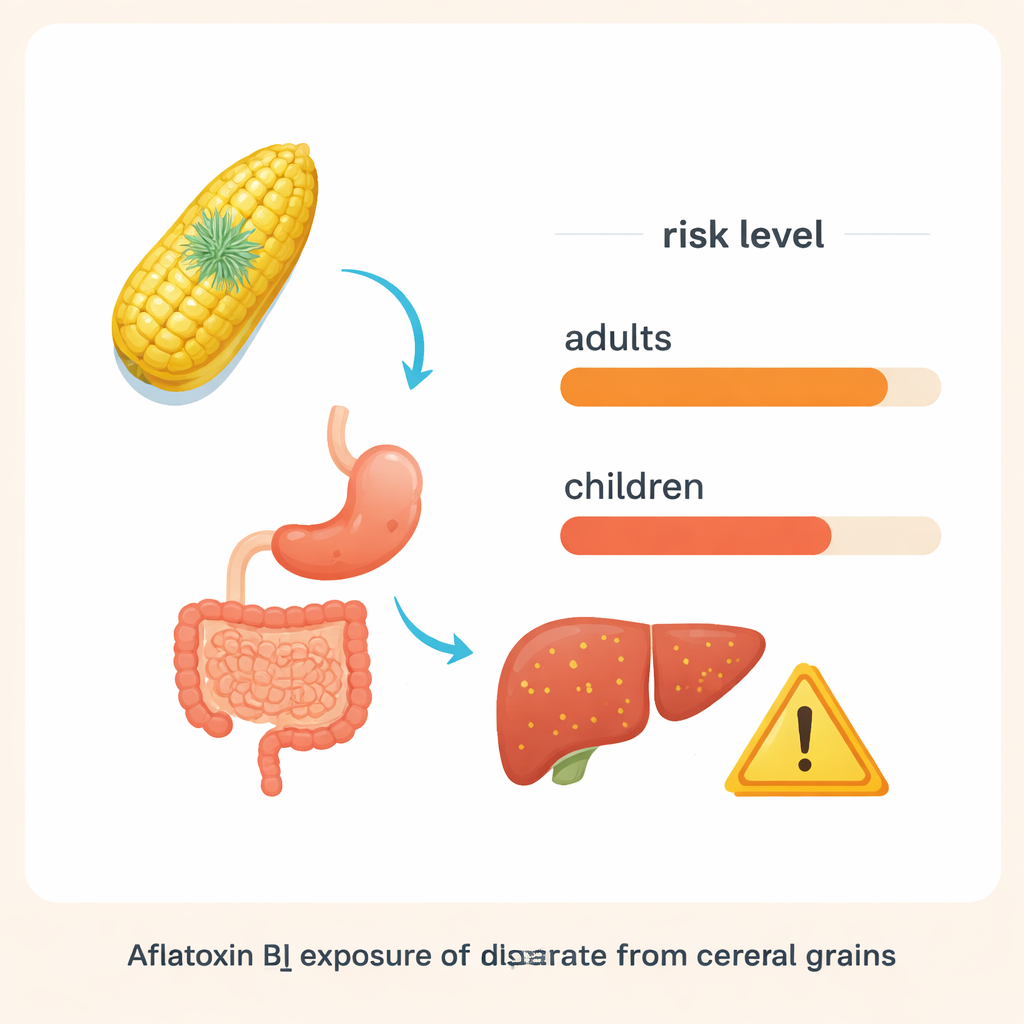
How Somalia compares and why it matters
When set alongside studies from other African countries, Somalia’s estimated exposures are at least as severe and in some cases worse. This raises concerns not only for public health, particularly in a country where child undernutrition and liver infections are common, but also for trade. Aflatoxin limits in major export markets such as the European Union are far stricter than the contamination levels measured in Somali cereals, effectively shutting these grains out of many high-value markets and signaling that the same products may pose risks for local consumers.
Next steps to protect people and markets
The authors conclude that daily aflatoxin exposure from staple cereals in Somalia is alarmingly high and should be treated as a top food-safety priority. They recommend setting and enforcing national limits for aflatoxin in grains, expanding routine testing and surveillance, and investing in practical post-harvest measures such as better drying, storage, and removal of visibly damaged kernels. Education campaigns for farmers, traders, and households could help reduce contamination using simple, low-cost practices. Finally, the study calls for more detailed dietary surveys and health monitoring so Somalia can better track exposure over time and measure the impact of these interventions, ultimately protecting both public health and economic opportunities.
Citation: Hersi, M.A., Fiidow, O.A. Dietary exposure assessment and risk characterization of aflatoxin \(\hbox {B}_1\) in cereal grains consumed in Somalia. Sci Rep 16, 6422 (2026). https://doi.org/10.1038/s41598-026-37589-6
Keywords: aflatoxin, maize, food safety, Somalia, liver cancer