Clear Sky Science · en
Manufacturing green transformation improves public health in China
Why Cleaner Factories Matter for Your Health
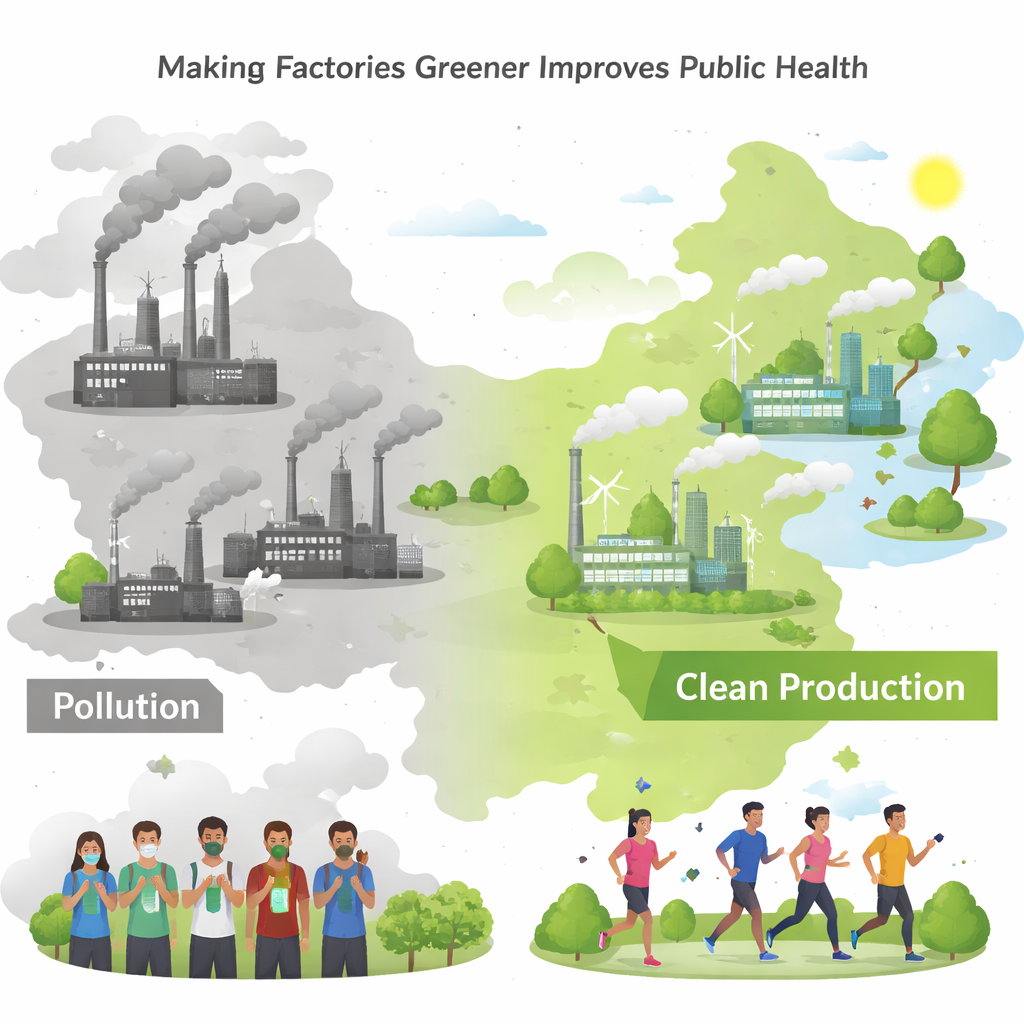
Most people think of smokestacks and assembly lines when they picture manufacturing, not hospitals and doctor visits. Yet the way factories use energy and handle pollution can quietly shape how long we live. This study looks at China’s massive manufacturing sector and asks a simple question with big implications: when factories go greener, do people actually live healthier, longer lives?
Linking Factory Change to Life and Death
The researchers examined data from 30 provinces across China between 2012 and 2022. Instead of focusing on a single pollutant or one industry, they built a broad score for how “green” manufacturing had become in each region. This score blended information on cleaner technologies, financial support for green projects, energy use, pollution emissions, and protection of the local environment. They then compared these changes with a straightforward measure of public health: the crude death rate, or how many people per thousand residents die each year.
Cleaner Production, Fewer Premature Deaths
The results show a clear pattern: where manufacturing became greener, death rates fell. After accounting for economic growth, aging, medical resources, and other social factors, provinces with higher green transformation scores had noticeably lower mortality. In practical terms, the study finds that a one‑unit increase in its green manufacturing index is linked to a drop of about 0.734 deaths per thousand people. That might sound small, but spread across millions of residents, it represents a large number of lives extended or saved. Importantly, this relationship remained strong even after the authors tested it using different time lags and statistical checks.
How Public Pressure and Industrial Upgrading Help
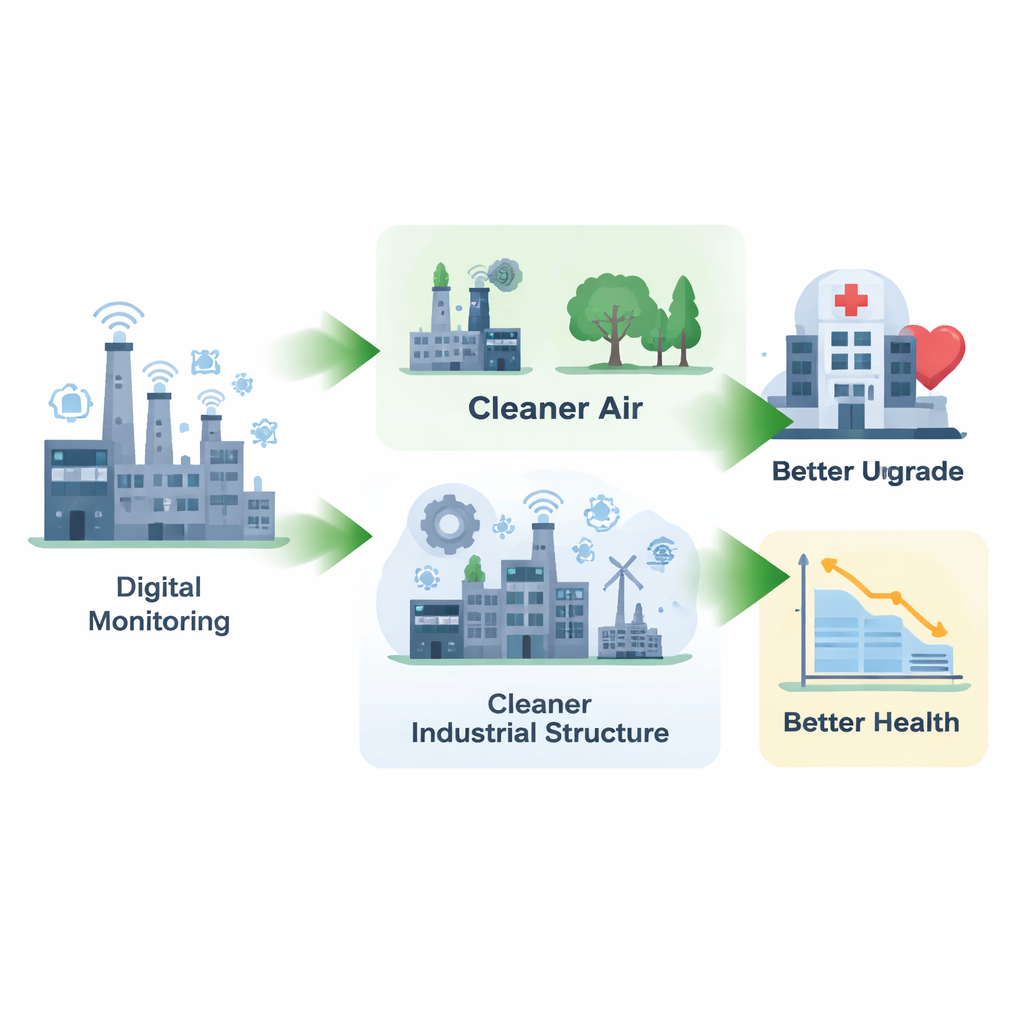
Beyond the direct effect of cleaner factories, the study asks how these improvements travel through society. Two key channels stand out. First, as manufacturing becomes greener, public awareness and concern about environmental issues rise. People search more for information, follow pollution news, and push governments and companies to do better. This social pressure encourages more investment in pollution control and openness about emissions, which in turn reduces health risks. Second, green transformation nudges the economy away from heavy, dirty industries and toward cleaner, service‑oriented and high‑tech sectors. As the industrial mix shifts, harmful emissions decline, and so do deaths linked to heart and lung disease.
When Digital Technology Turns the Tide
The authors also find that going green is not enough on its own—digital technology acts as a powerful on–off switch. They construct an index of how digitalized regional manufacturing is, capturing things like connected sensors, data platforms, and smart production systems. A striking threshold emerges: in provinces where digitalization stays below a value of 0.343, the health benefits of green manufacturing are too weak to show up clearly in the numbers. But once digitalization crosses that point, the picture changes sharply. Digital tools make it possible to track emissions in real time, fine‑tune production, and coordinate among government, companies, and the public. Above the threshold, the impact of green manufacturing on lowering death rates more than triples in strength.
What This Means for Everyday Lives
For non‑specialists, the message is straightforward: cleaner, smarter factories can make a measurable difference to how long people live, especially when supported by digital technology and an informed public. Reducing emissions, shifting toward less polluting industries, and using modern monitoring tools together cut the hidden health costs of industrial growth. In China, this combination already translates into lower mortality in better‑performing regions. As similar strategies spread, they offer a path for countries to grow their economies, protect the climate, and improve everyday health at the same time.
Citation: Li, X., Deng, Y. Manufacturing green transformation improves public health in China. Sci Rep 16, 6535 (2026). https://doi.org/10.1038/s41598-026-37563-2
Keywords: green manufacturing, air pollution and health, digitalization, industrial transformation, public health policy