Clear Sky Science · en
Comparative transcriptomic dynamics reveal molecular responses of susceptible and resistant Triticum aestivum genotypes to wheat stripe mosaic virus
Why a hidden wheat disease matters to your dinner plate
Wheat is a staple food for billions of people, and in South America it underpins both local diets and rural economies. A little-known virus called wheat stripe mosaic virus (WhSMV) is quietly attacking wheat roots through the soil, stunting plants and reducing grain yields. This study compares how two modern wheat varieties, one naturally resistant and one vulnerable, respond to the virus at the molecular level. By uncovering the inner workings of resistance, the research points the way toward breeding hardier crops that can help keep bread, pasta, and other wheat-based foods both available and affordable.
Two wheat varieties, two very different outcomes
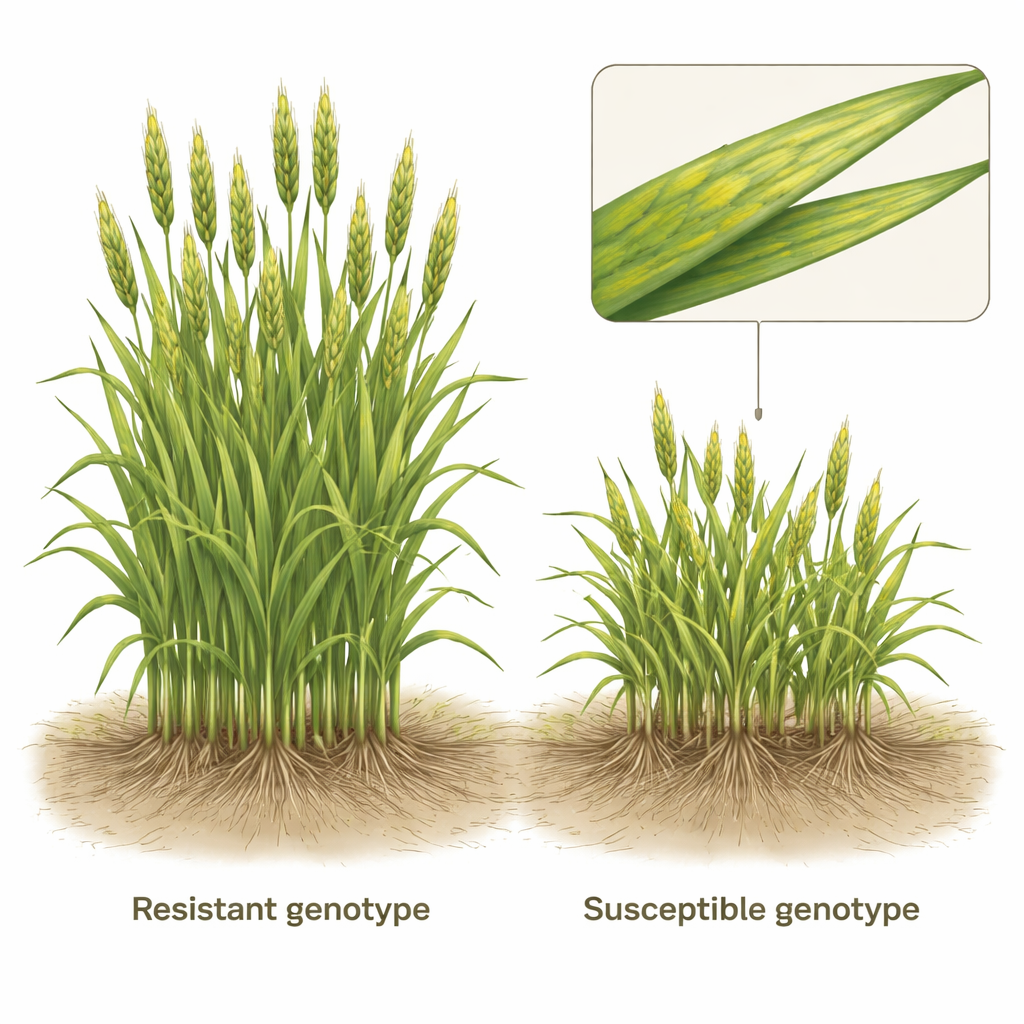
The researchers focused on two Brazilian wheat cultivars grown in fields where the virus is naturally present. Embrapa 16 is known to tolerate soil-borne wheat mosaic disease, showing few or no visible symptoms. BRS Guamirim, in contrast, often develops yellow, streaky leaves, poor root systems, and overall stunted growth. Using sensitive genetic tests, the team confirmed that infected Embrapa 16 plants carried far fewer virus copies than infected BRS Guamirim plants. This real-world contrast in disease severity provided a powerful starting point for asking what is happening inside the plants at the level of gene activity.
Reading the plants’ molecular “stress diaries”
To explore this inner world, the scientists used RNA sequencing, a technique that measures which genes are turned on or off in a cell. They compared four sets of samples: infected and healthy plants of each variety. Across these combinations, more than 13,000 genes changed their activity levels. In Embrapa 16, infection triggered a focused adjustment: genes involved in warning signals, stress responses, and protective chemistry were switched on, while basic metabolism stayed relatively stable. In BRS Guamirim, by contrast, infection led to a much broader upheaval in gene activity, especially in genes tied to photosynthesis and growth, indicating deeper stress and less controlled coping mechanisms.
Strong defenses versus disrupted energy and hormones
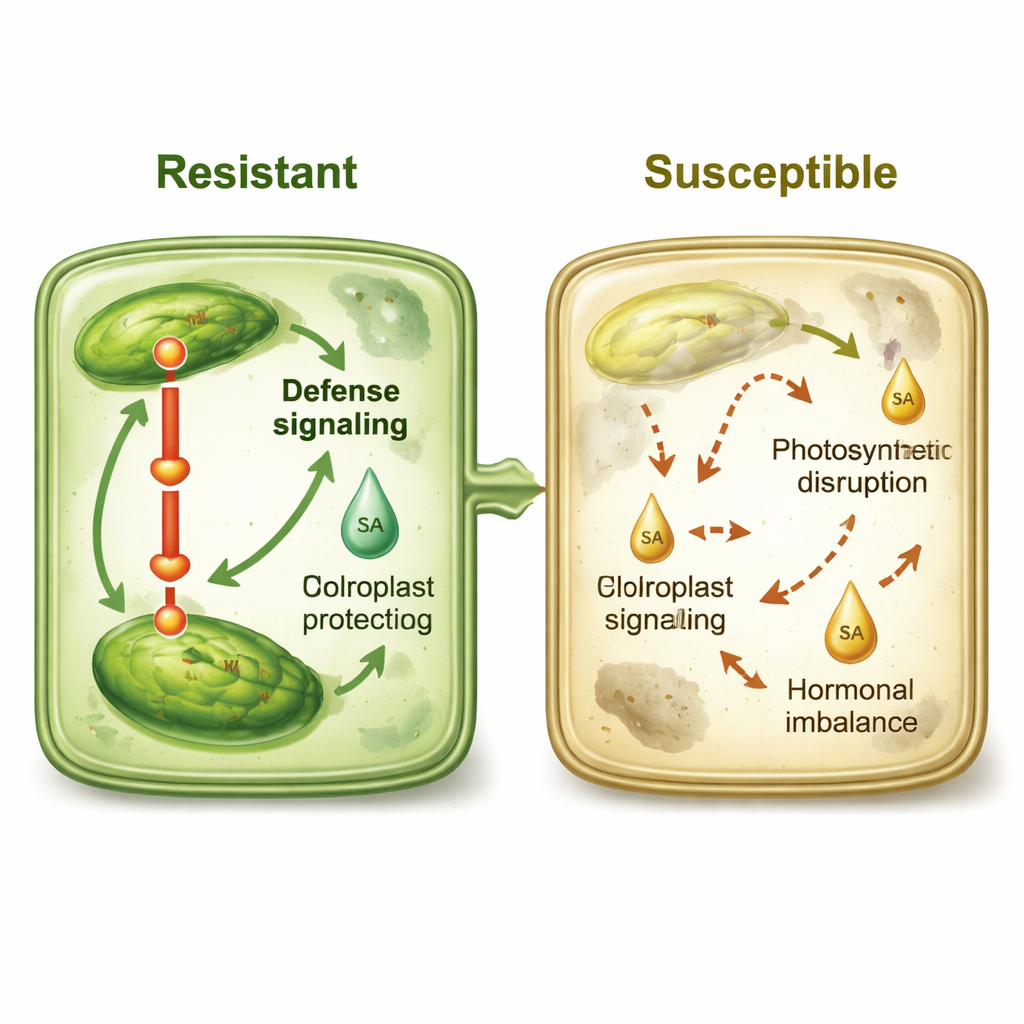
Digging deeper, the team mapped these gene changes onto known biological pathways. In the resistant Embrapa 16, pathways linked to plant–pathogen recognition and kinase signaling—molecular “relay races” that rapidly transmit danger signals—were clearly activated. Genes similar to classic plant resistance genes, as well as a key enzyme in a pathway that makes protective compounds, were strongly induced only in this variety. Hormone-related signaling, especially involving salicylic acid, a central defense hormone in plants, was also engaged. Together, these responses suggest that Embrapa 16 recognizes the virus quickly and mounts a coordinated defense that both slows the virus and limits visible damage.
When the virus unbalances the plant
The susceptible BRS Guamirim painted a different picture. Many genes required for capturing light and running the plant’s “green power plants” (chloroplasts) were dialed down during infection. This pattern matches the yellowing and stunting seen in the field and hints that the virus disrupts the plant’s energy supply. At the same time, genes responding to hormones such as auxin and ethylene showed a confusing mix of increased and decreased activity, suggesting that the plant’s internal growth and defense signals are thrown off balance. Instead of a sharp, organized defense, BRS Guamirim appears to experience widespread metabolic disruption that leaves it more vulnerable to damage.
What this means for building tougher wheat
For non-specialists, the takeaway is that resistance to this soil-borne virus is not just about having “strong” genes; it is about how the plant’s signaling networks, energy systems, and protective chemistries work together under attack. The resistant variety keeps its chloroplasts functioning, activates well-organized alarm systems, and boosts production of defensive molecules, allowing it to tolerate infection with limited yield loss. The susceptible variety, in contrast, suffers from collapsed photosynthesis and confused hormone signals, amplifying both virus growth and symptoms. By pinpointing the genes and pathways behind these differences, this study offers breeders concrete molecular targets—such as specific resistance genes, signaling components, and chloroplast-protective traits—to develop wheat lines that can better withstand wheat stripe mosaic virus and safeguard future harvests.
Citation: Nascimento, S.C., Pereira, F.S., Silva, V.I.A. et al. Comparative transcriptomic dynamics reveal molecular responses of susceptible and resistant Triticum aestivum genotypes to wheat stripe mosaic virus. Sci Rep 16, 6397 (2026). https://doi.org/10.1038/s41598-026-37557-0
Keywords: wheat virus, crop disease resistance, plant immunity, soil-borne pathogens, transcriptomics