Clear Sky Science · en
A novel polyhydroxyalkanoate-storing bacterium Thauera carbonocopians sp. nov. isolated from a sequencing batch reactor fed with volatile fatty acids
Why a tiny bacterium matters for plastics and food
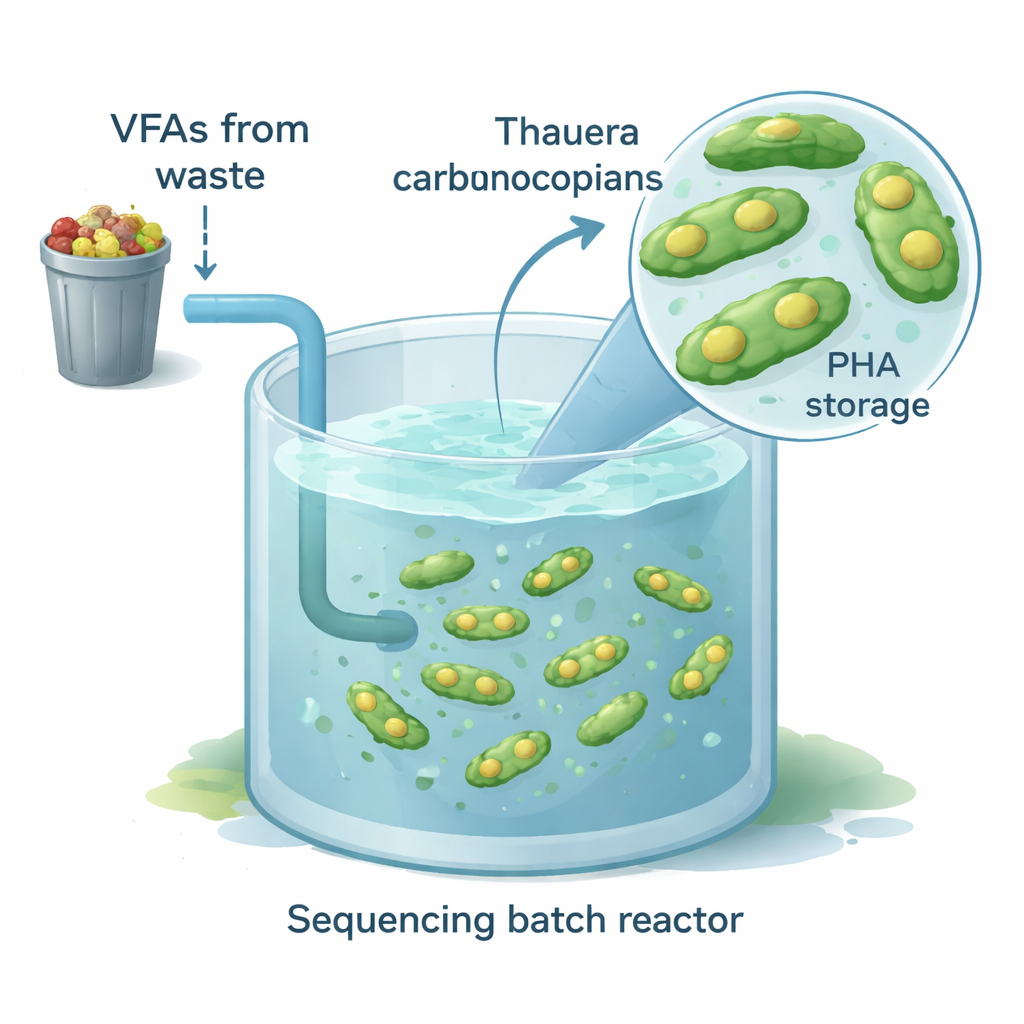
Plastic waste, fish farming, and microscopic bacteria may not seem connected, but this study shows they are. Researchers have discovered and named a new bacterial species, Thauera carbonocopians, that can turn low-value waste into valuable, biodegradable plastic-like materials. Because this microbe can store large amounts of these bioplastics inside its cells, it could help create more sustainable packaging and healthier feeds for aquaculture.
A new carbon-hoarding microbe
The story begins in a wastewater treatment tank in northern Italy designed to enrich microbes that stockpile special energy reserves. These reserves are polyhydroxyalkanoates (PHAs) – natural, plastic-like polymers that bacteria store as granules. The team isolated one promising strain from this tank and called it Sel9T. Using DNA sequence comparisons of a standard marker gene (16S rRNA) and deeper whole-genome analysis, they showed that Sel9T belongs to the genus Thauera, a group of versatile, rod-shaped bacteria often found in sediments and treatment plants. However, its genome was clearly different enough from all known relatives to justify recognition as a brand‑new species.
How scientists proved it is truly new
To decide whether Sel9T was just a variant or a genuinely new species, the researchers combined several lines of evidence. They compared its full genome with those of closely related Thauera strains, calculating how similar the DNA sequences are overall. The key similarity scores (average nucleotide identity and digital DNA–DNA hybridization) fell below widely accepted cutoffs used to separate bacterial species, even for its closest relative, Thauera butanivorans. They also built evolutionary family trees using hundreds of shared genes, which consistently placed Sel9T in its own distinct branch. Chemical fingerprints of its cell membrane fats and pigments, and its growth behavior under different conditions, further distinguished it from neighboring species.
What this bacterium eats and how it lives
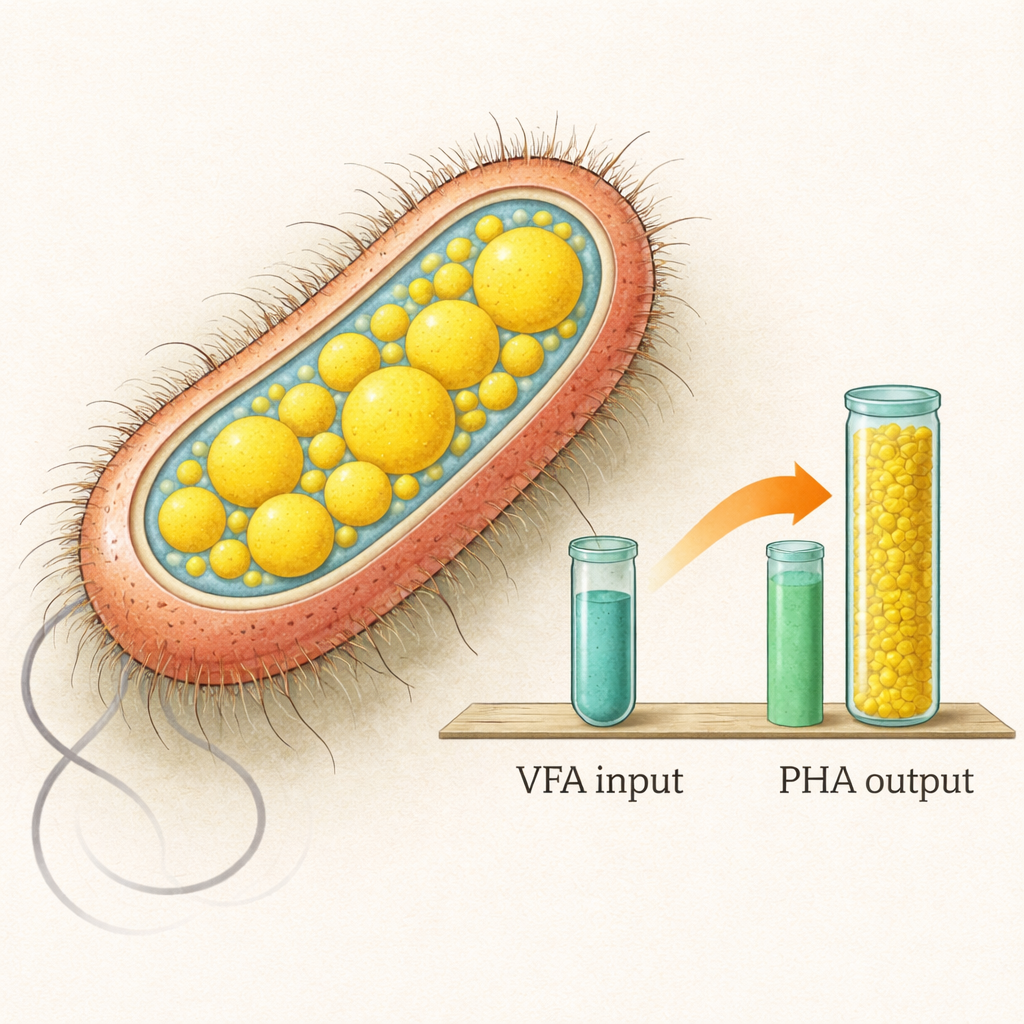
Sel9T thrives at moderate temperatures and neutral pH, grows in both oxygen-rich and low-oxygen conditions, and can tolerate some salt. Instead of relying on sugars, it prefers small organic acids and amino acids as food, especially volatile fatty acids (VFAs) such as acetate, propionate, butyrate, and caproate. These VFAs are abundant in fermented agricultural and food-processing wastes, making them cheap and sustainable feedstocks. When supplied with such acids, Sel9T can pack its interior with PHA granules that may exceed 60% of its dry weight, effectively acting as a living warehouse for bioplastic precursors.
Hidden genetic tools for survival and useful products
By scanning the genome of Sel9T and dozens of other Thauera strains, the team catalogued biosynthetic gene clusters – grouped genes that enable the production of specialized molecules. Sel9T carries nine such clusters, including sets for making an ectoine-like compound that helps cells cope with salt stress, a redox cofactor called PQQ that can boost metabolic reactions, and a rare non‑ribosomal peptide system that may produce yet‑unknown bioactive molecules. The bacterium also has a complete toolkit for building, storing, and breaking down PHAs, with enzymes tuned to use the very same fatty acids common in waste streams. Comparative analysis suggests that Sel9T may even utilize certain plant-derived fragrance molecules (like linalool), highlighting its metabolic flexibility.
From wastewater tank to future applications
Based on its genetic distinctiveness, cell chemistry, and metabolism, the authors formally propose the name Thauera carbonocopians for this species – literally “the Thauera that greedily stores carbon.” Because it can convert cheap, waste-derived acids into large amounts of natural, biodegradable polymer, it is a strong candidate for sustainable PHA production. These PHA-rich cells could be used directly as ingredients in fish and shrimp feeds, where they have been shown to support growth and disease resistance while reducing the need for antibiotics. In short, this newly named bacterium may help close the loop between organic waste, environmentally friendly plastics, and healthier aquaculture systems.
Citation: Jaberi, M., Andreolli, M., Salvetti, E. et al. A novel polyhydroxyalkanoate-storing bacterium Thauera carbonocopians sp. nov. isolated from a sequencing batch reactor fed with volatile fatty acids. Sci Rep 16, 6926 (2026). https://doi.org/10.1038/s41598-026-37556-1
Keywords: biodegradable plastics, polyhydroxyalkanoates, waste valorization, aquaculture feed, bacterial genomics