Clear Sky Science · en
CNS-active medication use and adverse health outcomes among Thai older adults: a population-based retrospective study
Medicines That Calm the Brain, But May Harm the Body
As people age, trouble sleeping, anxiety, and mood problems often lead to prescriptions for medicines that act on the brain. These central nervous system, or CNS-active, drugs can be very helpful in the short term—but they may also make older adults unsteady, confused, or more likely to end up in the hospital. This study from Thailand asks a simple but crucial question: how common are these medicines in older people, and what real-world harms might be linked to their use?
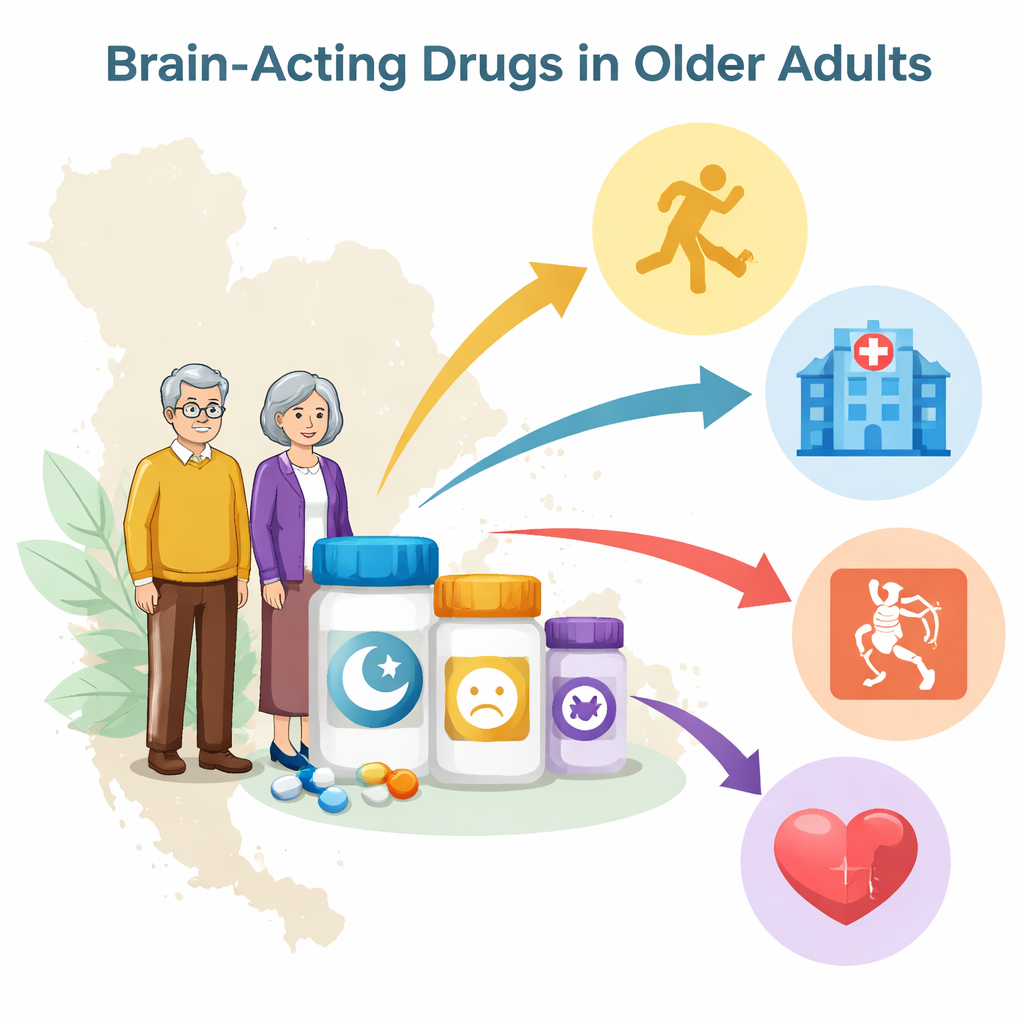
Growing Older in a Heavily Medicated World
Thailand, like many countries, is rapidly aging; nearly one in five citizens is already over 60, and that share is steadily rising. Older adults often live with several long-term illnesses and take multiple medicines at once. Some of these drugs are considered “potentially inappropriate” for seniors, meaning the risks may outweigh the benefits. The research team focused on a group of such drugs that specifically affect the brain—commonly used to treat sleep problems, anxiety, depression, Parkinson’s disease, and psychosis—to see how frequently they were prescribed and whether they were linked with bad outcomes such as falls, hip fractures, hospital stays, and death.
Peeking Inside a Province’s Medical Records
The researchers examined electronic health records from every public hospital and clinic in Lampang Province in northern Thailand during the year 2021. They included 170,709 adults aged 60 and older who had used these services and were alive at the start of the year. Any person who received at least one prescription for a CNS-active drug listed as high-risk in international geriatric guidelines was counted as a user, regardless of how long they took it. The team then followed each person’s records for one year to see who experienced a fall or hip fracture, who was admitted to hospital, and who died from any cause.
Who Takes These Medicines, and Which Ones?
Almost one in six older adults in the study—17.3 percent, or 29,533 people—received at least one CNS-active medicine. These users tended to be women and to have more health problems, including high blood pressure, diabetes, and especially mental and neurological conditions such as dementia and sleep disorders. The most commonly prescribed drugs were benzodiazepines, a class of sedatives often used for anxiety and insomnia; lorazepam alone accounted for over half of all brain-acting prescriptions. Strongly anticholinergic antidepressants, which can cause drowsiness and confusion, were also widely used, along with smaller numbers of antipsychotics, Parkinson’s medicines, barbiturates, and sleeping pills known as Z-drugs.
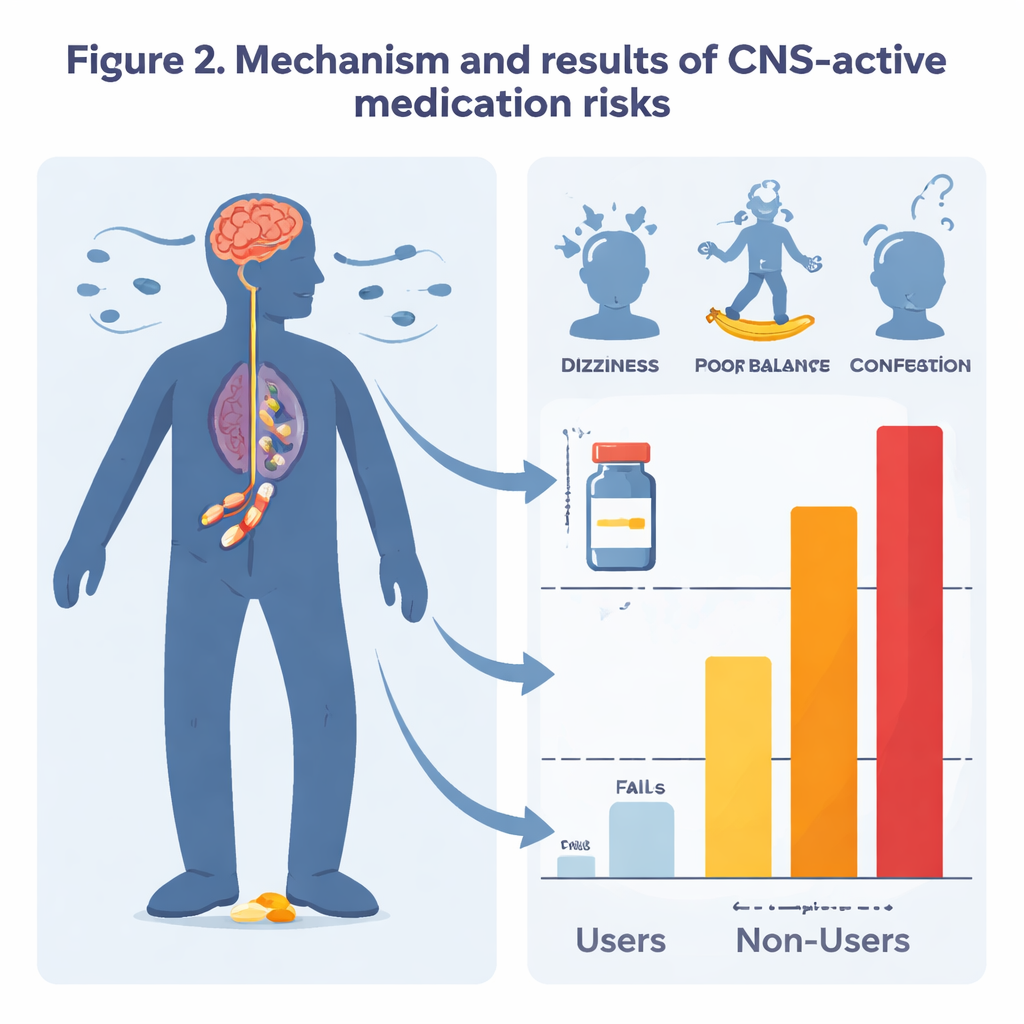
Links to Falls, Hospital Stays, and Death
When the researchers compared older adults who did and did not receive these medicines, they found striking differences. After accounting for age, sex, job, and many major illnesses, those taking any CNS-active drug were about 80 percent more likely to experience a fall and nearly twice as likely to be admitted to hospital within a year. Their risk of death was also modestly but significantly higher. The pattern was similar across several drug types—especially benzodiazepines and antipsychotics. The more different CNS-active medicines a person took, the greater their chance of falling or being hospitalized, suggesting that combining these drugs adds to the danger. The data hinted at an increased risk of hip fracture as well, though this result was less certain.
What This Means for Older Adults and Their Families
For a layperson, the takeaway is straightforward: medicines that calm the brain can quietly raise the odds of serious harm in older age, especially when several are used together. This does not mean such drugs should never be prescribed, but it does mean they should be used carefully, at the lowest effective dose, and reviewed regularly. The authors call for routine medication checkups, better prescribing guidance, and stronger communication among doctors, pharmacists, patients, and caregivers. By questioning long-term use of sedatives and similar drugs, and by exploring safer alternatives for sleep and mood problems, health systems in Thailand and elsewhere may help older adults stay steadier on their feet, avoid unnecessary hospital stays, and live longer, healthier lives.
Citation: Yotruangsri, T., Aramrat, P., Aramrat, C. et al. CNS-active medication use and adverse health outcomes among Thai older adults: a population-based retrospective study. Sci Rep 16, 6247 (2026). https://doi.org/10.1038/s41598-026-37555-2
Keywords: older adults, brain-acting medications, falls, Thailand, polypharmacy