Clear Sky Science · en
A comparative analysis of BMI and skinfold measurements in the assessment of body composition parameters
Why measuring children’s body fat matters
Across the world, more children than ever are carrying excess body fat, which can set the stage for diabetes, heart disease, and other illnesses later in life. Doctors usually rely on a quick calculation called body mass index (BMI) to spot weight problems, but BMI cannot tell fat from muscle. This study, carried out in the United Arab Emirates (UAE), asked a simple but important question: are there better, still practical ways to gauge how much fat children have, and can we build growth charts tailored to local boys and girls?
Looking beyond the bathroom scale
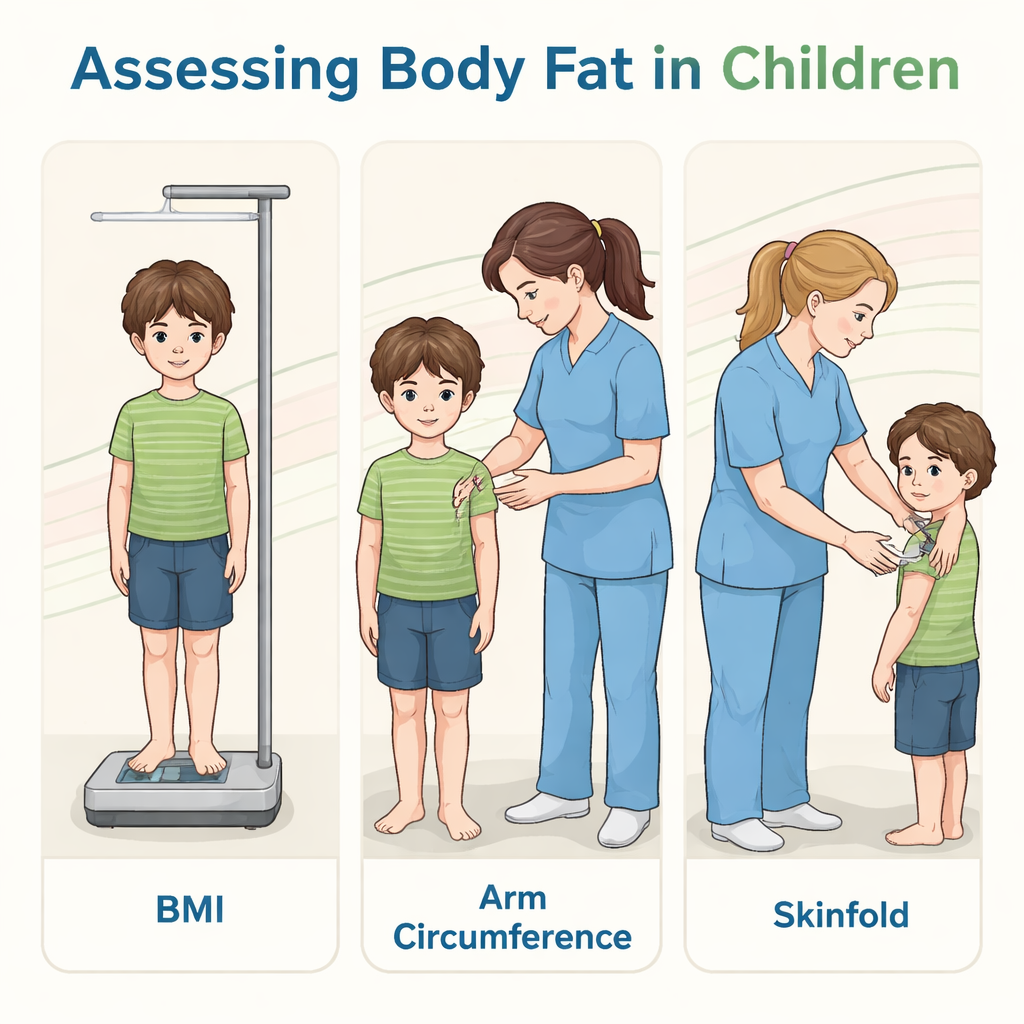
The researchers followed nearly 20,000 healthy Emirati children from birth to 18 years of age. For each child they measured height and weight to calculate BMI, as well as the circumference of the upper arm and the thickness of small pinches of skin and underlying fat at four sites: the biceps, triceps, just below the shoulder blade, and just above the hip bone. These “skinfolds” give a window into the amount of fat just under the skin, which can be used to estimate total body fat. Using a statistical method designed for children’s growth, the team built age- and sex-specific charts for BMI, arm circumference, each skinfold, and the sum of all four skinfolds.
What the measurements reveal as children grow
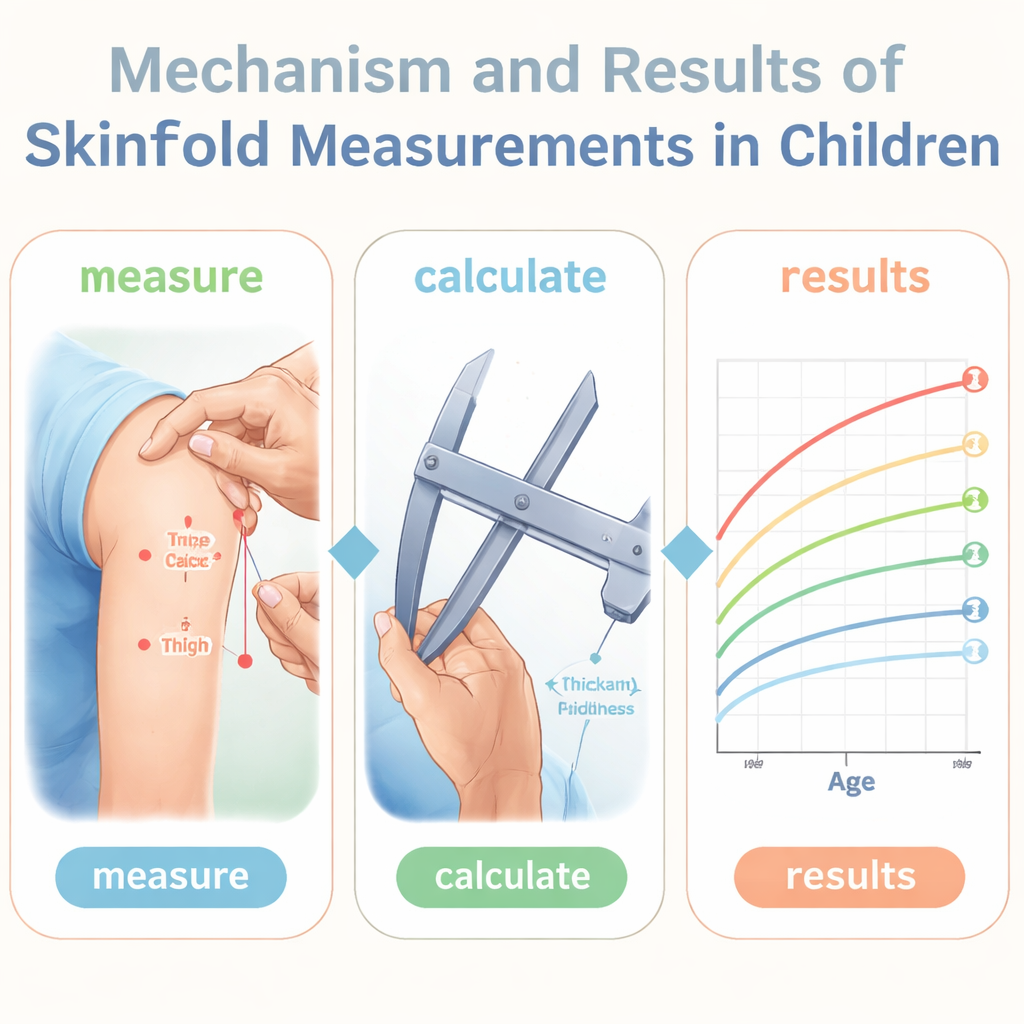
When the team plotted skinfold thickness across age, they saw a pattern that matched known growth phases. The sum of the four skinfolds rose in early childhood, leveled off around age eight, and then climbed again through the teenage years in both boys and girls. Individual skinfolds followed similar paths. The mid–upper arm circumference increased steadily from infancy to adulthood, with only a small dip around ages four to six. These patterns show how children’s fat stores expand and shift as they grow, and they provide benchmarks tailored specifically to the UAE population rather than relying on charts built from children elsewhere.
How well does BMI track true fatness?
BMI did show moderate to strong statistical links with arm size and skinfold thickness, especially after about age five. In other words, heavier children tended to have thicker skinfolds and larger arms. But when the researchers treated the sum of the four skinfolds as a closer stand-in for actual fatness, a different picture emerged. Measures of agreement showed that BMI and arm circumference did not line up closely with skinfold-based fat measures, even when the correlations looked high. In practice, BMI often labeled more children as overweight or obese than the skinfold method did, particularly in certain age bands, and sometimes misclassified younger children.
Skinfolds as a clearer window on body fat
By plugging the four skinfold measurements into established equations, the team estimated each child’s body fat percentage and other upper-arm fat and muscle areas. These fat-based measures matched the skinfold sums extremely closely and related strongly to overall body density, suggesting that multi-site skinfolds are a more precise way to gauge true fatness than BMI or arm circumference alone. Importantly, the authors stress that strong correlation does not guarantee accuracy: two methods can rise and fall together while still giving different answers for individual children. For the UAE population, BMI and arm circumference tracked each other well but both diverged from the skinfold-based “gold standard.”
What this means for parents, doctors, and policymakers
For families, the study underscores that a high BMI in a child is a warning sign but not a perfect measure of body fat. For doctors and health planners, it offers new UAE-specific growth charts and makes the case for including simple skinfold measurements, when properly performed, in checkups and large surveys. The authors conclude that adding these quick pinches of arm and trunk fat provides a clearer picture of which children truly carry excess fat, allowing earlier and more accurate identification of those at risk of obesity-related health problems.
Citation: Abdulrazzaq, Y.M., Aburawi, E., Abdulrahman, M. et al. A comparative analysis of BMI and skinfold measurements in the assessment of body composition parameters. Sci Rep 16, 6191 (2026). https://doi.org/10.1038/s41598-026-37549-0
Keywords: childhood obesity, body fat measurement, BMI, skinfold thickness, United Arab Emirates