Clear Sky Science · en
Life expectancy after kidney transplantation in a population-based retrospective cohort
Why this matters to patients and families
For people whose kidneys have failed, a transplant can mean the difference between years tied to a dialysis machine and a return to everyday life. But not every transplant offers the same outlook. This study followed nearly two thousand kidney transplant recipients in Israel for more than a decade to answer a simple, crucial question: who tends to live longer after a transplant, and what factors tilt the scales toward a better or worse future?
Who was followed and for how long
Researchers examined the medical records of 1,847 adults who received a single kidney transplant between 2005 and 2018. To focus on longer-term outcomes rather than surgical crises, they included only those who were alive one month after surgery and then tracked them until death or mid-2023. On average, people lived almost 12 years after that one-month mark, and more than half were still alive at the end of follow-up, so the true median survival could not yet be calculated. The group reflected real-world practice: most had spent years on dialysis, many had high blood pressure or diabetes, and about two thirds received kidneys from deceased donors rather than living ones.
Everyday health factors that shape survival
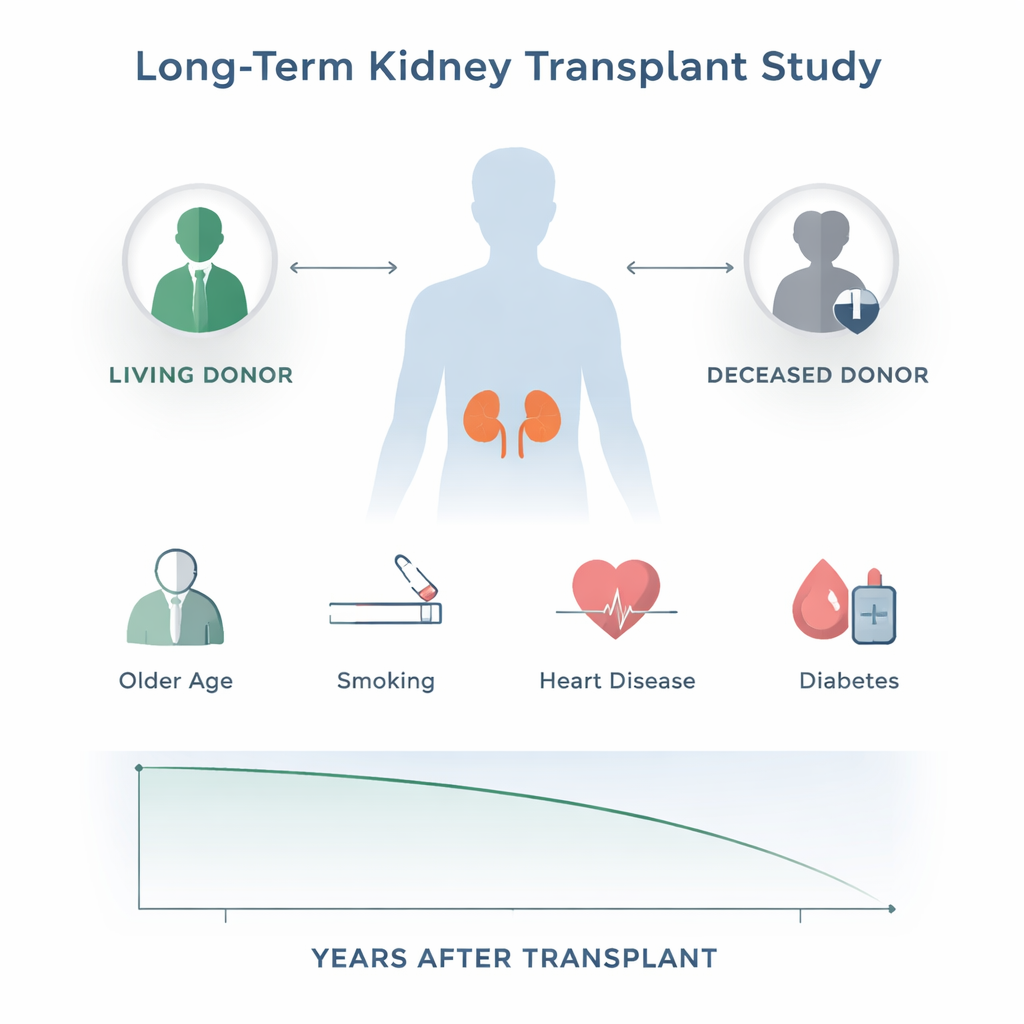
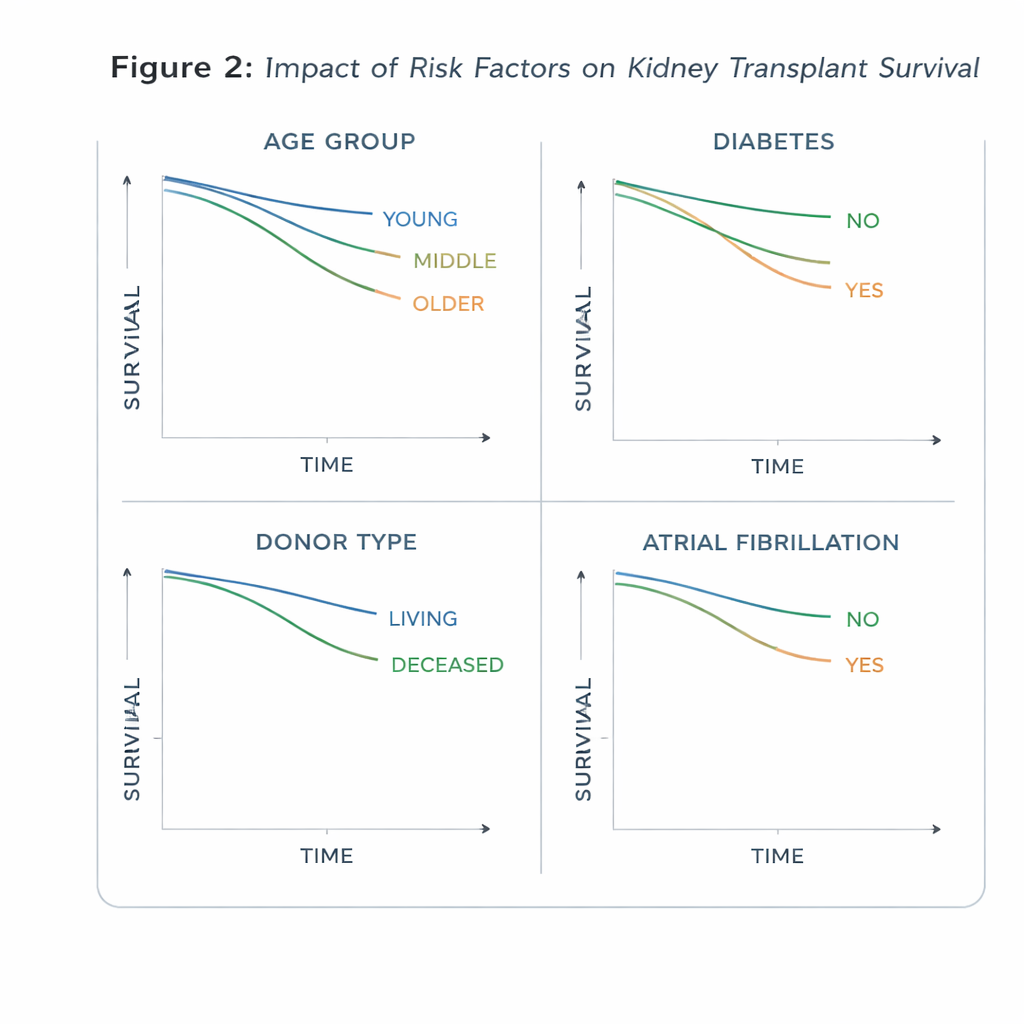
The study found that common health conditions and habits strongly influenced how long people lived after their transplant. Older age was the most powerful factor: compared with recipients under 50, those 50 to 64 had roughly double the risk of death, and those 65 or older had almost four times the risk. Smoking—whether current or in the past—also raised the chance of dying. Serious heart and blood vessel problems, including diabetes, heart failure and atrial fibrillation (an irregular heartbeat), were each linked to higher mortality. In other words, the same chronic conditions that threaten health in the general population continue to matter greatly even after a successful kidney transplant.
The advantage of a living donor
One of the clearest signals in the data was the benefit of receiving a kidney from a living donor. After taking other factors into account, people with a living-donor kidney had about half the risk of death compared with those who received an organ from someone who had died. Better health of living donors, shorter time the kidney spends outside the body, and the ability to plan surgery carefully likely all contribute to this edge. The study also found that higher levels of hemoglobin—a measure related to red blood cells and anemia—before transplant were tied to better long-term survival, hinting that optimizing patients’ overall health before surgery can pay off for years.
What high-risk patients can still gain
Even among the highest-risk group—patients over 65 who had diabetes and received a kidney from a deceased donor—transplantation offered meaningful extra years. Their average survival after the first month was about four years, and nearly one in five lived longer than eight years. Earlier research, together with these findings, suggests that while such patients may not live as long as younger, healthier recipients, they often gain more life and better quality of life from a transplant than they would from remaining on long-term dialysis. The authors argue that age and illness should not automatically exclude people from being considered; instead, they should guide careful, individualized decisions about timing and preparation.
What this means for decisions about transplant
For patients, families, and clinicians, this study underscores that long-term survival after kidney transplantation depends on a mix of who the patient is and where the kidney comes from. Living-donor kidneys and good overall health going into surgery are strong positives, while older age, smoking, diabetes and heart disease signal higher risk. Rather than a simple yes-or-no answer, the choice to pursue transplant—especially for older or sicker patients—should weigh the likely years and quality of life gained against these individual risks. The results also support efforts to expand living-donor programs and to better manage conditions like diabetes, heart failure and atrial fibrillation before and after surgery, with the goal of helping more transplant recipients not just survive, but live well, for as long as possible.
Citation: Babich, T., Daitch, V., Leibovici, L. et al. Life expectancy after kidney transplantation in a population-based retrospective cohort. Sci Rep 16, 6310 (2026). https://doi.org/10.1038/s41598-026-37536-5
Keywords: kidney transplantation, life expectancy, living donor, diabetes and heart disease, dialysis alternatives