Clear Sky Science · en
Enhancing fruit supply chain traceability through blockchain and cryptographic protocols for achieving UN sustainable development goals
Why your fruit’s backstory matters
Most of us assume the fruit in our shopping basket is safe, honestly labeled, and responsibly produced. Yet modern food supply chains are long and opaque, and problems like contamination, fraud, and mislabeling are disturbingly common. This paper explores how a new digital approach—combining blockchain, cryptography, and automated rules—can make the journey of fruit from farm to fork transparent, tamper‑resistant, and easier to trust, while also supporting global sustainability goals.
The problem with today’s hidden food journeys
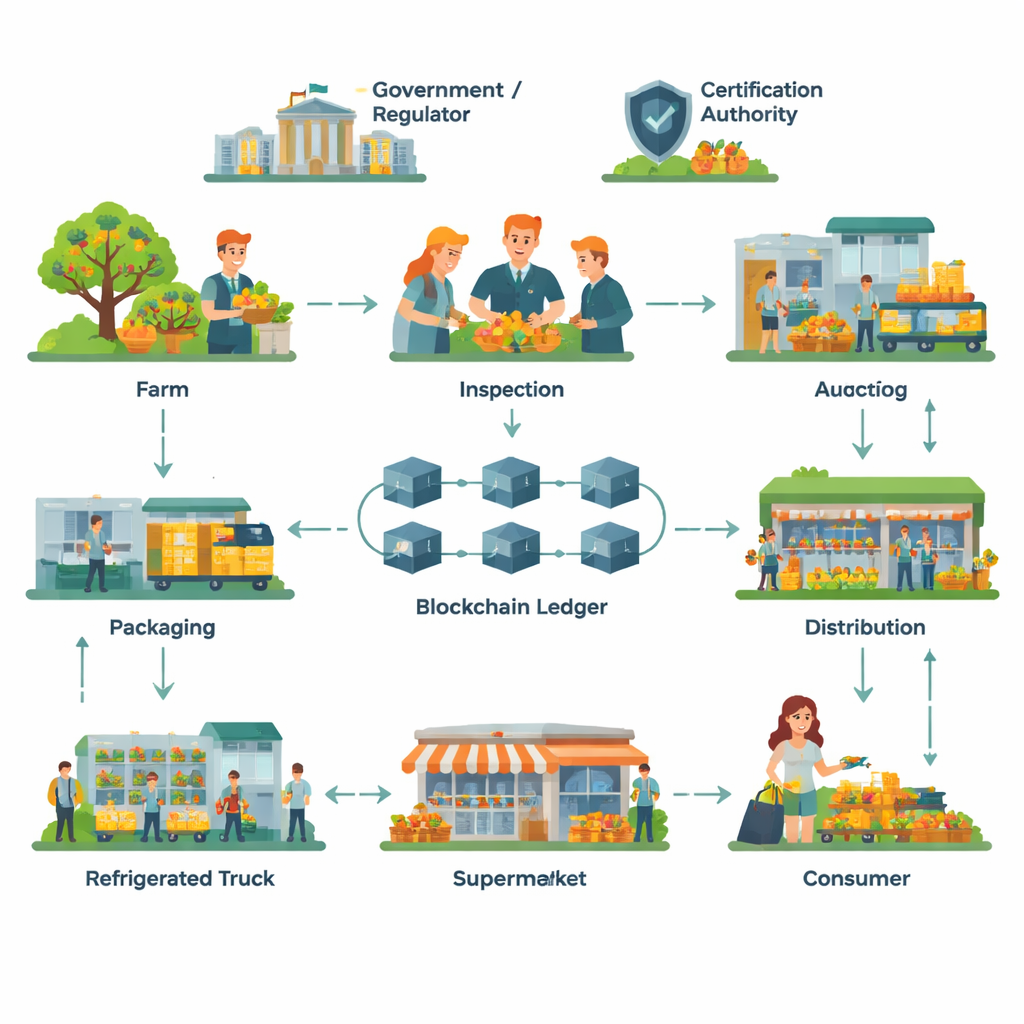
As the world population heads toward 9 billion, food production and trade are scaling up, but so are the risks. Traditional traceability systems are usually centralized databases controlled by a few organizations. That makes them vulnerable to hidden edits, slow in crisis response, and difficult for outsiders to audit. The result is real harm: hundreds of millions of people fall ill from unsafe food each year, and scandals—such as horse meat sold as beef—erode public confidence. Despite growing interest in using blockchain for finance or industry, its potential to reshape everyday food choices, especially for fresh produce like fruit, has been underexplored.
A digital backbone for the fruit supply chain
The authors propose a national‑scale framework called FSC_SDG that treats the fruit supply chain as a shared digital story written jointly by all participants. Farmers, inspectors, packers, transporters, warehouse managers, retailers, regulators, and even customers are modeled as roles in the system. Each important event—harvest dates, quality checks, packaging details, transport temperature, warehouse inspections, retail delivery, and final purchase—is recorded as a transaction on a blockchain. Instead of trusting one central database, all parties see the same tamper‑resistant ledger. Smart contracts—small programs stored on the blockchain—automatically enforce rules about who may do what, and when.
Quality checks and trust at every step
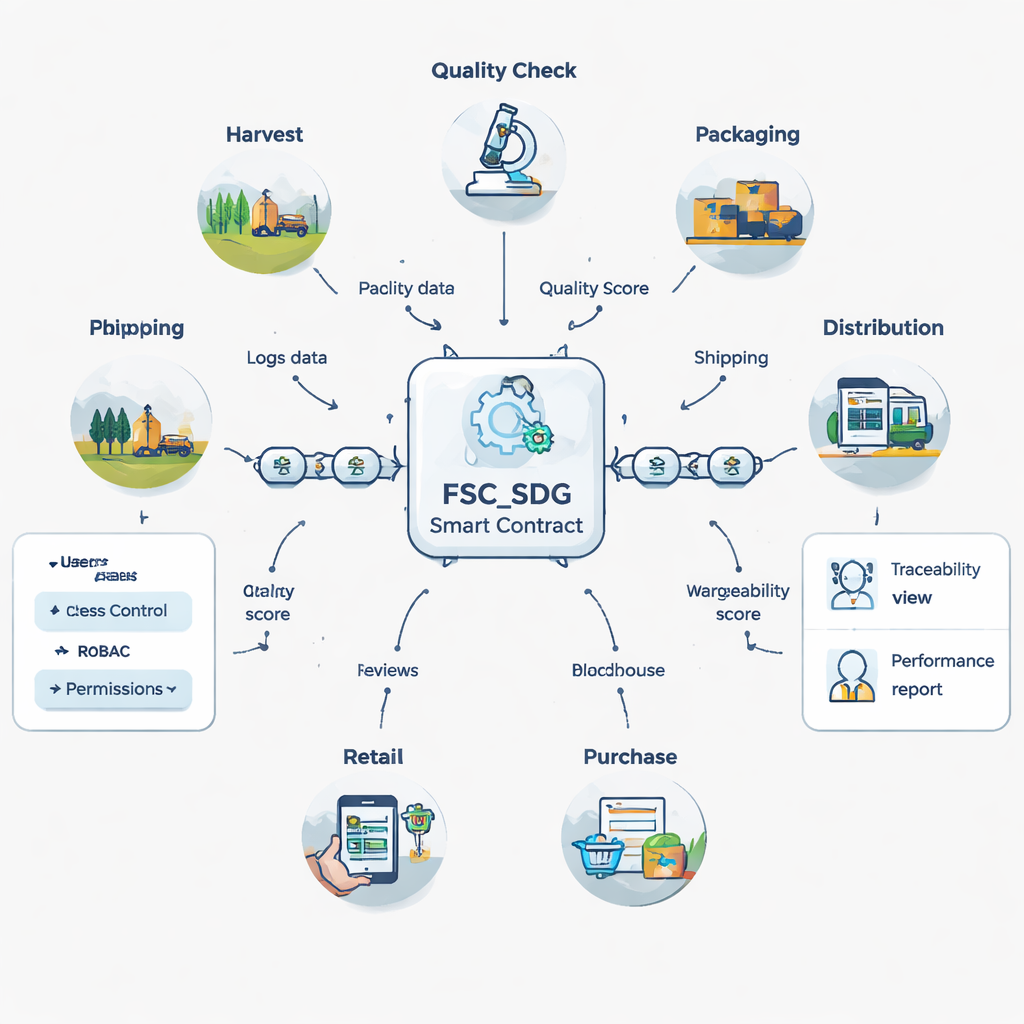
To move beyond simple “where did this come from?” tracking, the framework builds quality control into four critical stages: harvesting, packaging, shipping, and distribution. At each stage, certified inspectors log standardized quality scores and conditions. A role‑based access control system ensures that only verified actors—for example, a recognized inspector or licensed packer—can create or update specific records. Once written, the entries cannot quietly be altered. Customers and regulators can later retrieve a complete, readable history for a particular batch: where it was grown, how it was handled, whether it was kept cold in transit, when it reached the supermarket, and what other buyers thought of it.
How the blockchain engine actually works
Under the hood, the system is implemented as a smart contract on the public Ethereum blockchain. When the contract is deployed, it becomes an independent digital entity with its own address. Stakeholders interact with it through defined functions such as “Harvest”, “Bidding”, “Shipment”, “Retail”, “Purchase”, “Feedback”, and “Traceability”. Each call is checked against stored permissions; if the caller’s role and rights are valid, the contract records the new data and the resulting transaction is verified by the network and added to the chain. The researchers built a full proof‑of‑concept, then measured how much computing effort (“gas”) and cost in cryptocurrency were needed for different operations. They found that write operations like registering roles or logging new stages consume more resources than simple read‑only lookups, but overall costs and delays remained practical for real‑world use.
Security, threats, and real‑world pressures
Because real supply chains face fraud, tampering, and mistakes, the authors systematically mapped common threats—false “organic” claims, collusive auctions, batch mixing during packaging, temperature abuse in transit, mislabeling in warehouses, sale of expired goods, forged certificates—and showed how their design mitigates each one. Authentication and cryptographic signatures tie each record to a verified actor; immutable logs and public traceability discourage manipulation; and automated checks and alerts help catch problems early. Beyond safety and honesty, the system is linked to several United Nations Sustainable Development Goals, including reducing poverty among farmers through fairer pricing, cutting food waste and recalls through faster trace‑back, and enabling more informed and responsible consumption.
What this means for shoppers and society
For a layperson, the bottom line is straightforward: this work demonstrates that it is technically and economically feasible to give every box of fruit a secure, lifelong digital paper trail. Instead of taking labels on faith, a shopper—or a regulator—could scan a code and see where the fruit came from, how it was handled, and how others rated its quality. Farmers gain recognition and potentially better prices for good practices; retailers gain a powerful tool for recalls and reputation protection; and public health agencies get clearer data when something goes wrong. While larger‑scale tests are still needed, the study shows that blockchain, when thoughtfully designed, can turn today’s opaque fruit supply chains into open, verifiable stories that benefit both people and the planet.
Citation: Rashid, A., Ahmad, R.W., Nachouki, M. et al. Enhancing fruit supply chain traceability through blockchain and cryptographic protocols for achieving UN sustainable development goals. Sci Rep 16, 7219 (2026). https://doi.org/10.1038/s41598-026-37534-7
Keywords: food traceability, blockchain, fruit supply chain, food safety, sustainable agriculture