Clear Sky Science · en
Nutritional and phytochemical properties of Pakhoi a traditional fermented beverage from Uttarakhand, India
A Mountain Drink with a Modern Twist
High in the hills of Uttarakhand in northern India, the Jaunsari community has quietly brewed a drink called Pakhoi for generations. Made in earthen pots from local grains or fruits and a herb-rich starter, this mildly alcoholic beverage is praised in village lore for giving strength and protecting health. The study behind this article asks a simple but powerful question: if Pakhoi is tested with the same scientific tools used for wine and beer, does it really offer special nutritional and health-related benefits?
How a Village Brew Is Made
Pakhoi starts with everyday foods—barley, finger millet, rice, or sweet fruits like apples and peaches. These are mixed with jaggery (unrefined sugar) and a powdered starter cake called Keem, which is prepared from more than 40 local medicinal plants. The mixture ferments for about a week in sealed clay pots wrapped in cloth to keep them warm, slowly turning into a tangy, mildly alcoholic drink sipped during weddings and festivals. Because each household may use slightly different ingredients and methods, the researchers collected Pakhoi from three villages in the Chakrata–Tons Valley region to see how much its chemistry changes from place to place. 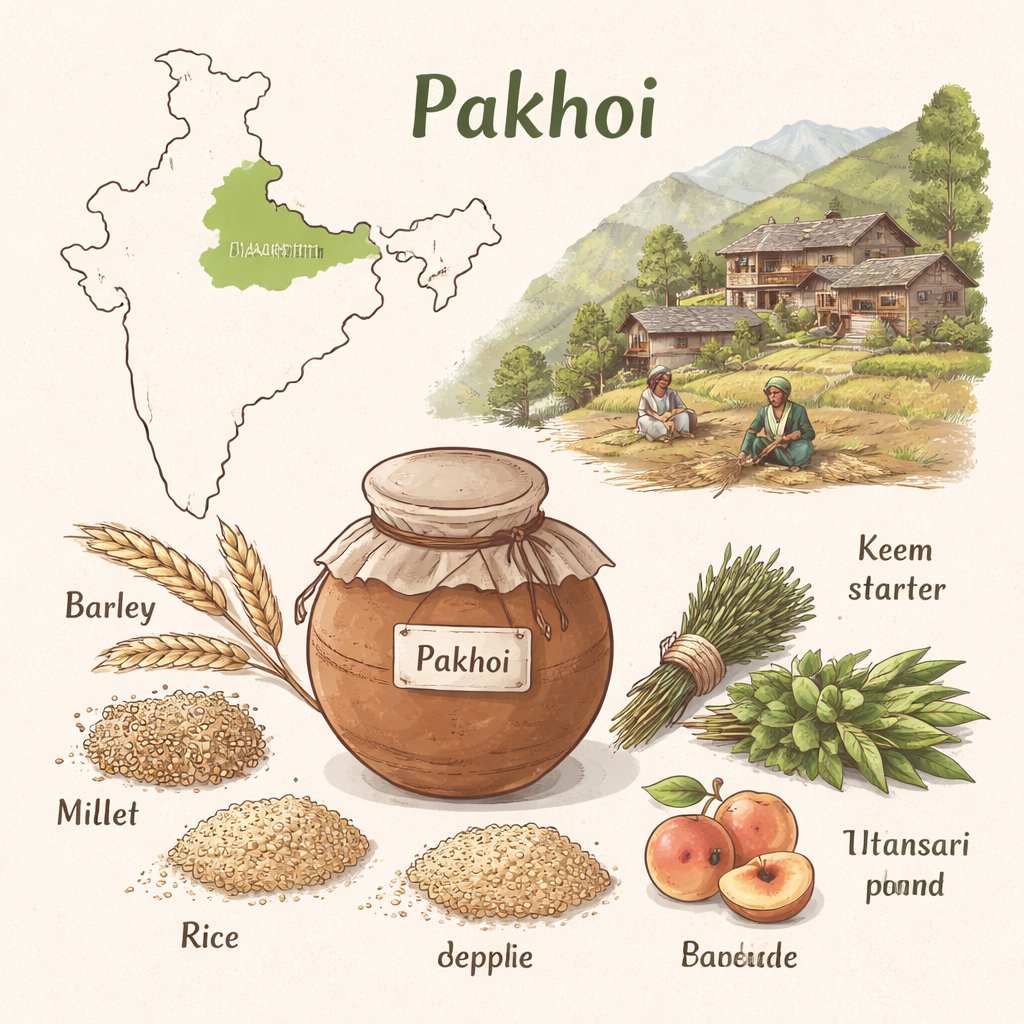
Peeking Inside the Drink’s Chemistry
To understand what is really inside Pakhoi, the team used advanced mass spectrometry, a technique that can sort and identify thousands of tiny molecules at once. They detected 2,720 distinct chemical “entities” and highlighted 252 as key markers, linking 137 of them to known compounds. These included familiar names like caffeine and capsaicin (responsible for the kick in chili peppers) as well as plant-derived molecules often discussed for their medicinal potential. Each village’s Pakhoi had a slightly different chemical fingerprint, and one site—called Location 1—stood out with especially high levels of several bioactive compounds, so this sample was examined in greater detail.
Nutrition and Plant Compounds Compared with Wine and Beer
When the researchers compared Pakhoi with red wine, white wine, and malt beer, an interesting picture emerged. Pakhoi was more acidic and far richer in carbohydrates and crude protein than the commercial drinks tested, giving it the highest calorie content per 100 milliliters. It also contained a broad range of plant-derived chemicals such as phenols and flavonoids, which are often linked with protective effects in the body. While red wine still had the greatest total amount of these compounds and the strongest antioxidant performance in standard lab tests, Pakhoi came in a strong second, clearly ahead of white wine and beer. In other words, this traditional mountain drink held its own against globally popular beverages when it came to the kinds of molecules scientists associate with health benefits. 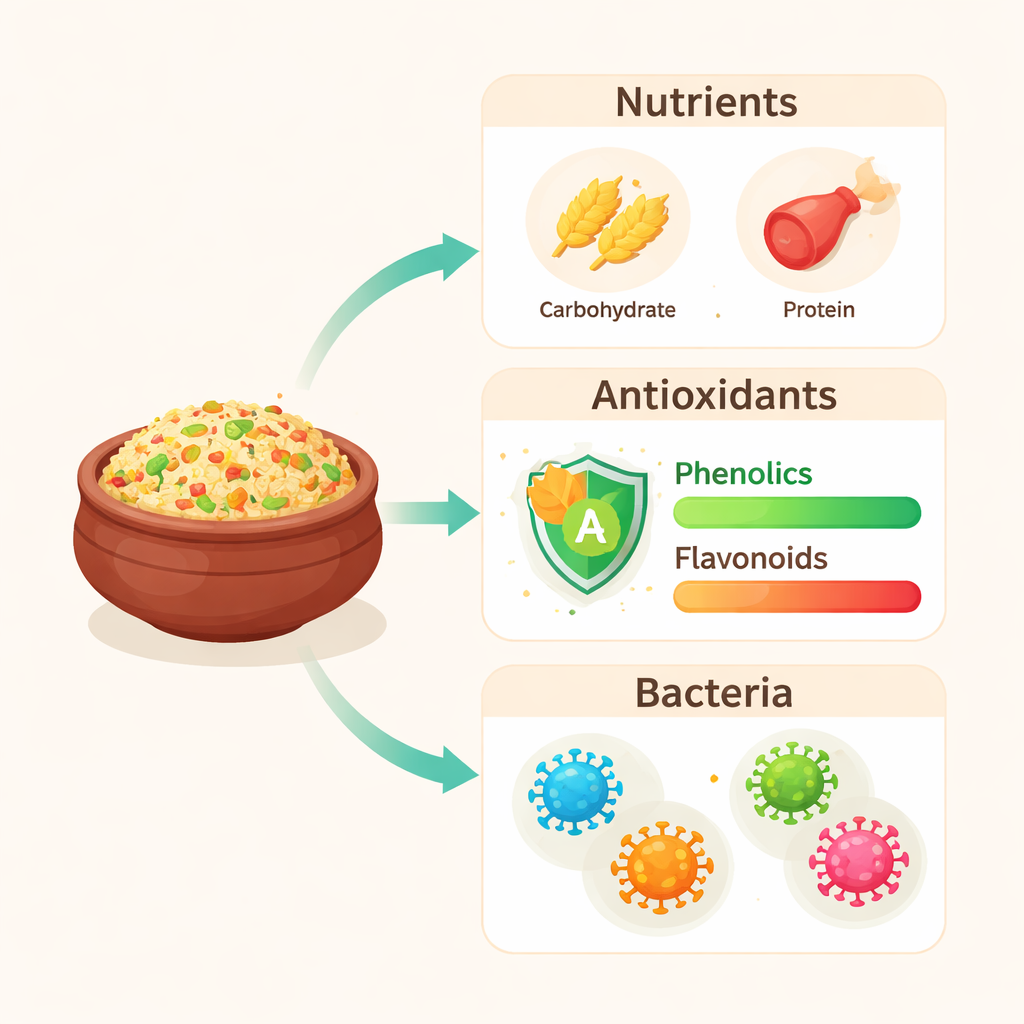
Fighting Germs in the Lab
The team also asked whether Pakhoi could slow down harmful microbes that cause common food-borne illnesses. Using standard plate tests, they exposed four disease-causing bacteria—Escherichia coli, Salmonella typhi, Shigella sonnei, and Vibrio cholerae—to Pakhoi. Around the spots where Pakhoi was placed, clear zones formed where the bacteria could not grow, showing measurable antimicrobial action. These effects were stronger than those produced by similar amounts of plain alcohol alone, suggesting that the drink’s complex mix of organic acids and plant compounds works together to discourage microbial growth, rather than any single ingredient acting on its own.
From Ancestral Brew to Functional Beverage
For non-specialists, the takeaway is straightforward: Pakhoi is more than just a festive village drink. It is nutritionally dense, packed with plant-based chemicals, and shows solid antioxidant and germ-slowing activity in the lab—features often used to justify calling a product a “functional” beverage. While this study does not prove direct health benefits in people, it provides a scientific foundation for the Jaunsari community’s long-standing beliefs and points to traditional fermented drinks as promising candidates for future, healthier beverage options. Further research could help refine how Pakhoi is made and better understand how its rich chemistry might support human health.
Citation: Tomar, S., Pant, K., Anand, J. et al. Nutritional and phytochemical properties of Pakhoi a traditional fermented beverage from Uttarakhand, India. Sci Rep 16, 6228 (2026). https://doi.org/10.1038/s41598-026-37533-8
Keywords: fermented beverages, traditional foods, antioxidants, functional drinks, Pakhoi