Clear Sky Science · en
A cross-sectional study on associated factors of Chinese herbal medicine use in middle-aged and older adults with dyslipidaemia
Why this matters for everyday health
High cholesterol and unhealthy blood fats are now common problems worldwide, especially as people get older. Many Chinese adults turn not only to pills prescribed in hospitals but also to traditional herbal remedies that have been used for centuries. This study looks at who is using Chinese herbal medicine to manage unhealthy blood fats, why they choose it, and what this tells us about health care, aging, and economic pressures in modern China. 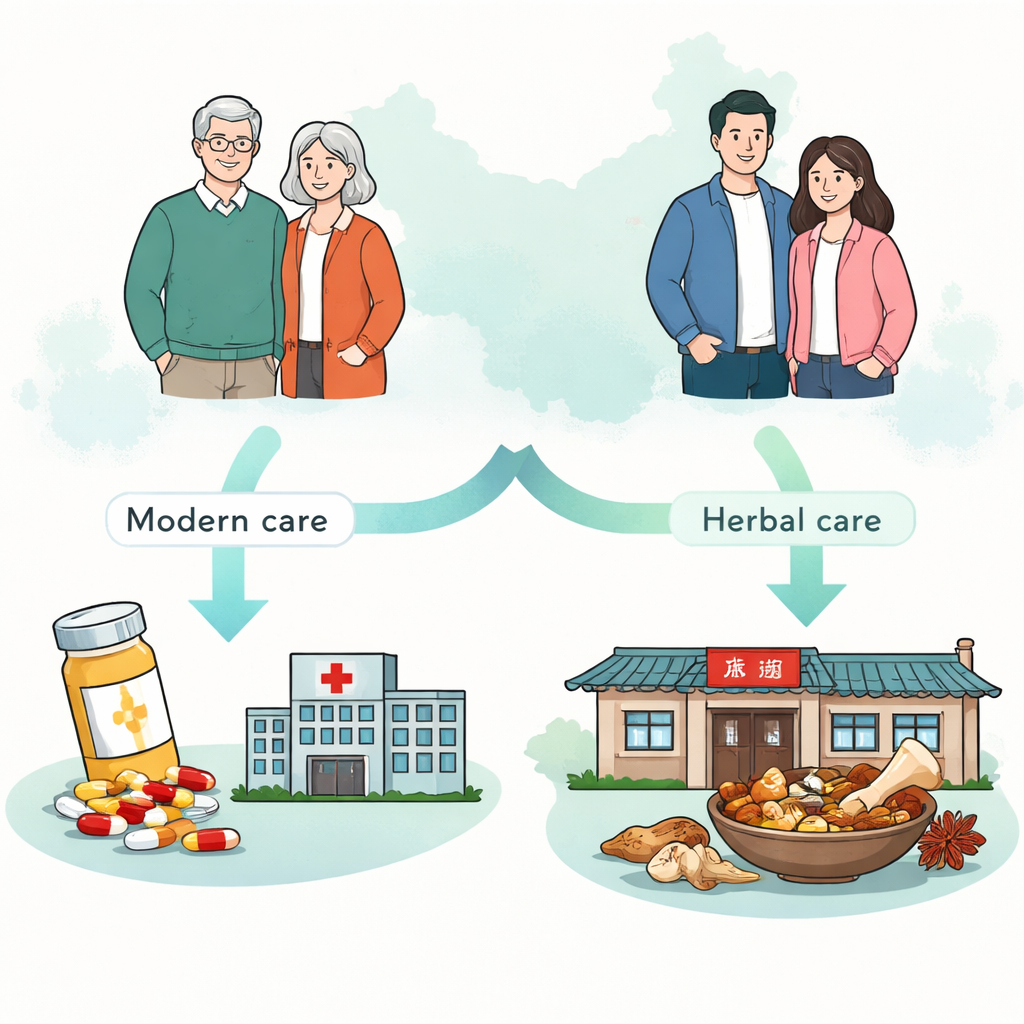
Who was studied and what the researchers asked
The researchers used data from a large national survey in China called the China Health and Retirement Longitudinal Study, which regularly interviews people aged 45 and over. From nearly twenty thousand participants surveyed in 2018, they focused on 4,341 middle-aged and older adults who said a doctor had told them they had abnormal blood fats, a condition linked to heart disease and stroke. Each person was asked whether they were currently taking traditional Chinese medicine specifically to treat their blood fat problem or its complications. Those who answered yes were counted as users of Chinese herbal medicine, and those who answered no were counted as nonusers.
How common herbal treatment was
The study found that 14.08%—about one in seven—of these adults with unhealthy blood fats reported using Chinese herbal medicine for this problem. Users and nonusers looked similar in some ways: they were about evenly split between men and women, and most lived in villages rather than cities. But there were also clear differences. People using herbal remedies were more likely to be older within this group, to have marital status other than married, to lack a regular wage or bonus income, and to receive financial support from their children, hinting at economic vulnerability and stronger dependence on family support.
Health, hospitals, and self‑care choices
Beyond money, health and care-seeking patterns played a major role. Herbal users were more likely to describe their overall health as only fair or poor, to have multiple chronic conditions such as diabetes, stroke, or kidney disease, and to report difficulties with everyday tasks like dressing or shopping. They were also more likely to feel depressed and dissatisfied with their health. When it came to health services, herbal users stood out in two ways: they more often visited hospitals dedicated to traditional Chinese medicine, and they were more likely to practice self-treatment—using medicines they had bought or stored themselves. Visiting a traditional medicine hospital and having had a stroke together greatly increased the odds of using herbs, suggesting that people facing serious, long-lasting problems may be especially drawn to these treatments. 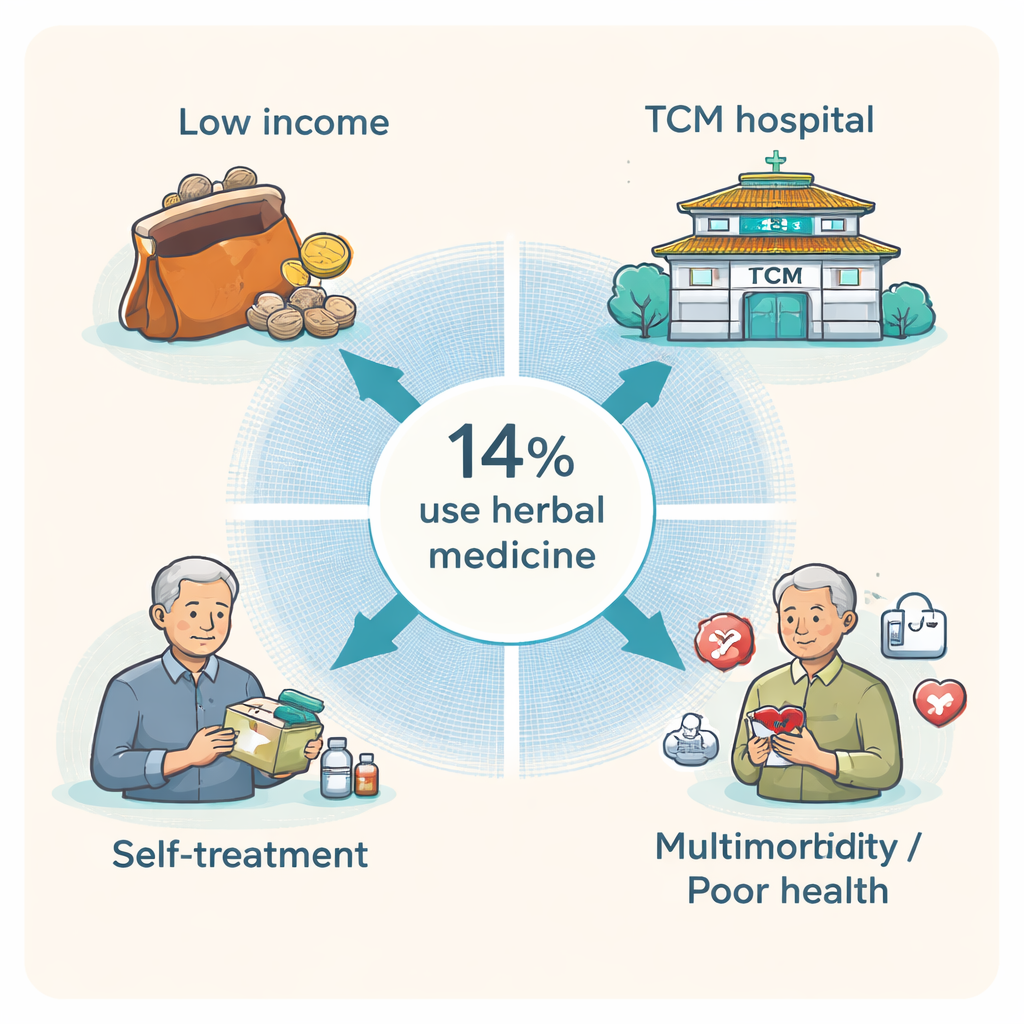
What the numbers reveal about patterns of use
Using statistical models that account for many overlapping influences, the authors identified several factors strongly linked to herbal use. Having no reported income increased the likelihood of using herbs compared with having income. Visiting a traditional Chinese medicine hospital made herbal use almost three times as likely, and engaging in self-treatment also raised the odds. People who rated their health as fair or poor were substantially more likely to turn to herbs than those who felt their health was good. A higher score on a multimorbidity index—which reflects having several different chronic diseases—was also tied to greater herbal use. Together, these patterns suggest that Chinese herbal medicine is especially attractive to people who feel sicker, have more medical problems, and may be under financial strain.
What this means for patients and care
For a layperson, the main message is that in China, roughly one out of every seven middle-aged or older adults with unhealthy blood fats uses Chinese herbal medicine as part of their treatment. These are often people who feel unwell, juggle several chronic diseases, and may have limited income, and they tend to seek care both in traditional medicine hospitals and on their own at home. The study does not test whether herbs actually improve blood fats or prevent heart disease, and it cannot prove that low income or poor health cause people to choose herbs. But it does show that personal finances, overall health, and trust in traditional care shape how people manage a major risk factor for heart disease. The authors argue that doctors and policymakers should take these patient-specific factors into account when designing care, so that modern drugs and long-standing herbal practices can, where appropriate, be combined in a safer, more coordinated way for older adults.
Citation: Chen, Y., Lin, L., Li, J. et al. A cross-sectional study on associated factors of Chinese herbal medicine use in middle-aged and older adults with dyslipidaemia. Sci Rep 16, 7660 (2026). https://doi.org/10.1038/s41598-026-37532-9
Keywords: Chinese herbal medicine, dyslipidaemia, older adults, traditional medicine use, cardiovascular risk