Clear Sky Science · en
Acute beetroot juice supplementation enhances short duration high-intensity exercise performance and influences muscle oxygenation in football players
Beetroot Juice and the Quest for a Performance Edge
From the aisles of grocery stores to locker rooms of elite teams, beetroot juice has gained a reputation as a natural “legal booster” for athletes. But does a single shot of this deep-red drink actually help players sprint harder or recover faster, or is it just another wellness fad? This study focused on teenage male football players and rigorously tested whether one dose of concentrated beetroot juice could improve short, all-out cycling efforts that mimic the explosive power demands of modern football.
Why Nitrate-Rich Foods Matter for Muscles
Beetroot juice is rich in nitrate, a compound our bodies can convert into nitric oxide, a gas that helps blood vessels widen and improves blood flow. Better blood flow can deliver more oxygen and nutrients to working muscles and may also help the muscles use energy more efficiently. Earlier research suggested that nitrate-rich foods can reduce the effort needed for steady exercise and might especially benefit fast-twitch muscle fibers—the same fibers athletes rely on for sprints, jumps, and quick changes of direction. Because football is full of short bursts of high-intensity work, the authors set out to see whether beetroot juice could give trained players a measurable, real-world advantage.
How the Players Were Tested
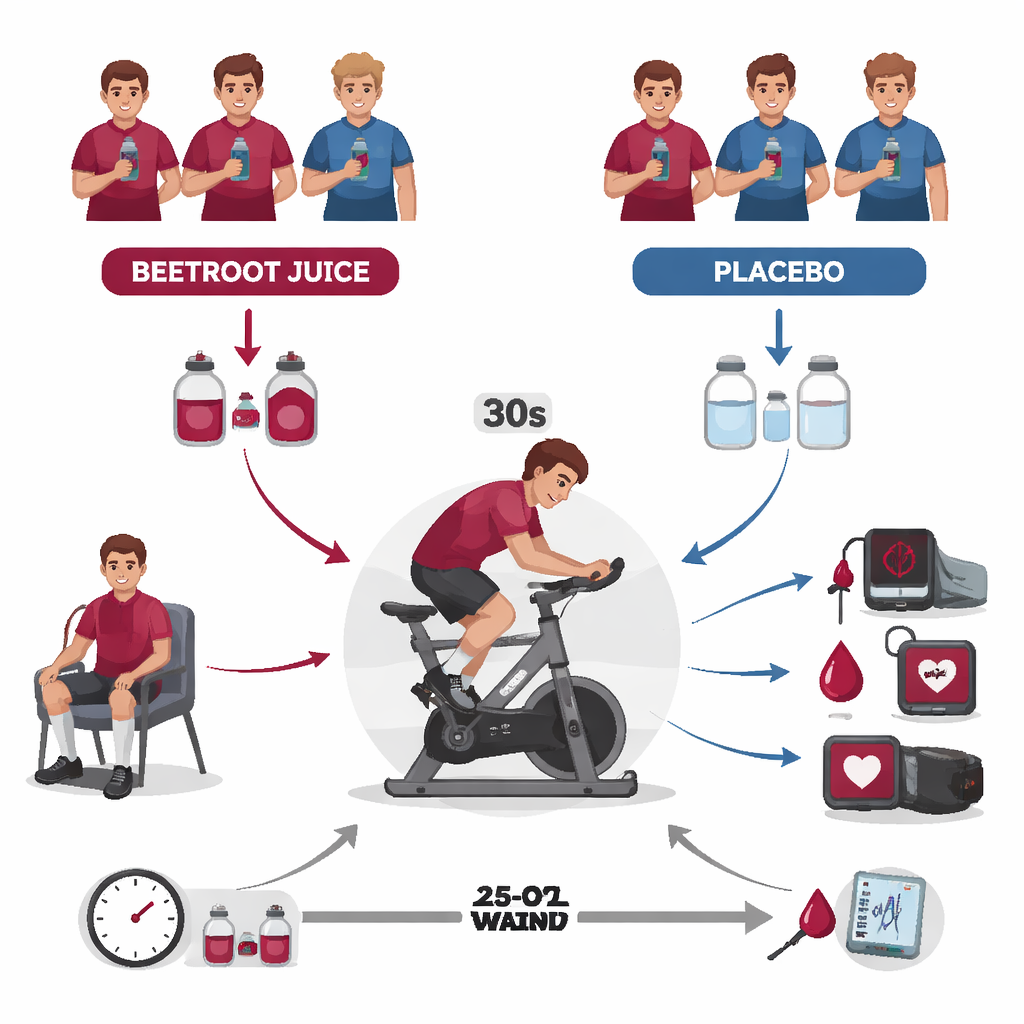
Sixteen highly trained under-19 male footballers took part in a carefully controlled experiment. On two separate days, each player drank either 140 milliliters of concentrated beetroot juice or a similar-looking blackcurrant drink that contained almost no nitrate. Neither the players nor the researchers knew which drink was which on test days. After the drink, the players rested for two and a half hours—the time needed for nitrate levels in the blood to rise—before performing a 30-second Wingate test. This brutal, all-out cycling test is widely used to measure anaerobic power, the ability to produce a lot of energy quickly without relying on oxygen. During the test and recovery, the researchers measured pedaling power, heart rate, blood pressure, blood lactate (a marker of intense effort), and muscle oxygen levels in the thigh using a small light-based sensor.
Stronger Sprints Without Extra Strain
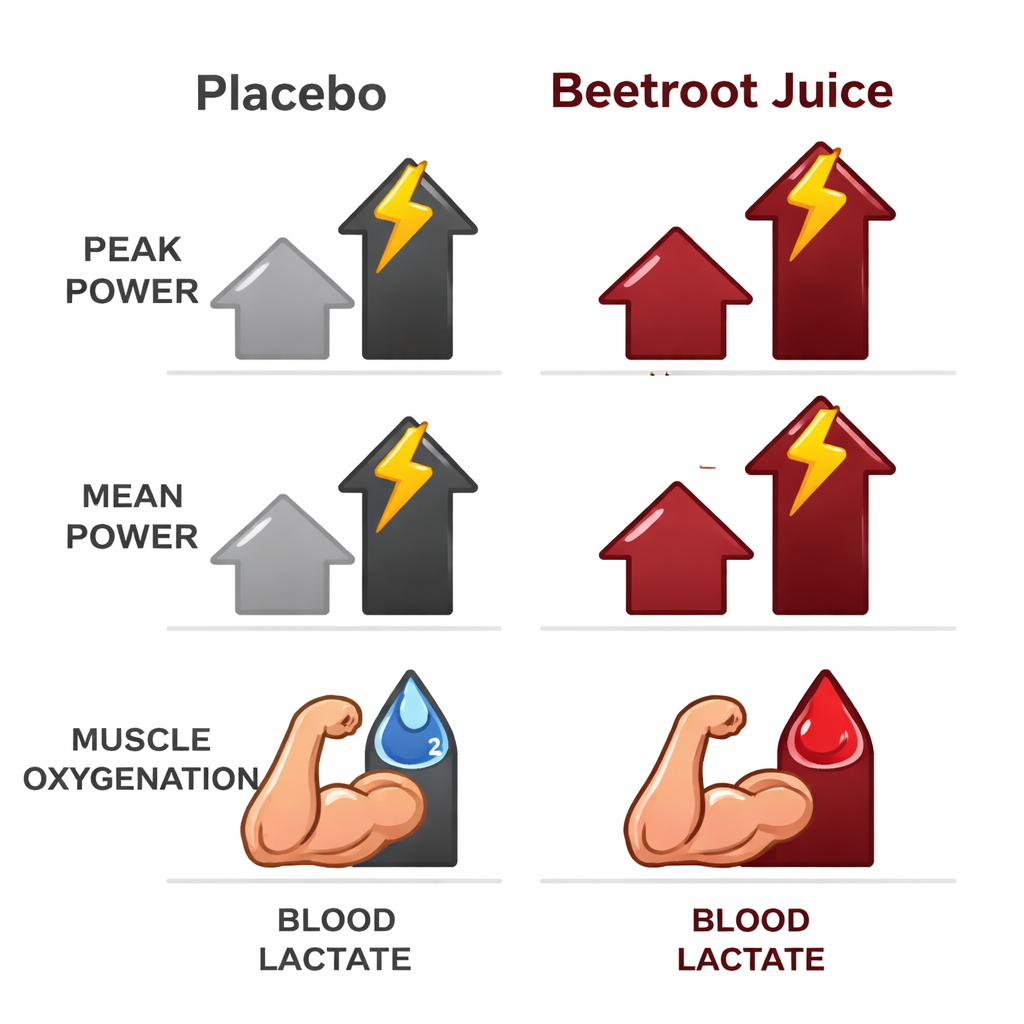
When the players drank beetroot juice, their performance improved noticeably. On average, peak power—the highest power reached in the sprint—was about 11 percent higher, and mean power over the full 30 seconds was about 7 percent higher compared with the placebo drink. The time it took to reach peak power was slightly shorter as well, meaning the players hit top gear faster. Interestingly, these gains came without changes in heart rate, blood pressure, or how hard the effort felt to the athletes. In other words, the players produced more power, but their bodies did not show signs of extra cardiovascular strain. Blood lactate levels, however, were higher after beetroot juice, suggesting that the muscles were working harder and tapping more into fast, glycolytic energy systems.
What Happened Inside the Muscles
The muscle oxygen sensor told a more nuanced story. During the 30-second, all-out effort, muscle oxygen levels in the thigh dropped sharply in both conditions and were not meaningfully different between beetroot juice and placebo. This likely reflects the fact that, at such high intensity, the contracting muscles squeeze their own blood vessels, temporarily limiting blood flow no matter how dilated the vessels might be. The differences emerged after the effort stopped. In the minutes following the test, players who had taken beetroot juice showed higher muscle oxygen saturation and lower levels of deoxygenated blood in the muscle. This pattern suggests that beetroot juice may help restore oxygen levels in muscle more quickly, potentially supporting faster recovery processes such as refilling energy stores and clearing fatigue-related by-products.
What This Means for Players and Coaches
Put simply, a single shot of concentrated beetroot juice taken about two and a half hours before intense activity allowed these trained football players to produce more power in a short, all-out effort, and their thigh muscles re-oxygenated better during recovery. The drink did not act by making the heart beat faster or by raising blood pressure; instead, it appears to work locally in the muscles, sharpening their ability to deliver and use energy during explosive efforts and to recover immediately afterward. For athletes in sports that demand repeated sprints, beetroot juice may offer a simple, food-based strategy to gain a small but meaningful performance edge—though it should be seen as a complement, not a substitute, for sound training, nutrition, and recovery habits.
Citation: Eroglu, M., Kose, B., Kolayis, İ.E. et al. Acute beetroot juice supplementation enhances short duration high-intensity exercise performance and influences muscle oxygenation in football players. Sci Rep 16, 7581 (2026). https://doi.org/10.1038/s41598-026-37514-x
Keywords: beetroot juice, football performance, high-intensity exercise, muscle oxygenation, dietary nitrate