Clear Sky Science · en
Integrating grafting and vermicompost for the sustainable management of drought in eggplant cultivation
Why thirsty crops matter to our dinner plates
As heatwaves and dry spells become more common, farmers struggle to grow enough food with less water. Eggplant, a staple in many cuisines, is especially sensitive to drought, leading to smaller harvests and poorer quality fruits. This study explores a practical, eco‑friendly way to help eggplants cope with water shortage by pairing two tools growers already use: grafting onto hardy rootstocks and enriching soil with vermicompost, a nutrient‑rich material produced by earthworms.
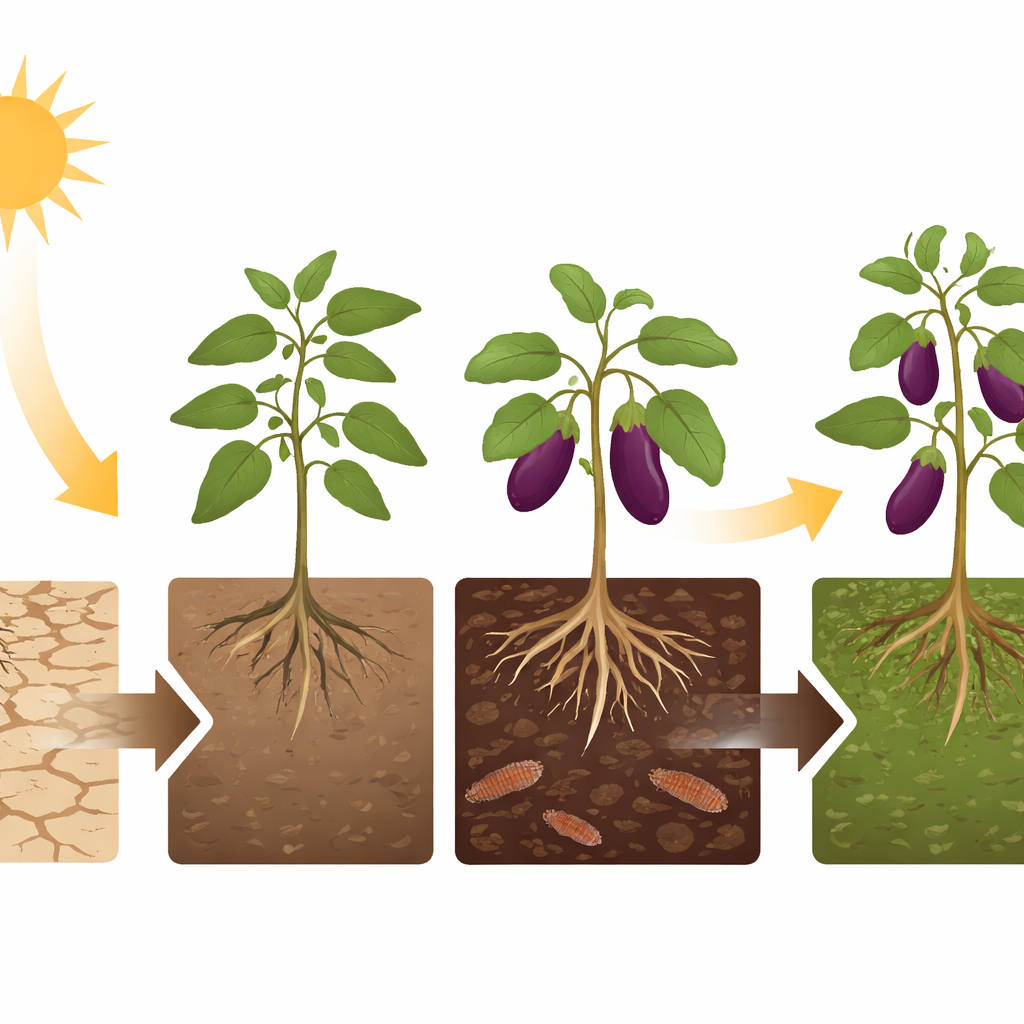
Two nature‑based tools working together
The researchers focused on two strategies. First, they used grafting, in which the above‑ground part of a cultivated eggplant is joined to the roots of a tougher relative with a stronger, deeper root system. Second, they added vermicompost to the soil at low doses. Vermicompost improves soil structure, helps it hold water, and brings in beneficial microorganisms and natural plant‑growth substances. Previous work had shown that each method on its own can soften the blow of drought, but no one had thoroughly tested what happens when they are combined in real‑world growing conditions.
Testing ideas from pots to open fields
The team ran experiments first in a greenhouse and then in open fields in Türkiye. In pots, they grew both grafted and non‑grafted eggplants with four levels of vermicompost and three irrigation levels, from full watering down to severe water shortage. This allowed them to find the most effective vermicompost rate, which turned out to be 2% of the potting soil by weight. They then took this 2% rate to the field, where eggplants were exposed to normal watering, mild drought, or severe drought, with or without vermicompost and with or without grafting. Across both settings, they measured yield, fruit size, and several indicators of nutritional quality, along with detailed soil properties such as organic matter, water‑holding capacity, and porosity.
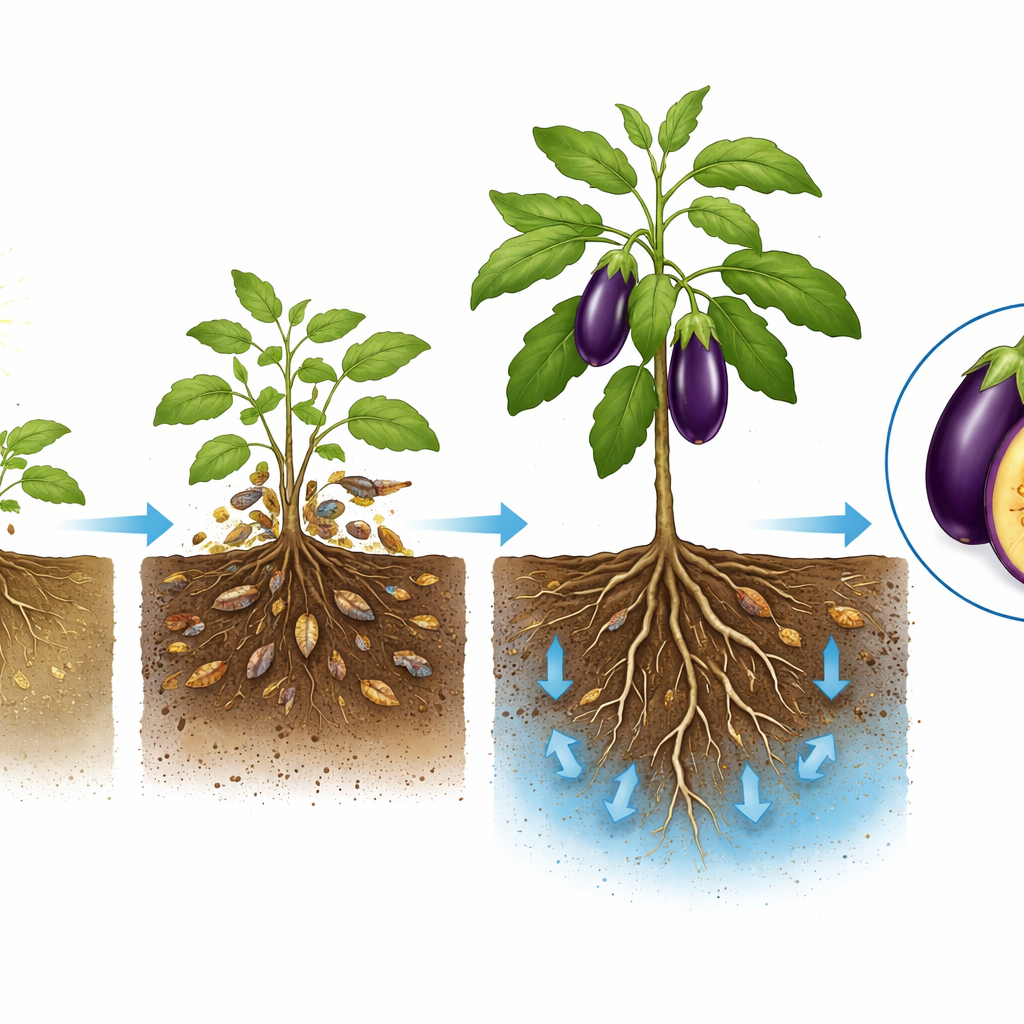
Bigger harvests and richer fruits under drought
Water stress clearly reduced eggplant yield, especially under the most severe drought. Yet the combination of grafted plants grown in vermicompost‑amended soil consistently cushioned these losses. In the greenhouse, grafted eggplants with 2% vermicompost produced much higher yields than non‑grafted plants without vermicompost under the same dry conditions. In the field, this same combination more than doubled yield under severe drought compared with untreated plants. Fruit chemistry also shifted in a favorable direction: drought naturally pushed plants to make more protective compounds such as phenolics and flavonoids, which are linked to antioxidant activity. Vermicompost on grafted plants amplified these increases, leading to fruits with higher antioxidant capacity and richer pigment, traits often associated with improved nutritional quality.
Healthier soils that help plants sip water wisely
Just as important as the plants themselves was the soil they grew in. Adding vermicompost increased soil organic matter, loosened compact structure, and boosted the soil’s ability to store and move water. Bulk density went down, while measures of water retention, pore space, and aggregate stability went up in both pots and field plots. These changes created a friendlier root zone where the robust root systems of grafted plants could explore more soil and tap into moisture pockets even under limited irrigation. The improved soil conditions also supported microbial activity and likely enhanced nutrient release, further helping plants adjust to drought without accumulating excessive salts or overly concentrated sugars in the fruits.
What this means for future farms
For growers facing hotter, drier seasons, the study’s message is straightforward: combining grafted eggplant seedlings with modest doses of vermicompost can substantially improve yield, fruit quality, and soil health when water is scarce. Instead of relying solely on breeding or high‑tech solutions, this approach leverages natural processes in roots and soil to make crops more resilient. However, the authors note that costs of grafted plants and vermicompost, variation in vermicompost quality, and the need for large amounts at field scale are real challenges. They call for multi‑year trials, economic assessments, and farmer‑centered studies to see whether this strategy can be adopted widely. If those hurdles are addressed, integrating grafting with vermicompost could become a cornerstone of sustainable eggplant production in drought‑prone regions.
Citation: Kıran, S., Demir, Z., Boyacı, H.F. et al. Integrating grafting and vermicompost for the sustainable management of drought in eggplant cultivation. Sci Rep 16, 8911 (2026). https://doi.org/10.1038/s41598-026-37509-8
Keywords: drought tolerant crops, eggplant production, vermicompost, grafted vegetables, soil health