Clear Sky Science · en
Tibetan herbal medicine improved the health status of calves by regulating the antioxidant ability, inflammatory reaction and microbiota of female Yaks
Herbal help for high‑mountain herds
High on the windswept grasslands of the Qinghai–Tibet Plateau, yaks are central to food, income, and culture. Yet many yak calves are born small and frail because their mothers struggle through long, bitter winters with poor forage just as pregnancy demands the most energy. This study asks a simple but powerful question: can traditional Tibetan and Chinese herbal blends, mixed into feed, help mother yaks stay healthier and give birth to stronger calves by supporting their gut microbes and natural defenses? 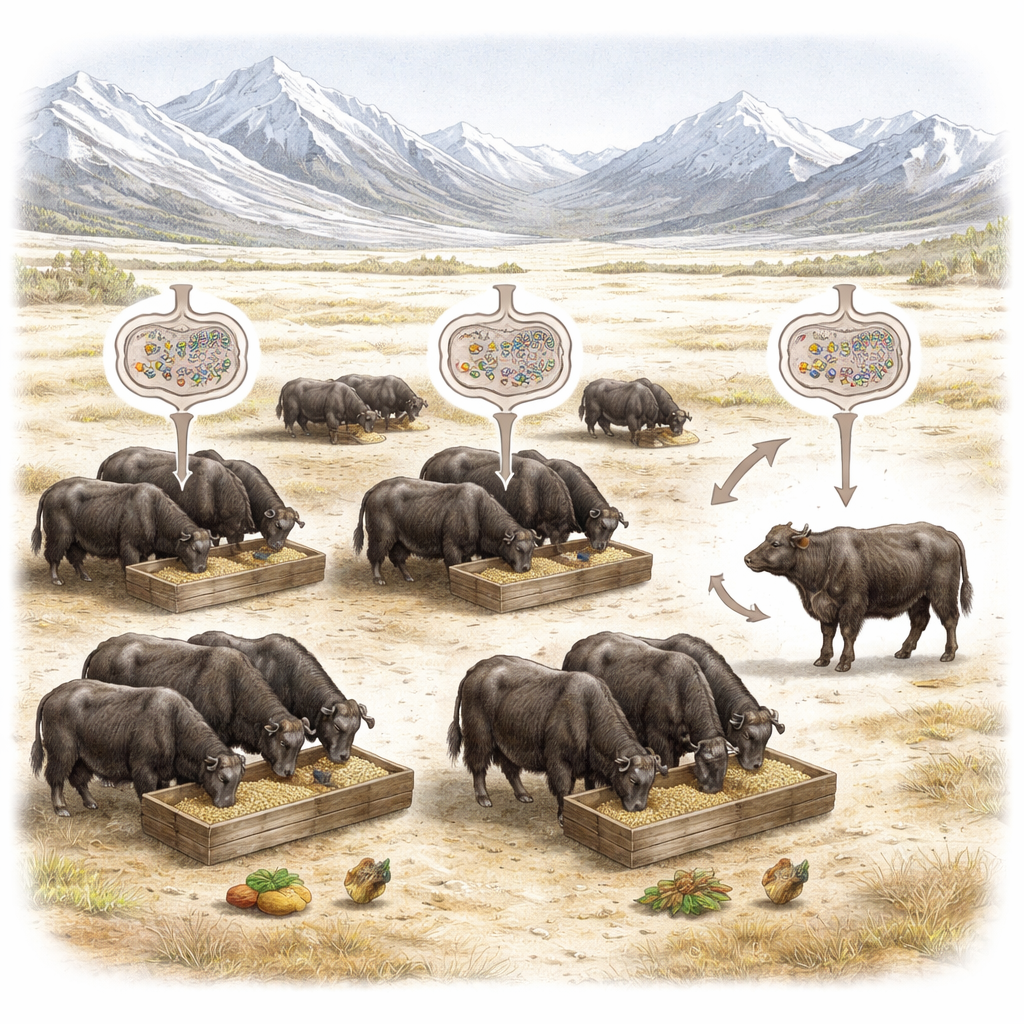
The challenge of winter pregnancy
Female yaks spend most of their pregnancy during the cold season, when grass is sparse, buried under snow, and low in nutrients. Late in pregnancy, the growing fetus sharply increases the mother’s need for energy and protein. When that demand is not met, calves are often born underweight and with weaker immune systems, and mothers can suffer from inflammation and oxidative stress—chemical damage linked to poor health. Because these animals usually graze freely with little extra feeding, herders need low‑cost, natural strategies that work with traditional management rather than replacing it.
A blend of roots, leaves, and local know‑how
The researchers worked with 32 healthy, late‑pregnant yaks, dividing them into four groups. Three groups received normal feed plus one of three herbal mixes, while a fourth group got only the usual diet. The herbal blends combined well‑known ingredients from Tibetan and Chinese medicine—such as Astragalus, Codonopsis, Lycium, Angelica, White Peony Root, and others—chosen for their traditional roles in “nourishing blood,” easing stress, and supporting pregnancy, as well as modern evidence for anti‑inflammatory and antioxidant effects. The herbs were dried, ground, and added to about 5% of the daily ration for the last two months before calving.
Watching microbes and measuring newborns
To see what the herbs were doing inside the animals, the team collected fresh fecal samples about 45 and 30 days before calving and used high‑throughput DNA sequencing to profile the gut microbiota—the trillions of bacteria living in the intestine. They also measured birth weight and blood markers of inflammation and antioxidant capacity in the newborn calves. Over time, yaks receiving herbal supplements developed a more diverse and evenly balanced gut community compared with unsupplemented controls. Beneficial groups of bacteria increased, especially those known to produce short‑chain fatty acids, energy‑rich compounds that feed the gut lining and help calm inflammation. At the same time, some bacterial groups associated with poorer gut health or higher inflammation were less common in treated animals. 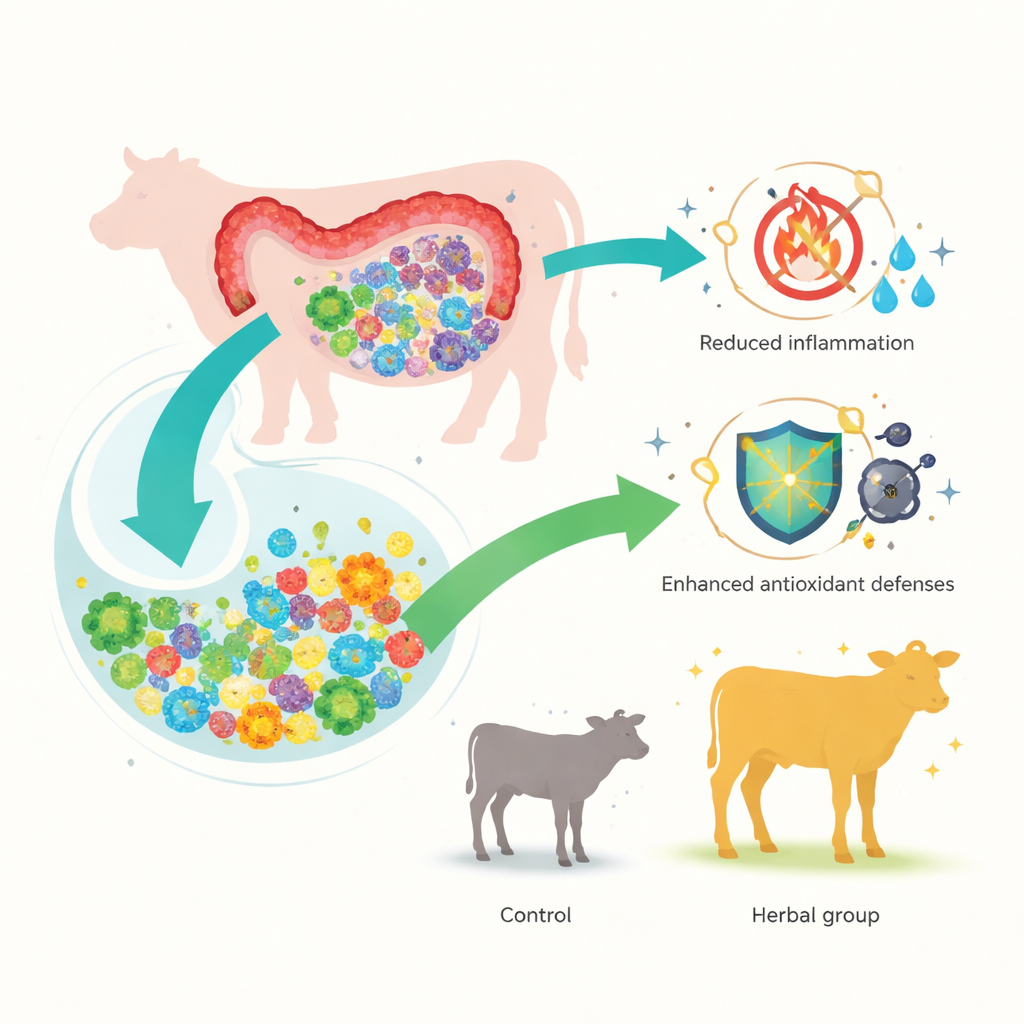
Stronger calves and calmer chemistry
The most striking changes showed up in the calves. Newborns from treated mothers were significantly heavier at birth—up to about 45% heavier in the group receiving the second herbal formula—suggesting that better maternal nutrition and metabolism translated directly into improved fetal growth. Blood tests in these calves revealed lower levels of pro‑inflammatory signals, such as TNF‑α and IL‑6, and higher activity of antioxidant systems that protect cells from damage. Together, these changes point to a quieter, less stressed immune state and a stronger ability to cope with the harsh plateau environment right from the start of life.
What this means for herders and animals
In plain terms, carefully designed Tibetan and Chinese herbal mixtures helped pregnant yaks “make better use of what little they have.” By gently reshaping the gut microbiota, the herbs supported digestion, reduced silent inflammation, and boosted natural antioxidant defenses. The result was healthier mothers and sturdier calves without relying on synthetic drugs or intensive feeding systems. While larger and longer studies are still needed, especially to measure the gut’s beneficial metabolites directly, this work suggests that traditional herbal knowledge, guided by modern microbiome science, could become a practical, low‑residue tool for improving yak survival and productivity on the world’s highest pasturelands.
Citation: Cidan, Y., Cisang, Z., Lu, S. et al. Tibetan herbal medicine improved the health status of calves by regulating the antioxidant ability, inflammatory reaction and microbiota of female Yaks. Sci Rep 16, 6685 (2026). https://doi.org/10.1038/s41598-026-37500-3
Keywords: yak health, Tibetan herbal medicine, gut microbiome, high-altitude livestock, calf growth