Clear Sky Science · en
Comprehensive 4E (energy, exergy, economic, and environmental) assessment of a repowered natural gas-fired combined power plant
Why this power plant matters for everyday life
Electricity keeps our lights on, our phones charged, and our hospitals running. But most of that power still comes from burning fossil fuels, which use energy imperfectly and release heat-trapping carbon dioxide. This study looks at a new way to redesign natural-gas power plants so they squeeze more useful electricity out of the same fuel while cutting both emissions and water use. For countries that rely heavily on natural gas, such as Algeria, improvements like these can have nationwide impacts on energy bills, fuel security, and climate goals.
Turning fuel into power more wisely
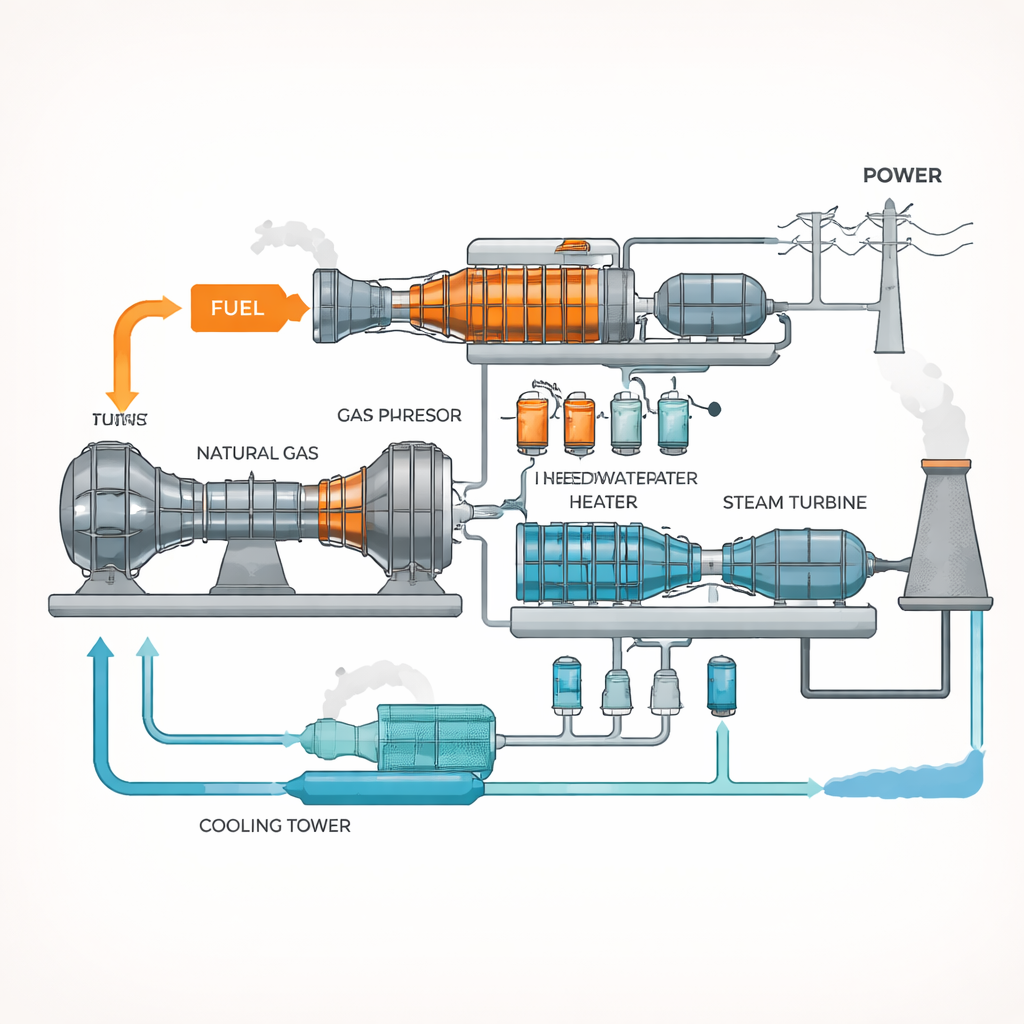
The power plants studied here are combined-cycle plants, which already use fuel more efficiently than many coal or simple gas plants. First, natural gas is burned to drive a gas turbine that generates electricity. Instead of wasting the hot exhaust, that heat is captured to produce steam, which spins a second turbine to generate additional power. The researchers propose an updated design that builds on this concept by adding extra heating stages and careful recycling of heat within the steam system. These tweaks do not change what comes out of your wall socket, but they change how much fuel is needed to produce each unit of electricity.
Comparing new and existing plants
To judge whether the new layout is truly better, the team compares it with two real working plants in Algeria: a conventional steam power plant and an existing combined-cycle plant called Hadjret Enouss. All three are analyzed under the same conditions and the same electrical output, so the differences come from design, not from size or weather. The new plant reaches an energy efficiency of about 64%, meaning almost two-thirds of the fuel’s energy becomes electricity. That is far higher than the steam-only plant (about 44%) and noticeably better than the current combined-cycle plant (about 59%). A more advanced measure called “exergy” — which considers not just how much energy is used but how well it is used — also favors the new design, showing that less of the fuel’s potential is wasted as useless heat.
Less fuel, less carbon, and less water
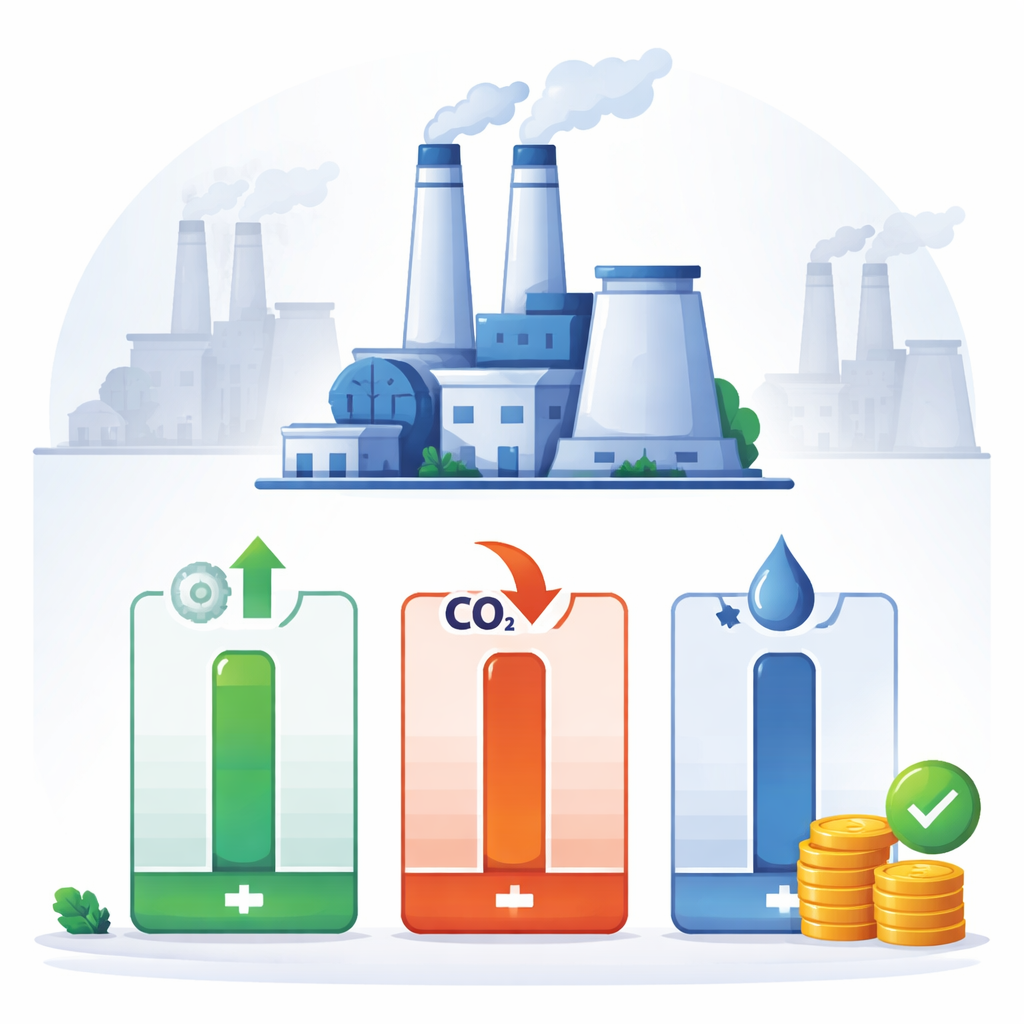
These performance gains translate directly into environmental benefits. Because the new plant converts fuel into power more efficiently, it needs less natural gas to deliver the same electricity. That lowers carbon dioxide emissions to about 40.8 kilograms per second, slightly below the current combined-cycle plant and far below the older steam plant. Over a 35‑year operating life, the redesigned plant could save more than 150 million kilograms of natural gas and avoid roughly 24 million kilograms of carbon dioxide each year compared with a typical existing plant. The design also eases pressure on water resources: its cooling system uses the least water of the three configurations, an important advantage in regions where both climate change and population growth strain freshwater supplies.
Balancing profit and sustainability
Any new power plant layout must make financial sense, not just technical sense. The researchers therefore carry out a full economic review, including construction costs, operating expenses, fuel costs, and revenues from selling electricity over three decades. The conventional combined-cycle plant comes out slightly ahead in pure profit, mainly because its simpler design is cheaper to build and run. The new plant has a somewhat higher upfront cost due to the added heating equipment, so its overall lifetime profit is marginally lower, though still strongly positive. In other words, investors would still make money, just not quite as much as with the simpler layout.
What it means for the future of power
For non-specialists, the key message is that relatively modest design changes can make natural-gas power plants cleaner and more efficient without sacrificing reliability. The proposed plant uses less gas, emits less carbon dioxide, and draws less cooling water than current designs, while remaining economically attractive. Although it is not a substitute for renewable energy, such improvements can make the existing power system more climate‑friendly during the long transition away from fossil fuels. If widely adopted, designs like this could help countries meet rising electricity demand while easing their environmental footprint.
Citation: Boukelia, T.E., Bouhala, A., Cheurfi, Y. et al. Comprehensive 4E (energy, exergy, economic, and environmental) assessment of a repowered natural gas-fired combined power plant. Sci Rep 16, 6505 (2026). https://doi.org/10.1038/s41598-026-37499-7
Keywords: natural gas power plants, combined cycle, energy efficiency, carbon emissions, power plant design