Clear Sky Science · en
Artificial intelligence predicts healthcare workers’ antibiotic use intentions from psychological and behavioral measures across multiple theories
Why antibiotic choices matter to everyone
Antibiotics have saved countless lives, but using them when they are not really needed helps breed drug‑resistant bacteria that can make once‑simple infections deadly. Around the world, many antibiotic prescriptions still do not follow medical guidelines. This study asks a simple but powerful question: can we use ideas from psychology, combined with artificial intelligence, to understand which healthcare workers are most likely to use antibiotics wisely—and which ones may need more support?
Looking inside the decision, not just the prescription
Past efforts to curb antibiotic overuse have mostly focused on rules, training, and monitoring. But real‑world decisions happen under pressure, with worried patients, time limits, and fear of missing a serious infection. The researchers argue that we must look beyond knowledge alone and study the beliefs, habits, and social pressures that shape a clinician’s choices. They drew on several well‑known behavior theories—covering attitudes, perceived risks, confidence, and social support—to build a detailed questionnaire for frontline doctors and nurses in four public hospitals in China.
More than a thousand clinicians completed this survey, which measured eight broad psychological areas, including how much support they feel from colleagues and leaders, how they process information, what they believe about the harms of resistance, and how confident they feel in their own skills. The team then linked these answers to each person’s stated intention to use antibiotics in line with guidelines in the future, creating a rich dataset that connects inner mindsets with planned behavior.
Teaching computers to read behavioral patterns
To make sense of this complex web of influences, the authors turned to machine‑learning methods that can detect subtle patterns in data. They trained several computer models, such as gradient boosting and ensemble methods, to sort clinicians into low, medium, or high intention to prescribe antibiotics appropriately based on their questionnaire scores. They then used statistical tools called LASSO and SHAP to highlight which psychological features mattered most for the model’s predictions, and how those features interacted with one another.
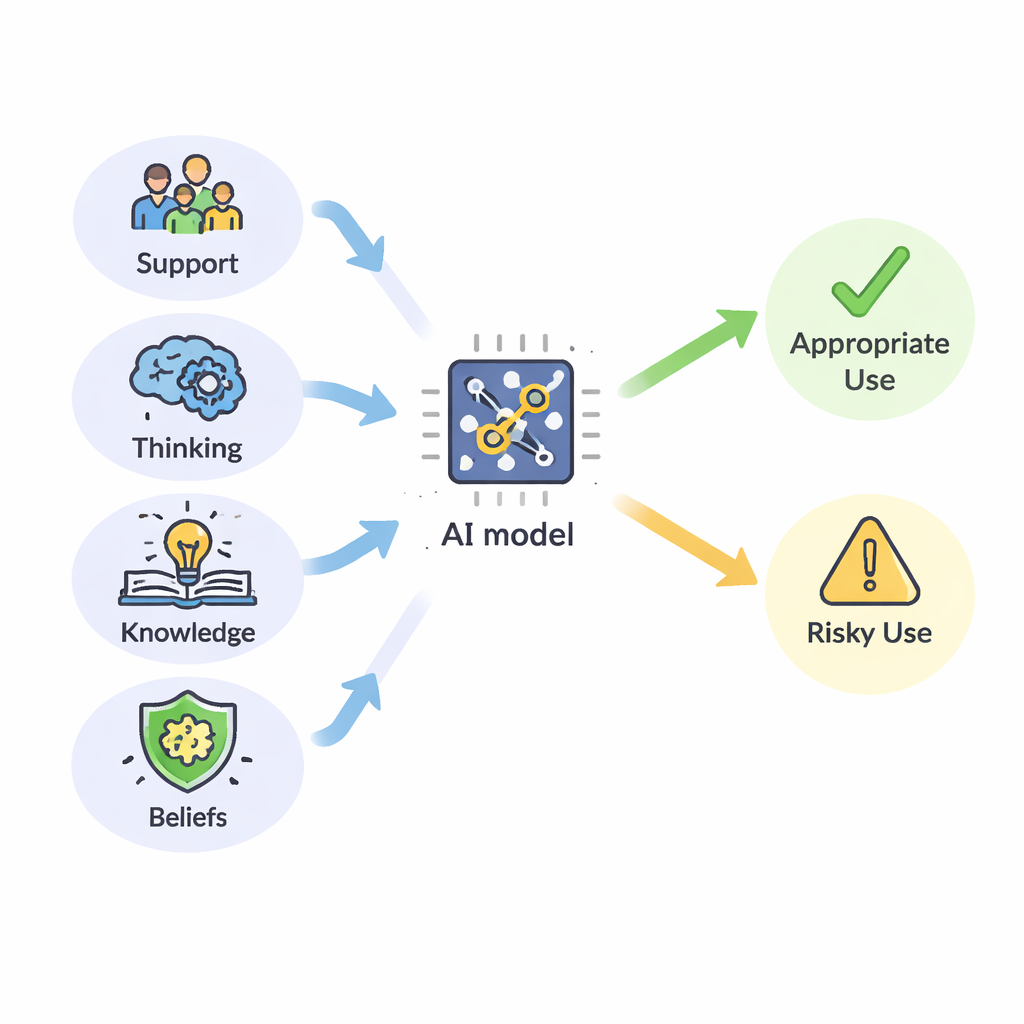
The results were striking. Models could identify clinicians with medium or high intention with very high accuracy, but had more difficulty cleanly separating out those with low intention. This suggests that weak motivation to follow guidelines may arise from more scattered or mixed reasons. Still, across models, a consistent picture emerged: social support at work, thoughtful information processing, solid knowledge and skills, and strong beliefs about the risks of resistance were the most powerful predictors of good intentions.
The hidden power of support, thinking, and belief
One of the clearest findings was the central role of social support. Clinicians who felt backed by their colleagues and institutions—through shared norms, practical help, and encouragement—were much more likely to intend to use antibiotics correctly. Careful, reflective thinking and up‑to‑date knowledge also pushed intentions in the right direction, as did a vivid sense of how dangerous drug‑resistant infections can be. Traditional ideas like personal willpower or a general sense of control over behavior played a surprisingly minor role in this tightly regulated hospital environment, where policies and team culture often set the tone.
The explainable AI tools revealed that these factors do not work in isolation. For example, social support had an especially strong effect among clinicians who also scored high on careful thinking, hinting that a supportive team may help thoughtful clinicians translate their reasoning into everyday practice. These kinds of nonlinear patterns are hard to uncover with simpler, purely linear statistics, but become visible when computers can flexibly explore the data and then “explain” which ingredients most strongly shape their predictions.
What this means for tackling antibiotic resistance
For a lay reader, the takeaway is that smarter antibiotic use is not just about telling clinicians the rules. It is about building hospital environments where people feel supported, informed, and mentally able to think clearly under pressure. This study shows that artificial intelligence, when made transparent and grounded in psychology, can flag clinicians who may be at higher risk of straying from guidelines and point to the specific reasons why. That opens the door to tailored feedback, coaching, and workplace changes that strengthen wise prescribing—helping to keep antibiotics effective for everyone who may one day depend on them.
Citation: Han, L., Xian, P., Liu, Y. et al. Artificial intelligence predicts healthcare workers’ antibiotic use intentions from psychological and behavioral measures across multiple theories. Sci Rep 16, 6486 (2026). https://doi.org/10.1038/s41598-026-37495-x
Keywords: antibiotic resistance, antibiotic prescribing, healthcare workers, behavioral factors, artificial intelligence