Clear Sky Science · en
Electrocoagulation-treated poultry wastewater sludge as a sustainable feed resource for black soldier fly larvae
Turning Dirty Water into Useful Food
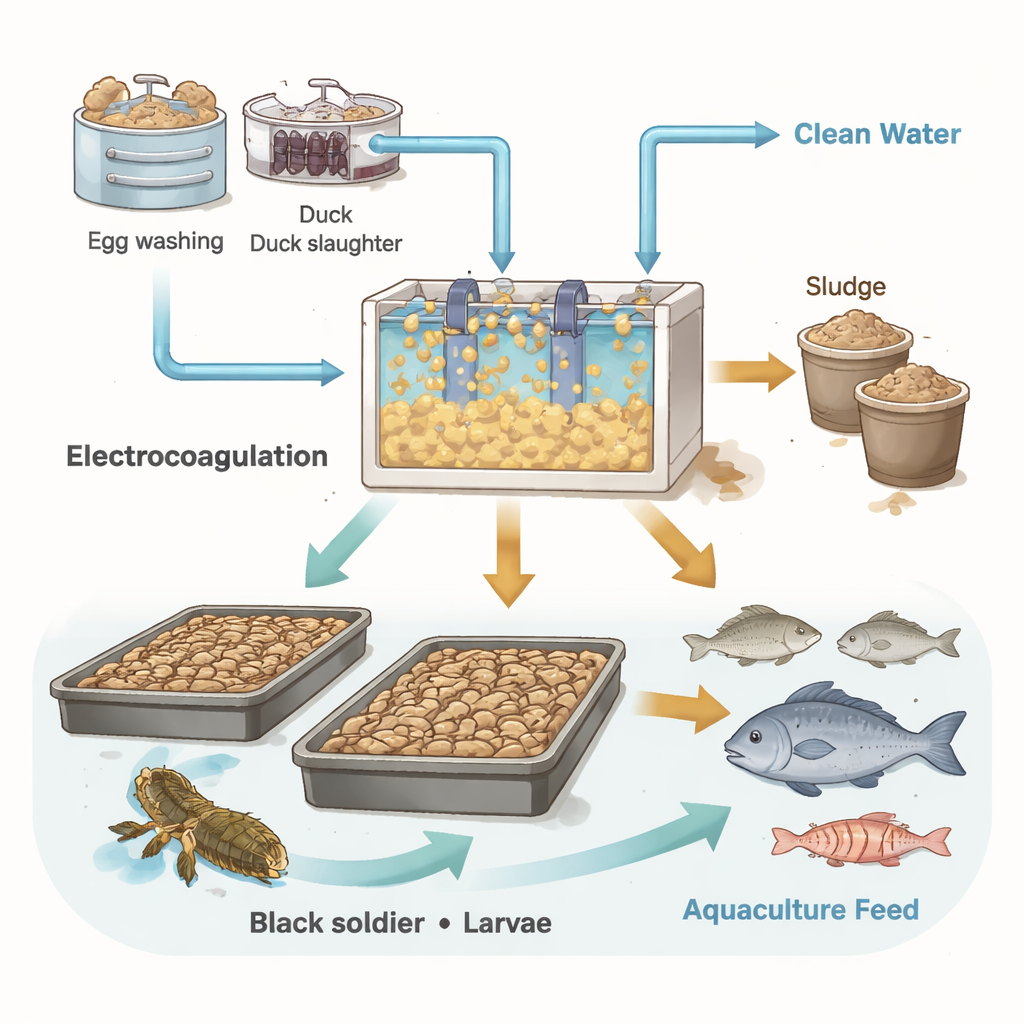
Every egg we crack and every chicken or duck we eat leaves behind a hidden trail of dirty water rich in fats, blood, and cleaning chemicals. If this wastewater is dumped untreated, it can choke rivers and threaten drinking water. This study explores an unexpected ally in cleaning up that mess: the larvae of the black soldier fly, an insect that can turn pollution into protein-rich animal feed for fish and other farmed animals.
Why Poultry Wastewater Is a Growing Problem
Industrial egg and poultry plants use huge volumes of fresh water to wash eggs, clean equipment, and process birds. For every bird slaughtered, several liters of heavily contaminated water are produced. This wastewater contains large amounts of organic matter, nutrients like nitrogen and phosphorus, and traces of disinfectants. Globally, much of it is discharged with little or no treatment, contributing to algae blooms, oxygen loss in rivers, and contamination of soil and groundwater. Finding low-cost, effective ways to treat this waste while recovering its nutrients is a major environmental challenge.
Cleaning Wastewater with Electricity and Chemistry
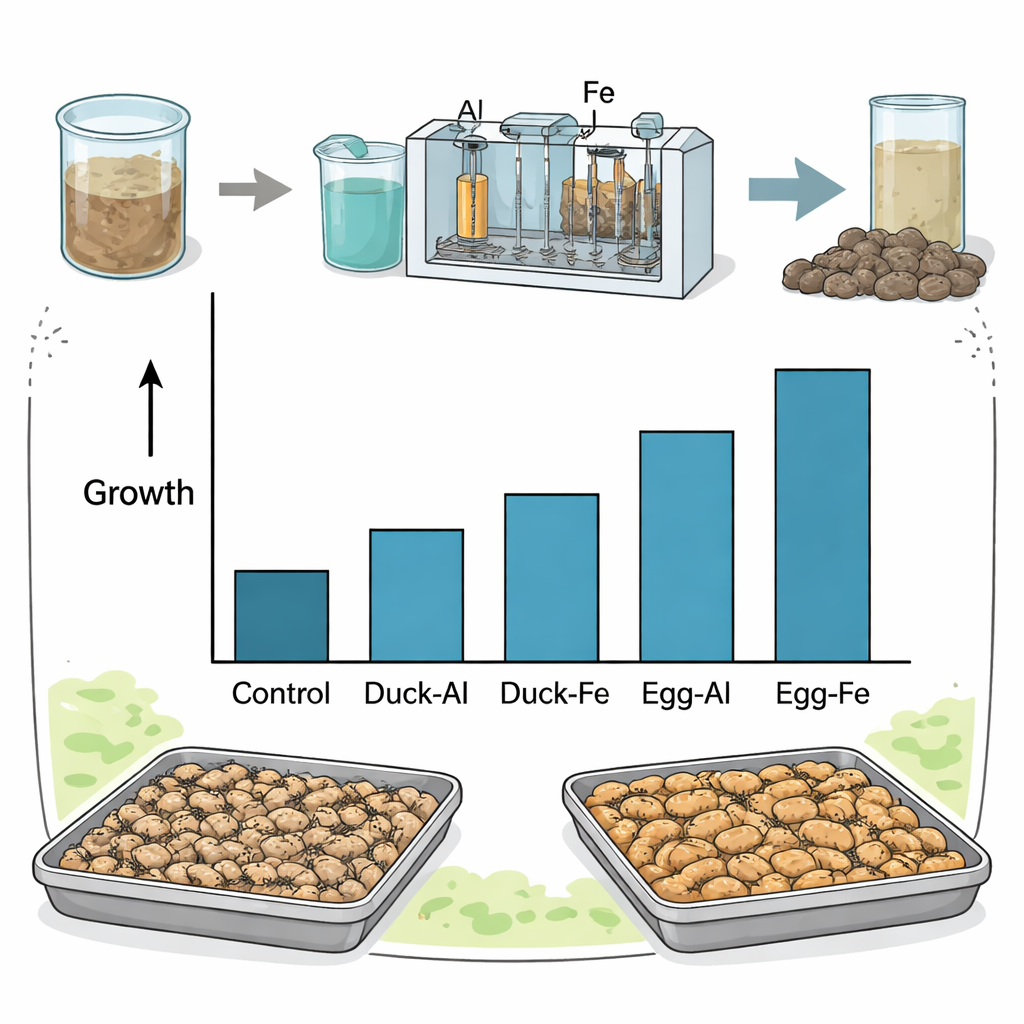
The researchers tested two treatment methods that transform dirty water into a thick sludge plus much cleaner water. In electrocoagulation, an electric current passes between metal plates (made of aluminum or iron) submerged in the wastewater. This releases metal particles that grab onto pollutants and form clumps that float or sink, taking contaminants with them. In flocculation, chemicals are added to make suspended particles stick together and settle. Both methods produce a semi-solid sludge rich in organic material and minerals. The team collected wastewater from an egg-washing facility and a duck-slaughtering plant in Indiana and treated it with either electrocoagulation (using aluminum or iron plates) or chemical flocculation, creating six different types of sludge.
Feeding Flies with Waste-Derived Sludge
Instead of viewing the sludge as a disposal problem, the scientists treated it as a resource. They mixed each sludge with a standard grain-based feed, known as the Gainesville Diet, to create moist diets for black soldier fly larvae. These larvae are already widely studied because they can convert organic scraps into a high-protein body mass suitable as feed for fish, poultry, and pets. In carefully controlled cups, groups of larvae were raised on diets moistened with each sludge type or with clean tap water as a control. Over 15 days, the researchers tracked how much the larvae grew, how much food they ate, and how many reached the non-feeding prepupal stage, when they are ready to be harvested as feed.
How Well the Larvae Grew
All of the sludge-based diets supported healthy larval development, meaning the treated wastewater by-products were safe and nutritious enough for the insects. On average, larvae grew 5–8 times their starting weight on the sludge diets, compared with roughly 11 times on the clean-water control diet. Some combinations performed particularly well. Sludge from duck-slaughtering wastewater treated with aluminum electrodes produced one of the highest weight gains (about 7.7-fold), nearly two-thirds of the growth seen with the control diet, and without a meaningful drop in the number of larvae reaching the prepupal stage. Sludge from egg-washing wastewater also supported growth, though larvae tended to be smaller, especially when the wastewater had been treated with iron plates.
Cleaning Power and Future Safeguards
Besides feeding larvae, the electrocoagulation process itself did an impressive job cleaning the water. For egg-washing wastewater, aluminum and iron treatments removed around 80 percent of organic pollutants and most of the ammonia and phosphate, while duck-slaughtering wastewater saw up to 98 percent removal of organic material and more than 99 percent removal of phosphate. This level of cleanup greatly reduces the environmental impact if the treated water is discharged or reused. The authors note that, based on existing knowledge, very little aluminum or iron from the treatment step should end up in the larvae, but they recommend future work to measure any metal residues and microbial risks directly, to ensure the insects fully meet feed safety standards.
From Waste Problem to Protein Solution
For a non-specialist, the key message is that a severe wastewater problem from the poultry industry can be turned into an asset. By first cleaning the water with electricity and simple chemistry and then feeding the resulting sludge to black soldier fly larvae, the study shows it is possible to both protect waterways and produce high-value animal feed. While larvae raised on sludge did not grow quite as large as those on clean water, their performance was strong enough to make this strategy promising. With further optimization and careful monitoring of metal and pathogen levels, this approach could help close the loop in food production—turning waste streams into a sustainable source of protein for farmed fish and other animals.
Citation: Shaika, N.A., Ingwell, L.L., Kayranli, B. et al. Electrocoagulation-treated poultry wastewater sludge as a sustainable feed resource for black soldier fly larvae. Sci Rep 16, 6675 (2026). https://doi.org/10.1038/s41598-026-37487-x
Keywords: black soldier fly larvae, poultry wastewater, electrocoagulation, sustainable aquaculture, waste-to-feed