Clear Sky Science · en
Nuclear receptor corepressor 1 is a potential diagnostic and prognostic biomarker in clear cell renal cell carcinoma
Why a kidney protein matters for cancer patients
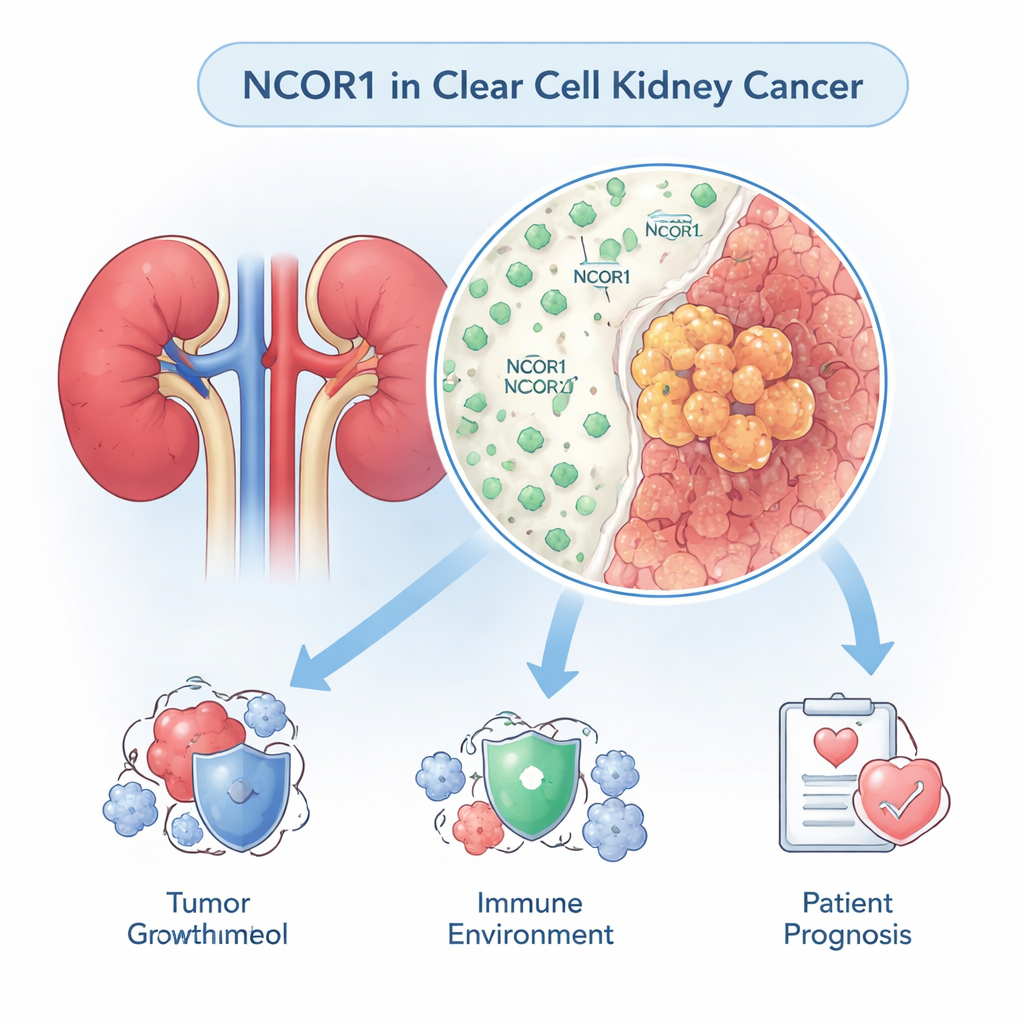
Clear cell renal cell carcinoma is the most common form of kidney cancer in adults, and many people are diagnosed only after the disease has quietly advanced. This study focuses on a protein called nuclear receptor corepressor 1 (NCOR1) and asks a practical question: could levels of this protein help doctors detect kidney cancer earlier, predict how a patient will do, and perhaps guide future treatments?
A quiet protector inside kidney cells
NCOR1 normally acts inside cells as a kind of molecular brake on gene activity. By partnering with hormone-sensitive switches in DNA, it helps keep processes like cell growth and metabolism under control. Earlier work in other cancers suggested that when NCOR1 is lost or reduced, tumors become more aggressive. Because clear cell kidney cancer is strongly driven by changes in gene control, metabolism, and the immune system, the authors suspected that NCOR1 might be an important missing piece in this disease as well.
NCOR1 levels drop in kidney tumors
The team first turned to large public cancer databases, including The Cancer Genome Atlas and two independent gene‑expression datasets, and compared NCOR1 levels in tumors and in nearby normal tissue. Across 33 cancer types, NCOR1 was frequently lower in tumors, and this drop was clear in kidney cancers. They then confirmed the pattern directly in tissue samples from patients using immunohistochemistry, a staining technique that shows where a protein sits in cells. In clear cell kidney tumors, NCOR1 was much less abundant than in normal kidney, where it sits mainly along cell membranes. Patients whose tumors had lower NCOR1 tended to have larger and more advanced cancers and higher tumor grades, all features linked with worse outcomes.
Faster cell division and a reshaped immune neighborhood
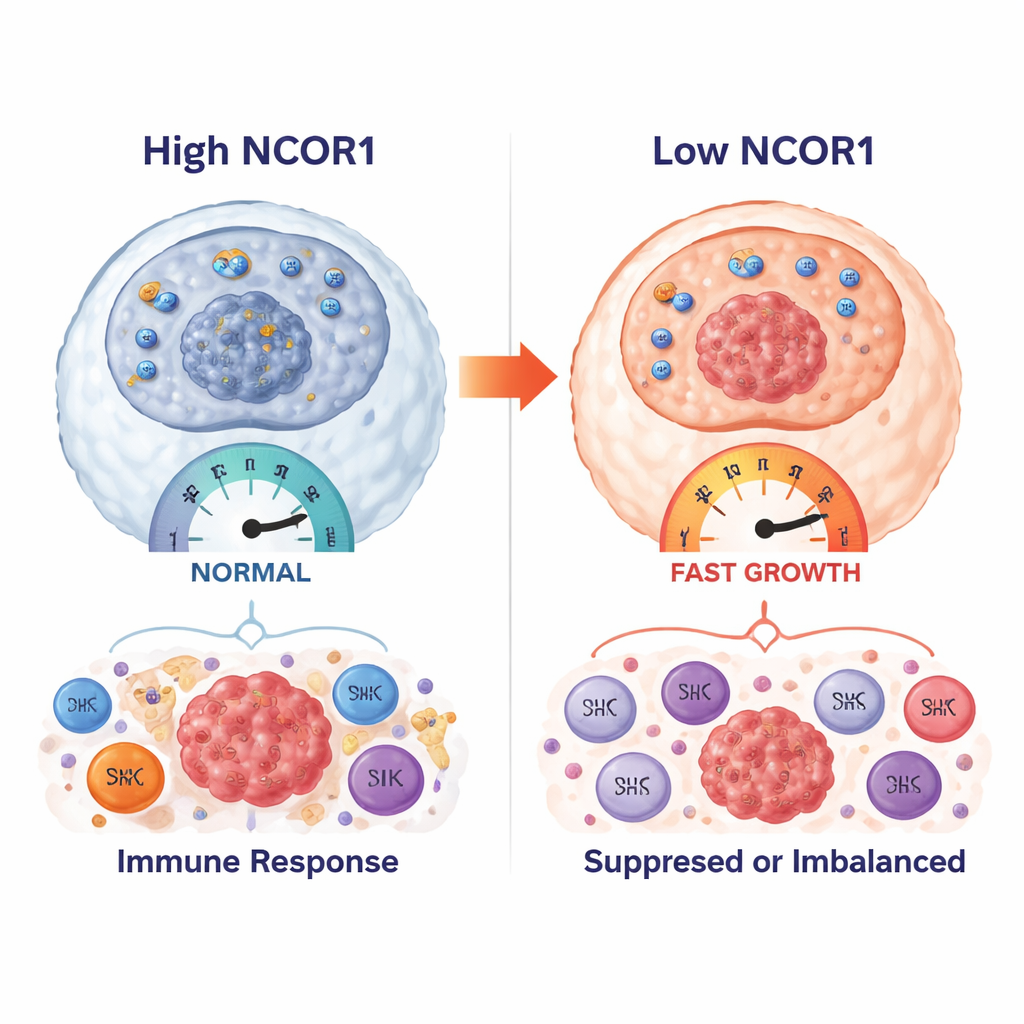
To understand what low NCOR1 might be doing inside tumors, the authors compared genes that switched on or off in patients with high versus low NCOR1. The genes that tracked with NCOR1 levels were strongly tied to the cell cycle — the internal program that drives cells to divide. When NCOR1 was low, pathways that control checkpoints between phases of cell division looked more active, consistent with a tumor that is cycling faster. At the same time, NCOR1 levels were linked to which immune cells were present in the tumor’s microenvironment. Higher NCOR1 expression went along with greater infiltration of several immune cell types that can support anti‑tumor responses, such as certain T‑cell memory populations, while it was inversely related to suppressive cells like regulatory T cells. This suggests that losing NCOR1 may not only let cancer cells multiply more freely, but also help them escape immune attack.
Marks on DNA and links to checkpoint molecules
The researchers also asked why NCOR1 is reduced. They found that specific chemical tags on DNA, known as methylation marks, in regions of the NCOR1 gene were associated with patient survival. Heavier methylation at several CpG sites tended to go hand in hand with poorer overall survival, supporting the idea that epigenetic silencing of NCOR1 is clinically important. In contrast, actual mutations in the NCOR1 gene were rare in kidney tumors and did not predict outcome. Intriguingly, NCOR1 expression tracked with the levels of several key immune checkpoint and tumor‑related genes, including TIGIT, CTLA‑4, TP53, and PTEN, hinting that NCOR1 may sit at the crossroads of cell growth control and immune regulation. Combining NCOR1 levels with standard clinical features in a predictive chart, or nomogram, improved estimates of 1‑, 3‑, and 5‑year survival for patients.
What this could mean for future care
For a layperson, the main message is that NCOR1 behaves like a protective gatekeeper in clear cell kidney cancer. When its levels drop — often through chemical silencing rather than damage to the gene itself — tumor cells divide more rapidly, the surrounding immune defenses are altered, and patients tend to fare worse. Measuring NCOR1 in tumor samples, and eventually perhaps in blood or urine, might help doctors diagnose kidney cancer more accurately, identify higher‑risk patients who need closer monitoring or more intensive therapy, and design new treatments that restore its braking function or exploit its links with the immune system. While more laboratory and clinical studies are needed before NCOR1 can be used routinely, this work positions it as a promising biomarker and potential therapeutic target in kidney cancer care.
Citation: Bao, Lr., Gao, Wn., Wang, Xf. et al. Nuclear receptor corepressor 1 is a potential diagnostic and prognostic biomarker in clear cell renal cell carcinoma. Sci Rep 16, 6303 (2026). https://doi.org/10.1038/s41598-026-37486-y
Keywords: clear cell kidney cancer, NCOR1, cancer biomarkers, tumor immune microenvironment, DNA methylation