Clear Sky Science · en
Lanatoside C ameliorates DSS-induced colitis with improved intestinal barrier integrity and reduced M1 macrophage polarization
Why this gut study matters to you
Ulcerative colitis is a painful disease in which the body’s own immune system chronically attacks the lining of the large intestine, causing diarrhea, bleeding, and fatigue. Many current drugs only partly control symptoms and can have serious side effects. This study tests whether an old heart medicine, Lanatoside C, can be repurposed to calm gut inflammation and help the intestinal wall heal, offering a potential new way to treat people living with this lifelong condition.
An old heart drug with a new mission
Lanatoside C has long been used as a cardiac glycoside, a class of drugs that strengthen heart contractions by acting on salt balance in cells. In recent years, scientists have noticed that these compounds can also dampen certain inflammatory processes. Computer-based “network pharmacology” suggested that Lanatoside C might interact with many proteins involved in ulcerative colitis, but its effects had not been tested in living animals with colitis. The authors set out to see whether this drug could ease disease in a well-established mouse model that closely mimics key features of human ulcerative colitis.
Protecting the gut wall and easing symptoms
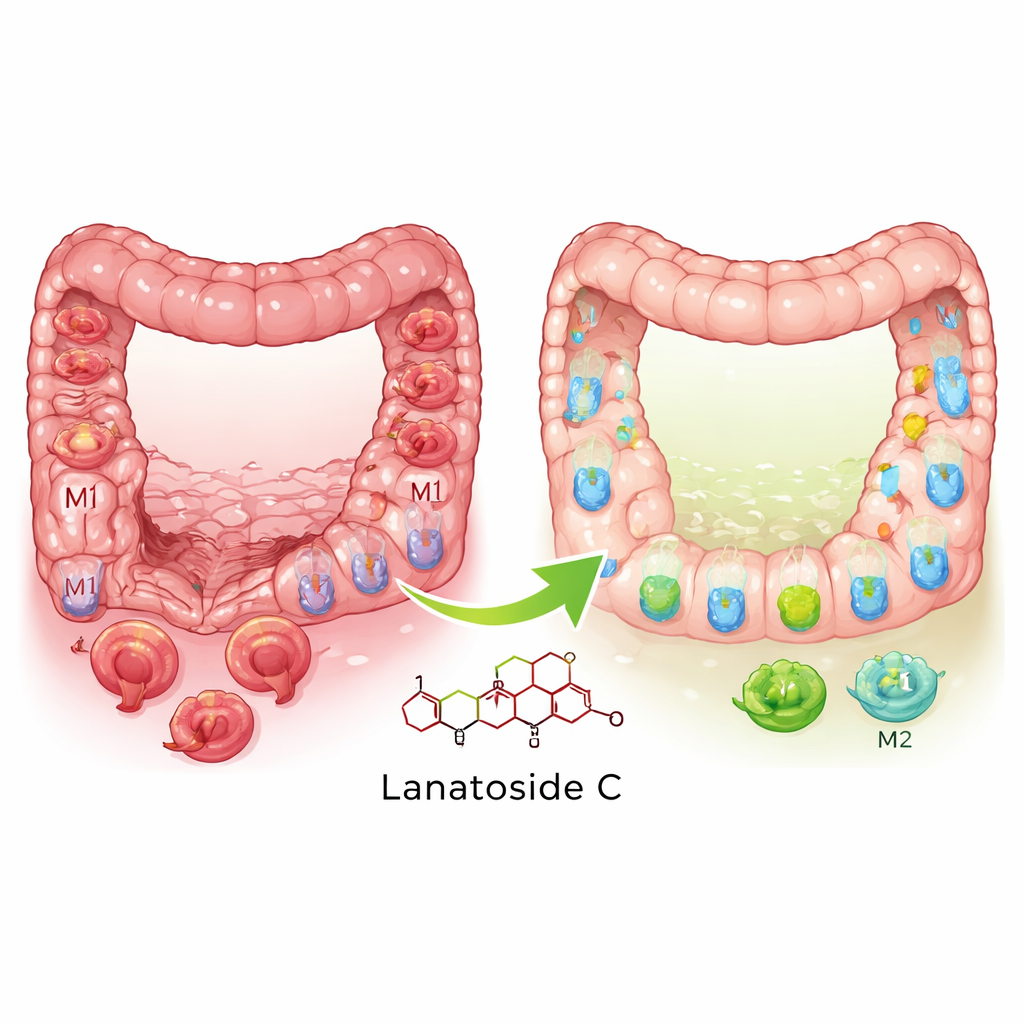
To model colitis, the researchers gave mice a chemical called DSS in their drinking water, which reliably triggers inflammation and damage in the colon. As expected, untreated DSS mice lost weight, developed diarrhea and bleeding, and showed shortened, inflamed colons under the microscope. Mice that received Lanatoside C alongside DSS fared noticeably better: their weight loss and disease scores were milder, and their colons remained longer and less damaged. When the team examined the intestinal lining, they found that Lanatoside C helped preserve goblet cells—specialized cells that produce protective mucus—and restored key “tight junction” proteins that seal neighboring cells together. These changes suggest that the drug helps maintain the gut’s barrier, making it harder for harmful contents of the intestine to leak into the body and fuel further inflammation.
Dialing down bad inflammation, boosting good repair
Inflammation in ulcerative colitis does not just stay in the gut; it reverberates through the immune system. DSS-treated mice developed enlarged spleens and high levels of inflammatory molecules such as IL‑1β, IL‑6, TNFα, and IFNγ in their colon tissue and blood. Lanatoside C reduced many of these aggressive signals while raising levels of IL‑10 and TGFβ, which are known to calm immune responses and support healing. When the scientists looked at immune cells entering the colon and spleen, they found that treatment modestly limited overall immune cell buildup but more clearly altered the behavior of one crucial cell type: macrophages, the body’s professional “clean-up crew” and first responders.
Re-educating immune cells that drive colitis
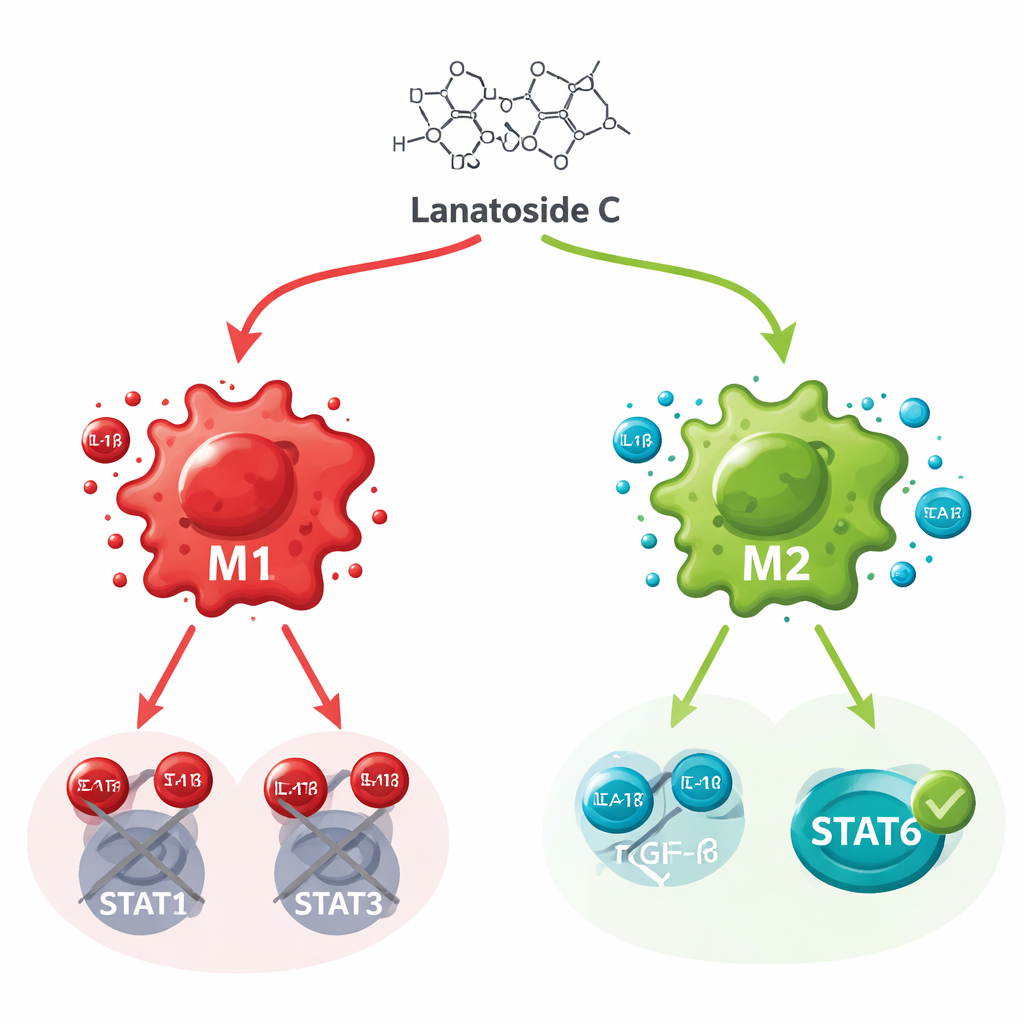
Macrophages can adopt different personalities. In their “M1” mode, they pour out harsh inflammatory chemicals and can damage tissue; in their “M2” mode, they help resolve inflammation and encourage repair. In the DSS model, many macrophages in the colon and spleen shifted into the harmful M1 state. Lanatoside C treatment reduced the share of these M1 cells and nearly doubled the fraction of M2-like cells. To prove this effect was direct, the team grew mouse bone marrow cells in the lab and pushed them toward either M1 or M2 states. Lanatoside C made it harder for cells to become M1 and easier for them to become M2, while lowering inflammatory cytokines and increasing soothing ones. At the molecular level, the drug selectively turned down two signaling switches, STAT1 and STAT3, that favor M1 behavior, and turned up STAT6, a switch that drives M2 behavior, without broadly shutting off other major inflammatory pathways.
What the findings mean for future treatments
In everyday terms, this research suggests that Lanatoside C helps the diseased gut in two main ways: it stabilizes the physical “brick-and-mortar” barrier of the intestine, and it retrains key immune cells to stop attacking and start repairing. By tilting macrophages away from a destructive mode and toward a healing one, through precise changes in their internal signaling, Lanatoside C lessens symptoms and tissue damage in a severe model of ulcerative colitis. Although the work was done in mice and important questions remain about safety, dosing, and mechanisms in humans, it highlights a promising strategy: repurposing a familiar heart drug to target macrophages and restore balance in the inflamed intestine.
Citation: Yu, L., Liu, J., Zhao, X. et al. Lanatoside C ameliorates DSS-induced colitis with improved intestinal barrier integrity and reduced M1 macrophage polarization. Sci Rep 16, 6556 (2026). https://doi.org/10.1038/s41598-026-37484-0
Keywords: ulcerative colitis, Lanatoside C, macrophage polarization, intestinal barrier, inflammation