Clear Sky Science · en
Long-term exposure to particulate matter from road traffic and residential heating and mortality: a multi-cohort study in Sweden
Why tiny particles from traffic matter for all of us
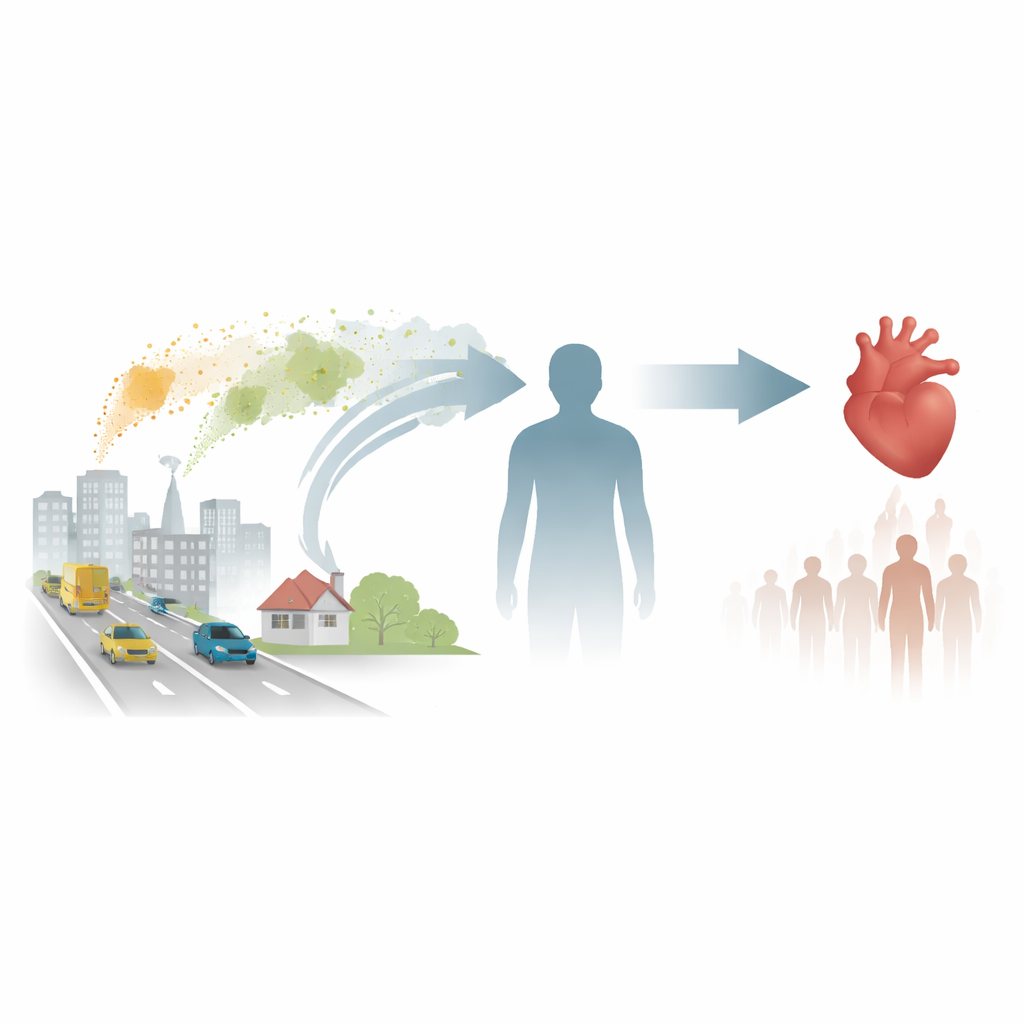
Air pollution is often talked about in terms of hazy skylines in megacities, but this study asks a question that affects people even in relatively clean places: do the tiny particles from everyday road traffic shorten our lives, and are some sources more dangerous than others? Looking at tens of thousands of residents in three Swedish cities with generally low pollution, the researchers set out to see whether long-term exposure to particles from cars, trucks, and home heating is linked to a higher risk of death, especially from heart and blood vessel diseases.
Following people in Swedish cities over many years
The study combined data from several long-running health projects in Gothenburg, Stockholm, and Umeå, including more than 68,000 mostly middle-aged and older adults who were followed from the early 1990s to 2011. During this period, over 7,300 participants died from natural causes, including about 2,800 deaths from cardiovascular disease. Because the cohorts were originally set up to study heart and metabolic health or aging, the researchers had rich background information: age, sex, smoking, physical activity, alcohol use, education, job type, and neighborhood income. This allowed them to separate the effects of air pollution from other lifestyle and social factors.
Separating traffic and home heating pollution
Instead of lumping all air pollution together, the team used detailed computer models to estimate the yearly average levels of tiny airborne particles at each participant’s home address. They focused on particles from specific local sources: exhaust from vehicle engines, particles from road wear (for example from studded tires grinding the pavement), and particles from residential heating, mainly wood burning. The models recreated how winds and weather disperse pollution block by block, down to areas as small as 35 by 35 meters in some cities. For each person and each year, the researchers calculated how much they were exposed to these source-specific particles over the last five and the previous six to ten years.
Linking particle exposure to risk of death
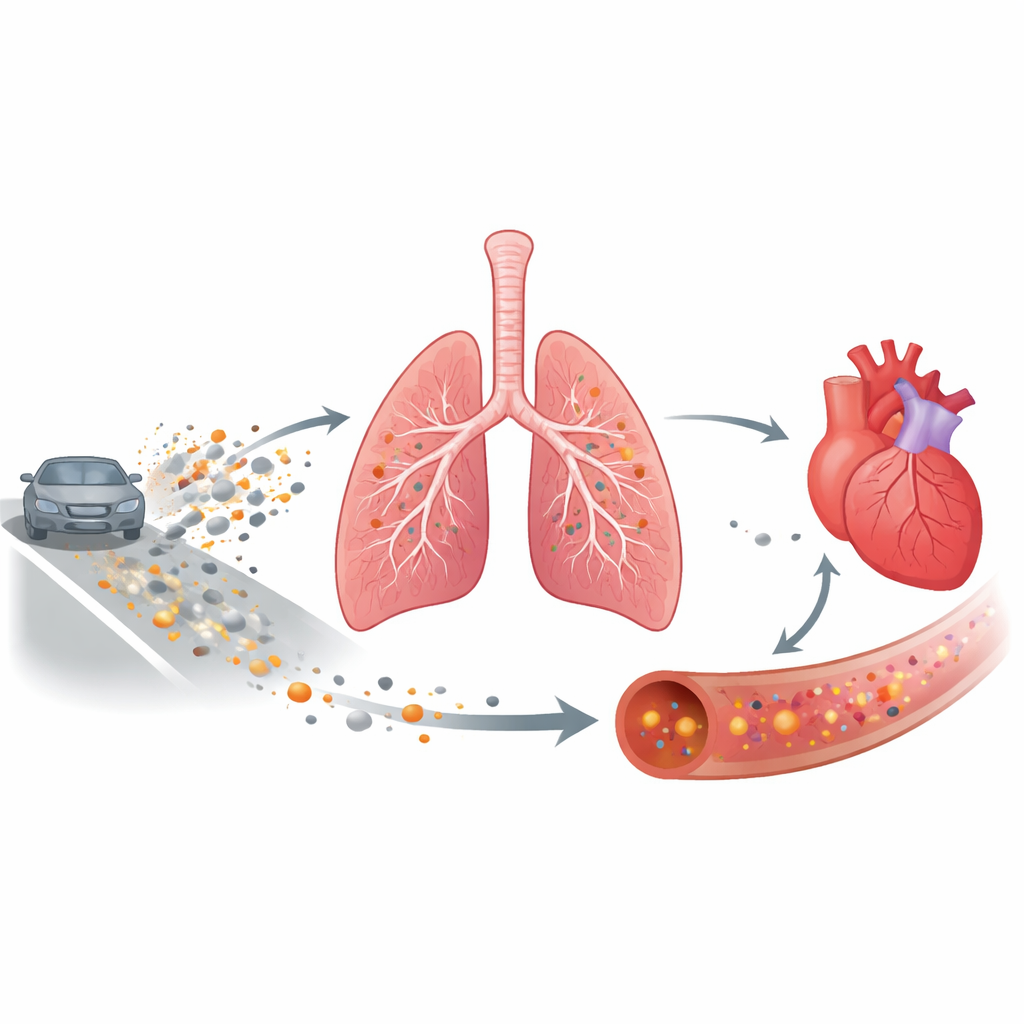
To understand how exposure related to mortality, the researchers applied standard survival analysis methods that estimate how different risk factors affect the chance of dying over time. They compared people with higher exposure to those with lower exposure, while adjusting for smoking, exercise, alcohol use, education, job status, marital status, and neighborhood income. They also accounted for road traffic noise in two of the regions, since noise and pollution often go together. Across the combined cohorts, long-term exposure to particles from traffic—both exhaust and road wear—was consistently linked to a small but measurable increase in deaths from natural causes, even though the overall pollution levels were moderate and mostly within current national limits but above recent World Health Organization guidelines.
What they found about traffic, home heating, and the heart
People living in areas with higher traffic-related particle levels had a slightly higher risk of dying from any natural cause, and this pattern appeared for both the last five years of exposure and for exposure six to ten years earlier. In contrast, particles from residential heating did not show a clear link to total natural mortality. When the researchers looked specifically at deaths from cardiovascular disease, the associations for both traffic and heating particles were generally positive but weaker and not statistically convincing, in part because overall exposure differences were small. Importantly, adjusting for traffic noise or including both traffic and heating particles in the same models did not meaningfully change the results, suggesting that the observed effect is tied to traffic-related particles themselves.
What this means for everyday life and policy
For any individual, the extra risk from these low levels of traffic-related particles is modest, but across an entire population it can translate into many additional deaths. The main message for non-specialists is that even in relatively clean northern European cities, long-term exposure to tiny particles from road traffic appears to shorten lives, while similar evidence for particles from home heating is weaker and more uncertain. The findings support efforts to further reduce emissions from vehicles—through cleaner engines, fewer cars, better tires, and smart urban planning—as a way to protect public health, not only in obviously polluted cities but also in communities that already meet many existing air quality standards.
Citation: Stockfelt, L., Forsberg, B., Andersson, E.M. et al. Long-term exposure to particulate matter from road traffic and residential heating and mortality: a multi-cohort study in Sweden. Sci Rep 16, 7955 (2026). https://doi.org/10.1038/s41598-026-37471-5
Keywords: air pollution, traffic particles, cardiovascular health, mortality, public health policy