Clear Sky Science · en
Cardiovascular medications and treatment outcomes in multiple myeloma: insights from phase III clinical trials
Why heart medicines matter in blood cancer
Many people living with multiple myeloma, a cancer of the bone marrow, are older adults who also have heart disease or high blood pressure. That means they often take daily cardiovascular medicines such as blood pressure pills or cholesterol drugs while receiving powerful modern cancer treatments. This study asked a simple but important question: do those common heart medicines quietly help, harm, or leave unchanged the results of multiple myeloma treatment?
Two health battles at the same time
Multiple myeloma already demands complex therapies that can strain the heart and circulation. Drugs like daratumumab, lenalidomide, and bortezomib have improved survival, but they can also raise blood pressure, trigger rhythm problems, and stress the kidneys. At the same time, many patients need beta-blockers, ACE inhibitors or angiotensin receptor blockers (ACEI/ARBs), calcium channel blockers, diuretics, or statins to control long-standing heart conditions. Patients and clinicians alike worry that this mix of medicines could blunt the benefits of cancer therapy or increase dangerous side effects. Yet until now, there has been little solid clinical evidence to guide these decisions.

What the researchers examined
The authors pooled data from three large phase III clinical trials—CASTOR, MAIA, and POLLUX—that tested modern drug combinations for newly diagnosed and relapsed multiple myeloma. Together, these trials included 1,804 adults from different stages of their illness. Before treatment began, researchers recorded who was already taking heart-related drugs and which class each medicine belonged to. They then followed patients for several years, tracking how long they lived without their cancer worsening (called progression-free survival), overall survival, and whether they developed serious treatment-related problems, especially severe side effects graded as level 3 or higher. Advanced statistical models were used to separate the influence of heart medicines from other factors such as age, overall health, and disease stage.
Which heart drugs were common
Roughly one in three patients was taking ACE inhibitors or ARBs, about one in four used beta-blockers, one in five took statins, and slightly fewer were on calcium channel blockers or diuretics. Those on cardiovascular medicines tended to be older, heavier, and burdened with more health problems, including a history of hypertension, blood clots, or heart rhythm disorders. Not surprisingly, they were also more likely to experience serious side effects in general, reflecting their more fragile health. Yet this backdrop made it especially important to understand whether any specific drug class changed how well myeloma treatments worked.
A mixed picture of benefit and risk
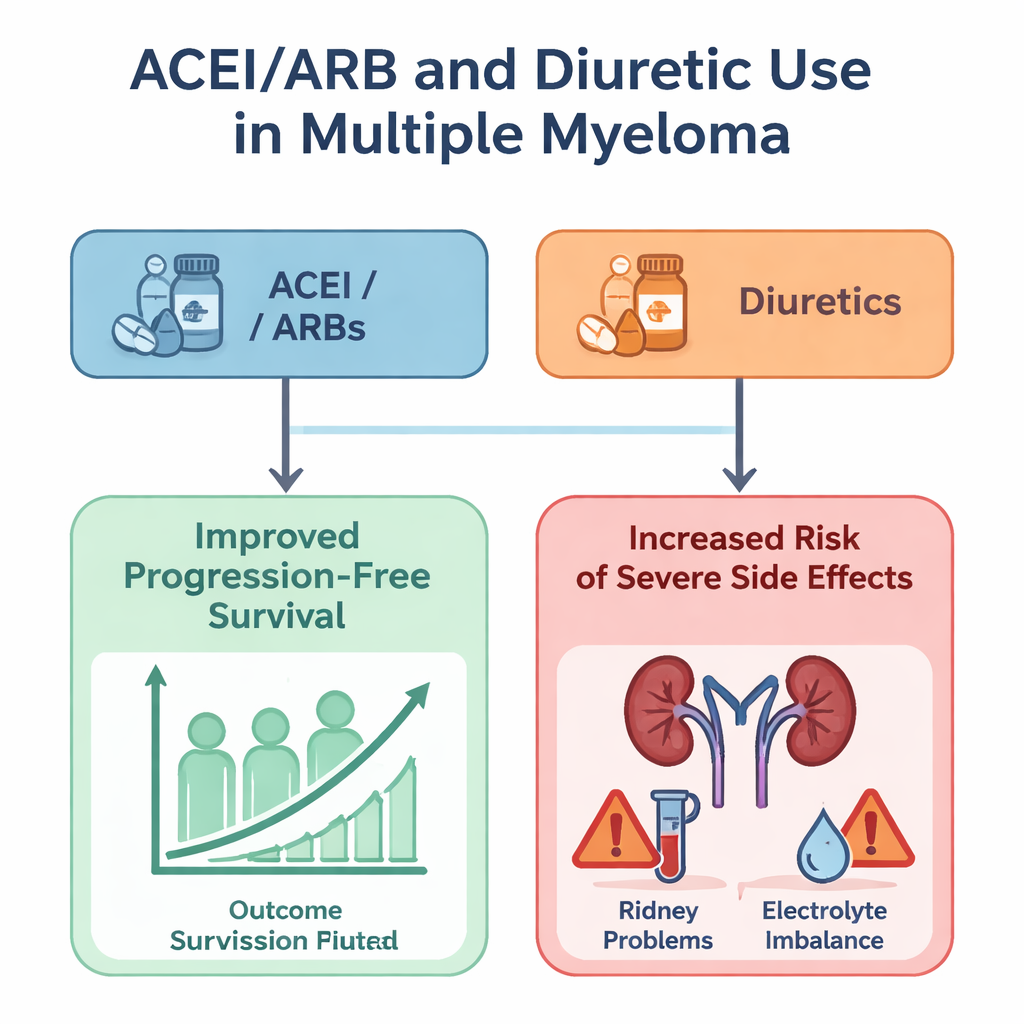
When the team compared outcomes, most heart drug classes did not clearly change how long patients lived or how long their disease stayed under control. Beta-blockers, calcium channel blockers, statins, and diuretics showed no meaningful link, positive or negative, with overall or progression-free survival once other factors were accounted for. One exception stood out: patients taking ACE inhibitors or ARBs had a modest but statistically significant improvement in the time their cancer remained in check, suggesting that these blood pressure medicines might somehow support better cancer control. However, this apparent benefit came with a trade-off. Both ACEI/ARBs and diuretics were linked to higher odds of serious side effects, especially kidney problems, abnormal blood chemistry such as high blood sugar or potassium imbalance, and other grade 3 or worse complications.
What this means for patients and doctors
For people with multiple myeloma, the study carries two main messages. First, most common heart medicines do not seem to strongly interfere with modern myeloma treatments, which should reassure patients who rely on them to manage blood pressure or cholesterol. Second, the finding that ACEI/ARBs may slightly extend the time before cancer worsens, while also raising the risk of serious side effects—along with similar safety concerns for diuretics—highlights the need for careful monitoring of kidney function and blood chemistry. The authors stress that their work is exploratory and based on trial data not designed primarily for this question. Nonetheless, it provides an important first map of how everyday cardiovascular drugs intersect with cutting-edge myeloma therapy, and it points to the need for future studies to confirm who can safely benefit most from these widely used medicines.
Citation: Abuhelwa, A.Y., Almansour, S.A., Al-Shamsi, H.O. et al. Cardiovascular medications and treatment outcomes in multiple myeloma: insights from phase III clinical trials. Sci Rep 16, 7683 (2026). https://doi.org/10.1038/s41598-026-37464-4
Keywords: multiple myeloma, cardiovascular drugs, ACE inhibitors, kidney side effects, progression-free survival