Clear Sky Science · en
High school students in armed conflict-affected North Wollo, Ethiopia, struggle with lived experiences of depression and academic challenges
Teens Trapped Between War and Homework
For many of us, high school is a time for thinking about exams, first jobs, and the future. For teenagers in North Wollo, a conflict-torn area of northern Ethiopia, it is also a time of air raids, closed schools, and crushing sadness. This study opens a window into the daily lives and inner worlds of these young people, showing how living with war shapes their emotions, their learning, and their hopes for what comes next. 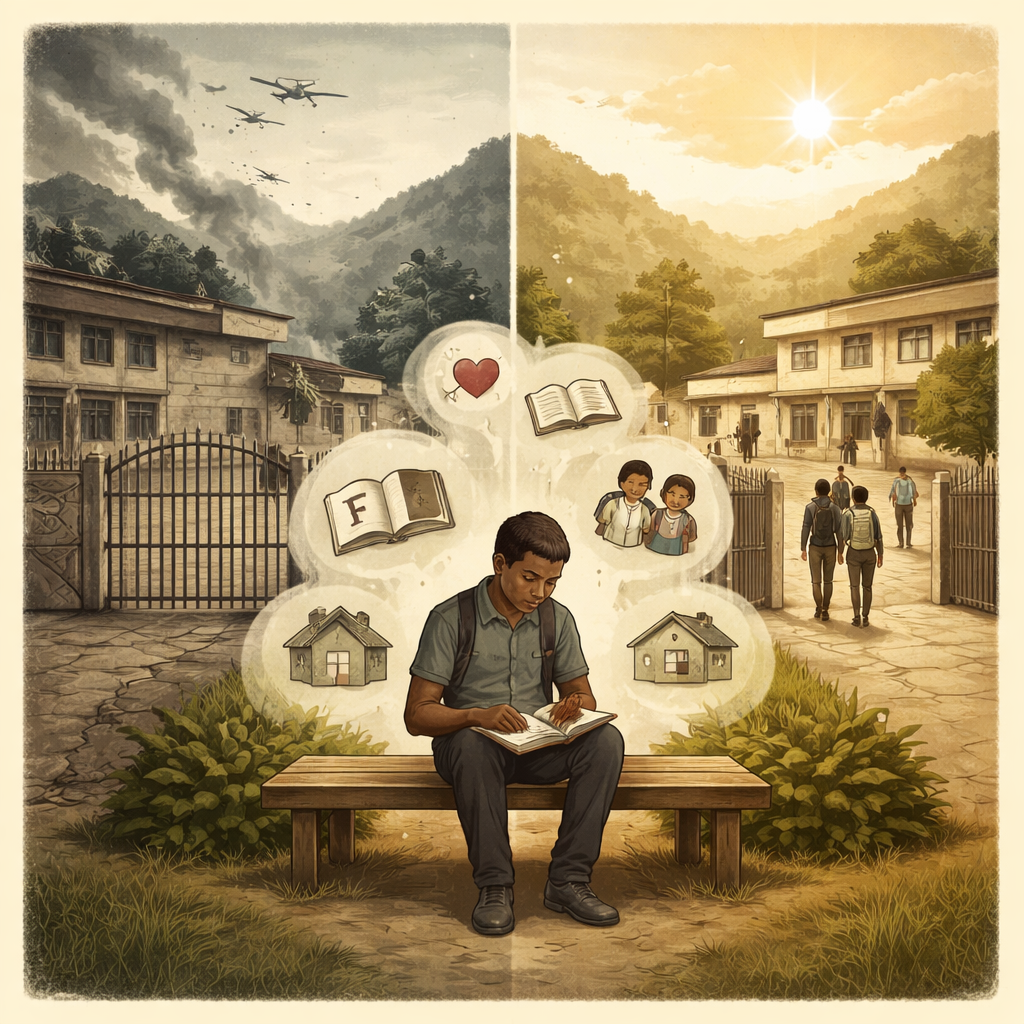
Growing Up Under the Shadow of War
The researchers spoke in depth with ten high school students who have lived through years of armed conflict and who screened positive for depression. Rather than counting symptoms alone, they used a method focused on personal stories to understand what life actually feels like. The teenagers described a world where violence is close and constant: gunfire near their homes, dead bodies on the road, explosions heard during class. Over time, fear and shock turned into a heavy emptiness. Many felt that death had become normal and that life itself had lost its meaning. Their distress was not just emotional but also physical, with recurring headaches, stomach pain, dizziness, and sleepless nights.
When the Future Stops Making Sense
In most places, school is a path to a better tomorrow. For these students, the future has become too uncertain to invest in. Several asked themselves, “Why should I study if I might die tomorrow?” Repeated school closures, destroyed buildings, and long breaks in learning made it hard to keep up. At the same time, severe poverty pushed families to focus on today’s food, not tomorrow’s degree. Some students saw university graduates doing manual labor and felt that education no longer opened doors. With families living “hand-to-mouth” and depending on small-scale work or aid rations, paying for notebooks or rent could mean going hungry. In this setting, giving up on school can feel like a painfully rational choice rather than laziness.
Broken Trust and Silent Suffering
The conflict did not only damage buildings; it also tore apart relationships. Students watched people they once admired become informants or take part in harm against neighbors. This sense of betrayal—from “our own people being cruel to our own people”—left them deeply wary of others. Many stopped sharing their feelings, convinced that anything they said could later be used against them. Inside schools, guidance counselors were mocked as “for psychos,” turning a potential support into a source of shame. Adults often dismissed signs of depression as laziness or typical teen behavior. Feeling unseen and misunderstood, some students withdrew socially, while others turned to extreme solutions such as risky migration routes, joining armed groups, or suicide attempts simply to escape unbearable pain. 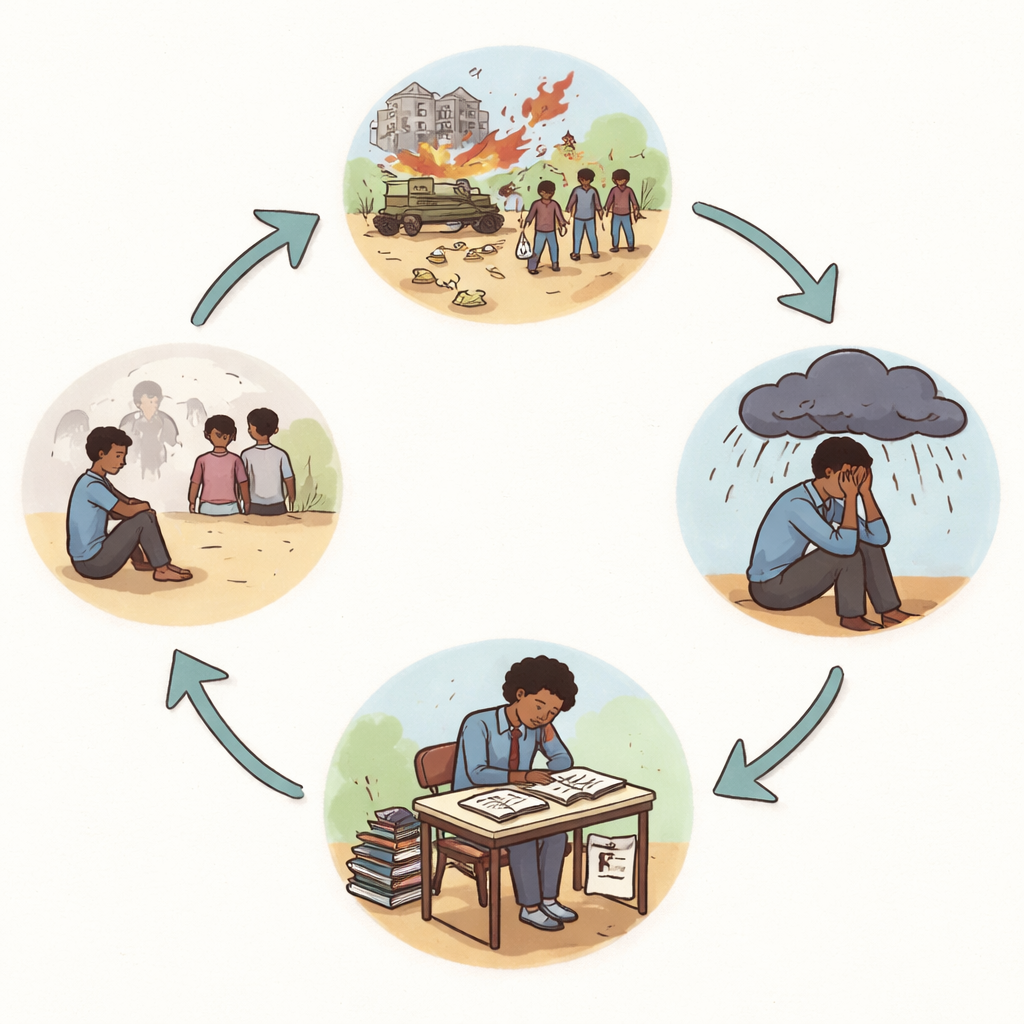
Searching for Help in God and in Machines
Despite overwhelming hardship, the students did not simply give up. Many turned to faith—praying, reading religious texts, and attending church or mosque—as their safest refuge. When trust in people broke down, God became the only listener they believed would not judge or betray them. Some also tried to distract themselves through entertainment, talking to trusted elders or friends, or reminding themselves that their current misery might one day lift. Strikingly, a few students found a new, unexpected outlet: artificial intelligence chatbots such as ChatGPT. Because they feared gossip and stigma, they preferred confiding in a machine that could not spread rumors or laugh at them. For these teens, an anonymous online conversation sometimes felt safer than speaking to teachers, counselors, or even family members.
Breaking the Vicious Cycle
Taken together, the stories reveal a vicious loop: war fuels deep psychological distress; distress undermines learning; poor school performance and bleak job prospects deepen hopelessness; and broken trust drives young people into isolation, which worsens their mental health. The authors argue that any effort to help these students must tackle all of these pieces at once. That means stabilizing schooling during conflict, training teachers to recognize and respond to emotional suffering, building trustworthy counseling and peer-support systems, and working with families and religious communities to rebuild a sense of safety and hope. In simple terms, the message is clear: to protect the future of these teenagers, it is not enough to reopen classrooms—you must also heal hearts and rebuild trust.
Citation: Tareke, M., Yirdaw, B.A., Demeke, S.M. et al. High school students in armed conflict-affected North Wollo, Ethiopia, struggle with lived experiences of depression and academic challenges. Sci Rep 16, 7272 (2026). https://doi.org/10.1038/s41598-026-37463-5
Keywords: adolescent mental health, armed conflict and education, depression in students, Ethiopia youth, school-based support