Clear Sky Science · en
A real-world, multicentre, epidemiological study in Czech and Slovak adults with spinal muscular atrophy treated with risdiplam
Why this study matters for everyday life
Spinal muscular atrophy (SMA) is a rare genetic disease that weakens muscles and often forces people into wheelchairs at a young age. For many adults living with long‑standing SMA, the fear is not sudden decline but slow, relentless loss of independence—struggling to feed themselves, type on a keyboard, or breathe without help. This study looks at a new at‑home, drinkable medicine called risdiplam and asks a simple, very practical question: in real life, not just in carefully controlled trials, can it help adult SMA patients keep the abilities they still have—and maybe even gain a little back?
A closer look at a rare muscle disease
SMA is caused by a broken gene that leads to a shortage of a protein vital for keeping nerve cells in the spinal cord healthy. Without that protein, the nerve cells gradually die and muscles grow weaker over time. In Europe, thousands of adults live with SMA, many of whom started showing symptoms in infancy or early childhood. By adulthood, most can no longer walk and often rely on wheelchairs, assistance with daily tasks, and sometimes machines to support their breathing. Until recently, there were no treatments that targeted the root cause of the disease; care mainly focused on managing symptoms and complications.
A home‑based treatment under real‑world conditions
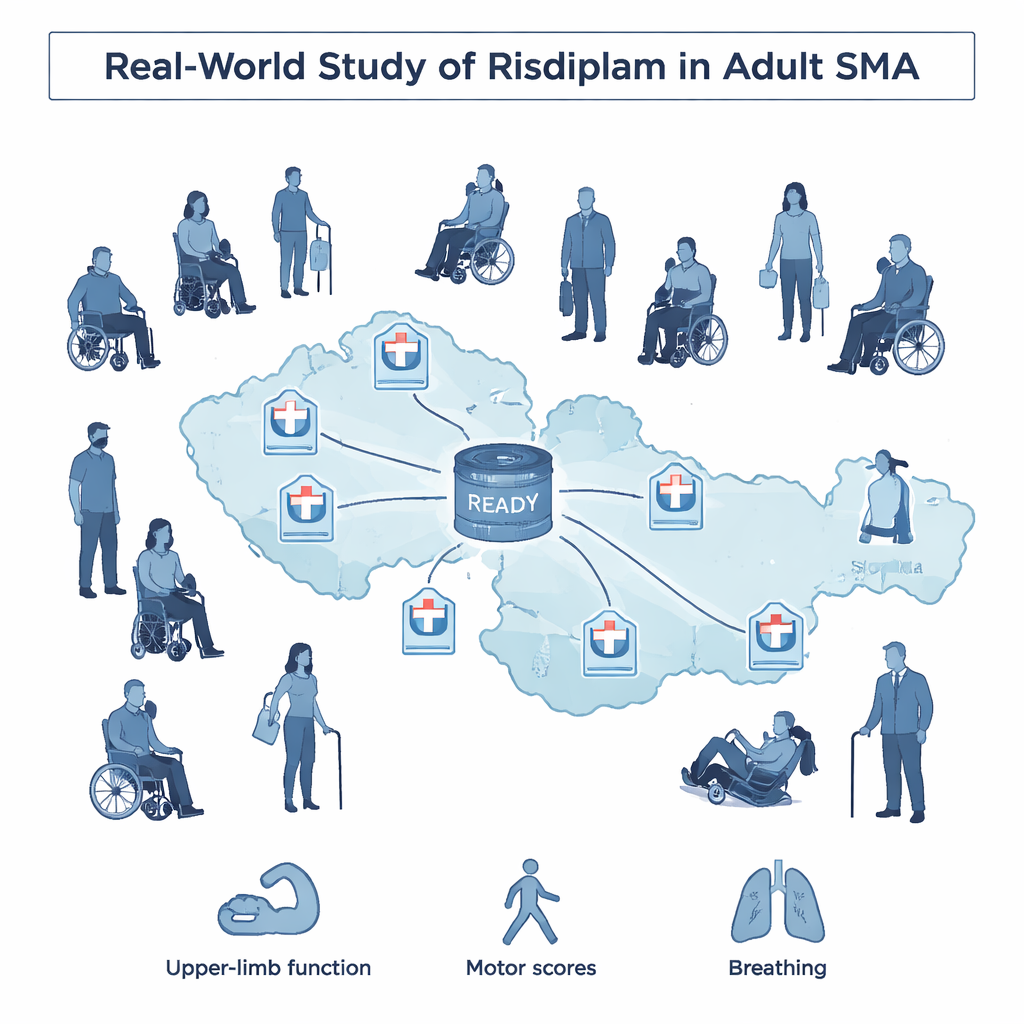
Risdiplam is a liquid medicine taken by mouth at home, designed to help the body make more of the missing protein. It has been approved in Europe for people with several common forms of SMA, from babies to adults. To see how it performs outside of clinical trials, researchers in the Czech Republic and Slovakia used a national registry of neuromuscular diseases to follow 59 adults with genetically confirmed SMA who were treated with risdiplam between 2020 and 2024. Most were in their late twenties, had developed symptoms around their first birthday, and over 90% used wheelchairs, often full‑time. Some had previously received another SMA drug given by spinal injections, while others were starting disease‑modifying therapy for the first time.
Tracking movement and breathing over several years
The team regularly measured patients’ abilities at the start of treatment and then at roughly 6, 12, 24, and up to 36 months. They focused on two physiotherapy scales: one that rates how well patients can use their arms and hands (such as lifting, reaching, and gripping) and another that looks at broader body movements like sitting, standing, or walking where possible. They also recorded lung test results and whether anyone needed to start machine‑assisted breathing. Because this was a real‑world study rather than a formal clinical trial, not every patient was tested at every visit, and the analyses were designed to describe trends rather than prove strict cause‑and‑effect.
What actually changed for patients
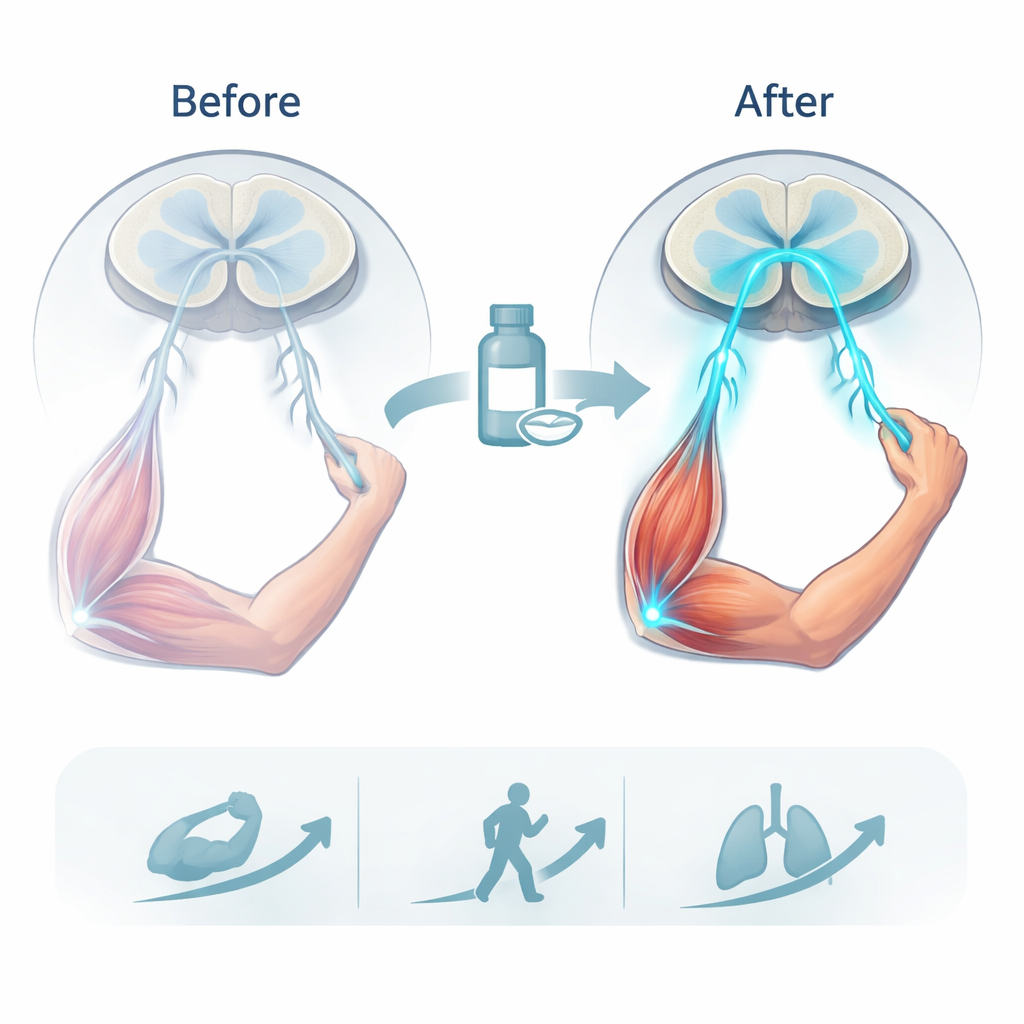
Across the entire group, no patient lost motor function during the follow‑up period—a notable result for a disease that usually worsens over time. In fact, one individual even gained control of their head, an important change for daily comfort and communication. Measures of arm and hand use improved during the first six months of treatment and then stayed roughly stable for two to three years. In those patients able to perform broader movement tests, scores increased by about two to two‑and‑a‑half points, close to what specialists consider a clearly meaningful improvement. Lung capacity tests showed a slight trend toward improvement, and crucially, no one had to start non‑invasive or invasive ventilation during the study. Patients and clinicians also reported everyday benefits that standard scales may miss, such as less fatigue, better ability to handle objects, and greater participation in work, school, and self‑care.
What this means for people living with SMA
For adults with long‑standing SMA who are already severely affected, dramatic recovery is not a realistic expectation. The key question is whether treatment can slow or halt the decline that would otherwise be expected. In this large, multicenter, real‑world study, risdiplam was linked to early gains in arm function and small improvements in overall movement that were largely maintained for up to three years, along with stable breathing and no new need for ventilatory support. To a lay person, this means that a daily at‑home medicine may help many adults with SMA hold onto vital abilities—such as feeding themselves or using a computer—for longer, and in some cases even improve them modestly. In a disease defined by gradual loss, simply staying steady can be a meaningful victory.
Citation: Parmova, O., Prasil, K., Mokra, L. et al. A real-world, multicentre, epidemiological study in Czech and Slovak adults with spinal muscular atrophy treated with risdiplam. Sci Rep 16, 7549 (2026). https://doi.org/10.1038/s41598-026-37462-6
Keywords: spinal muscular atrophy, risdiplam, adult neuromuscular disease, real-world study, motor function