Clear Sky Science · en
Effect of dual bacterial combinations on in vitro nutrient degradability, gas production, methane emission, ruminal fermentation parameters and predictive values in sheep
Feeding Animals While Protecting the Planet
Livestock are a major source of food for people, but they also release methane, a powerful greenhouse gas, as they digest their feed. This study explores whether carefully chosen “good bacteria,” added to sheep feed as probiotics, can help animals use their food more efficiently while cutting down on methane. The work points to a simple idea with big implications: tiny microbes might help make meat and milk production more climate‑friendly.
Tiny Helpers in the Rumen
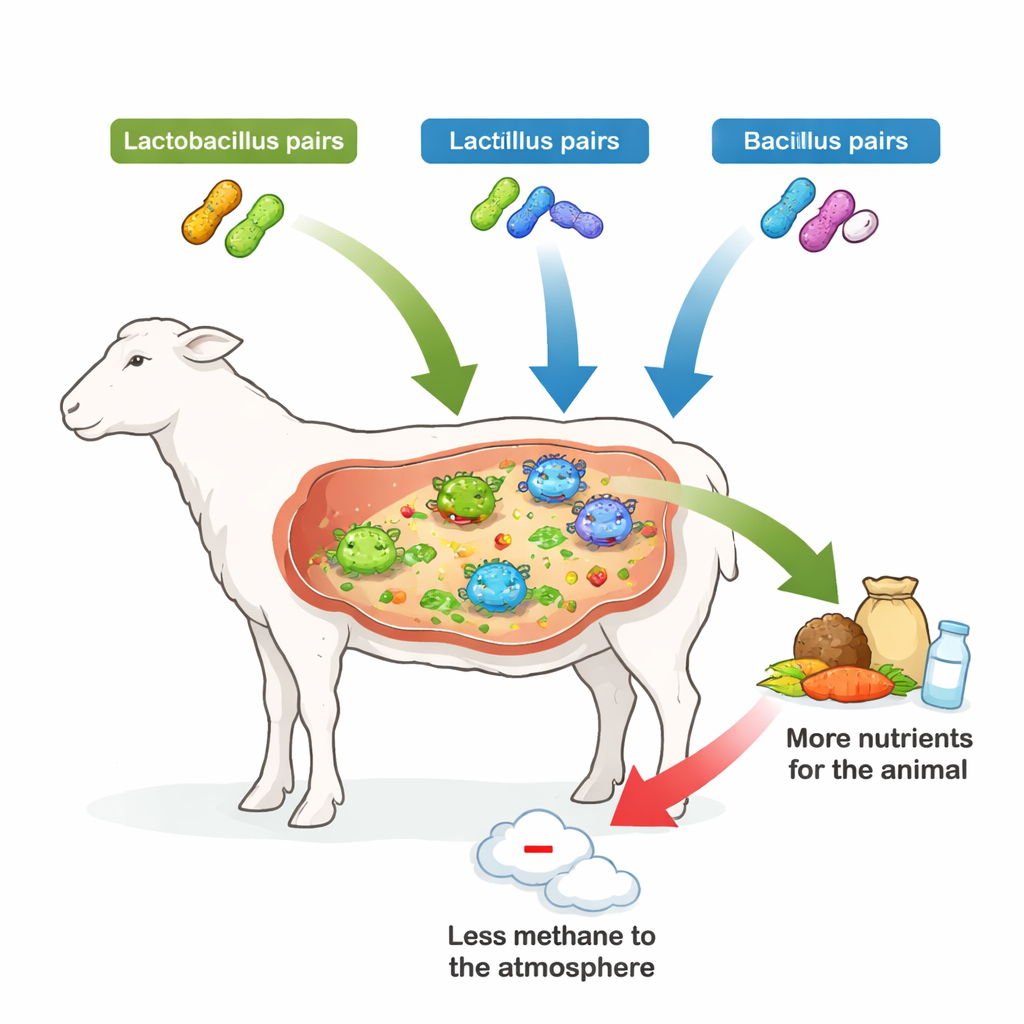
Sheep and other ruminants rely on a vast community of microbes in a special stomach chamber called the rumen to break down grass and other fibrous feeds. The authors tested three different pairs of probiotic bacteria, all commonly used in foods or animal supplements. Two pairs were based on Lactobacillus species, and one pair on Bacillus species. Each pair was mixed into a standard sheep diet in two doses and then incubated in bottles with rumen fluid taken from donor sheep. This “artificial rumen” allowed the team to track how the microbes changed feed breakdown, gas production, and signs of fermentation without using large numbers of live animals.
Better Use of Feed
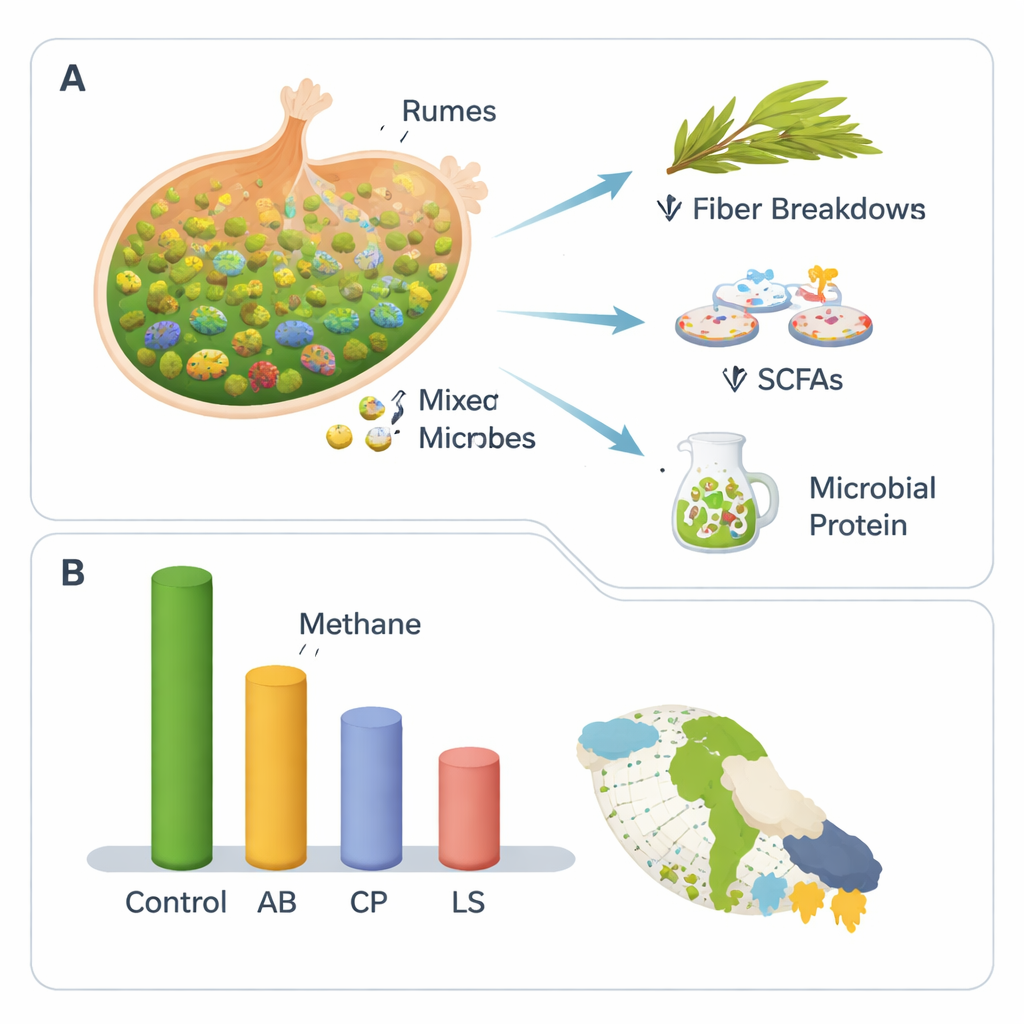
The probiotic mixtures clearly improved how well the feed was digested. Bottles that received any of the bacterial pairs showed higher breakdown of dry matter and fiber than bottles with no probiotics. The best results came from the low dose of one Lactobacillus pair (Lactobacillus acidophilus plus L. bulgaricus, called AB2), which achieved the highest digestion of both total feed and crude fiber. From these measurements, the researchers calculated “predictive values” that estimate how much usable energy and microbial protein a real animal might gain. All probiotic treatments boosted these values, with AB2 again standing out, suggesting that animals given this mix could extract more energy and nutrients from the same amount of feed.
Less Methane, Healthier Fermentation
Alongside better digestion, the probiotic combinations changed the pattern of gases and fermentation products in promising ways. Total gas production went up, but the share of that gas that was methane went down sharply in all probiotic groups compared with the control. The highest probiotic dose of the AB mix (AB4) produced the lowest methane across all time points. At the same time, levels of beneficial fermentation acids, which are a major energy source for ruminants, increased. Indicators linked to wasteful nitrogen loss—such as ammonia and rumen protozoa counts—fell in all probiotic treatments, and rumen pH stayed within a healthy range. Together, these shifts point to a rumen environment that captures more nutrients for the animal while leaking less energy as methane.
A Practical, Low-Dose Strategy
Interestingly, the lower probiotic doses were often just as effective as the higher ones. In many measurements, such as fiber digestion and calculated energy yield, the low-dose Lactobacillus mix performed as well as or better than the high dose. This suggests that farmers might not need large amounts of these supplements to see benefits, making the approach more affordable. The results also underline the value of using combinations of strains that work together, rather than relying on single species.
What It Means for Farmers and Climate
For a non‑specialist, the bottom line is straightforward: adding the right blend of beneficial bacteria to sheep feed helped the animals’ rumen microbes break down feed more completely and produced less methane in the process, at least under controlled laboratory conditions. If these findings are confirmed in live animals, dual‑strain probiotic mixes could become a practical tool for the sheep industry to improve growth and milk yield while shrinking its climate footprint. In a world that needs both more protein and lower emissions, such microbe‑based feed additives may become an important part of making animal agriculture more sustainable.
Citation: Saleem, A.S.A., Bassiony, S.M., Abdelnour, S. et al. Effect of dual bacterial combinations on in vitro nutrient degradability, gas production, methane emission, ruminal fermentation parameters and predictive values in sheep. Sci Rep 16, 7183 (2026). https://doi.org/10.1038/s41598-026-37458-2
Keywords: probiotics, sheep, rumen fermentation, methane emissions, sustainable livestock