Clear Sky Science · en
Efficacy of thyme oil and nano-formulated derivatives against Rhipicephalus sanguineus sensu lato (Acari: Ixodidae)
Why dog owners and farmers should care
Brown dog ticks are more than just a nuisance; they can spread serious diseases to pets and people, and they are becoming harder to kill with standard chemical sprays. This study explores whether a common kitchen herb—thyme—can be turned into a safer, more effective tool against these ticks by using modern nanotechnology.
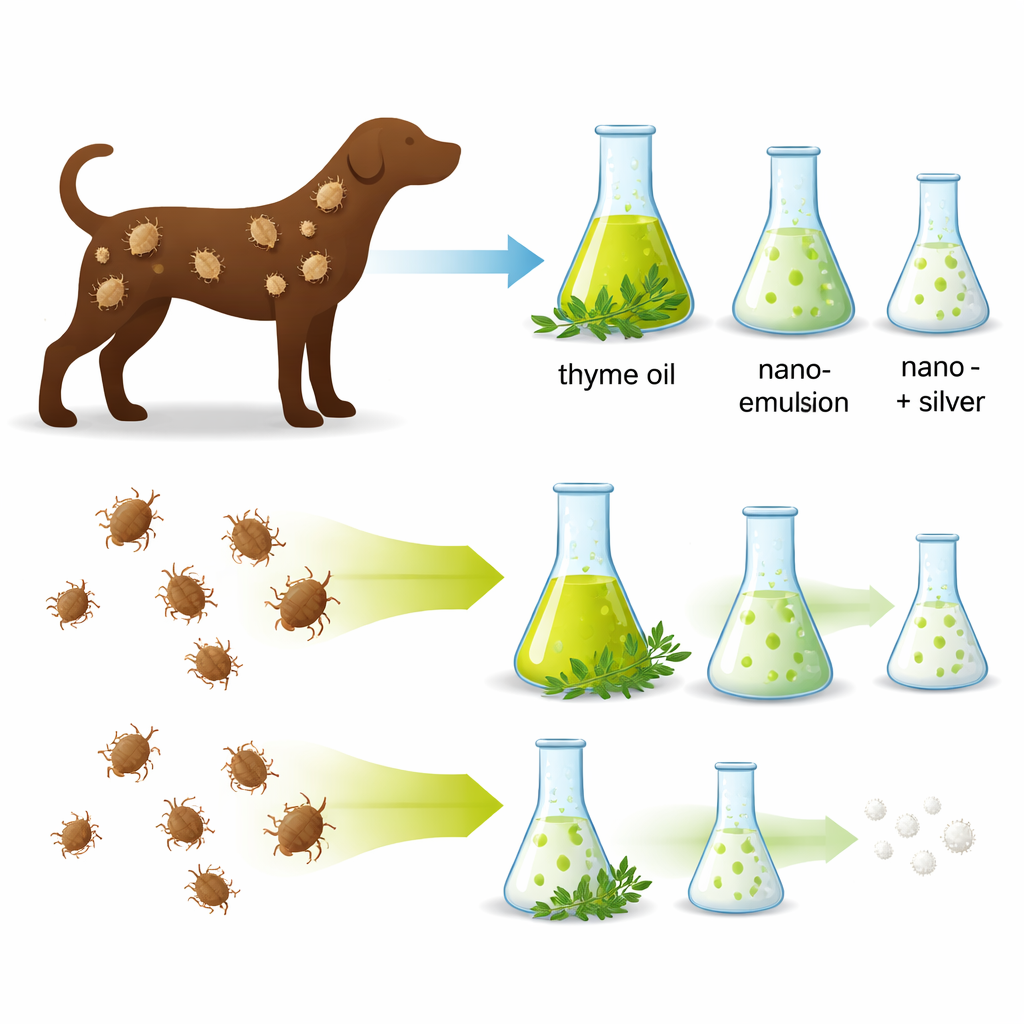
The tick that follows dogs everywhere
The brown dog tick, Rhipicephalus sanguineus, is found in homes, kennels, and yards around the world. It can transmit bacteria that cause illnesses such as Mediterranean spotted fever and Rocky Mountain spotted fever, and in Egypt it is linked to several blood parasites in dogs. For decades, control has relied on synthetic chemicals. Over time, these products have led to problems: ticks that no longer die when treated, contamination of the environment, and safety concerns for animals and humans. Researchers are therefore looking for plant-based alternatives that are friendlier to the environment and less likely to drive resistance.
Turning thyme into a tick-fighting tool
Thyme (Thymus vulgaris) is widely used as a flavoring herb and as a natural remedy. Its essential oil contains many aromatic substances, particularly a compound called thymol, already known to be toxic to certain insects and ticks. However, essential oils evaporate quickly, do not mix well with water, and can break down rapidly, limiting their practical use as sprays or washes. In this work, scientists tested plain thyme oil alongside three more advanced versions: a fine oil-in-water mixture called a nano-emulsion; tiny silver particles (silver nanoparticles) on their own; and a combination of both, where the thyme nano-emulsion carried silver nanoparticles. These nano-sized preparations are designed to spread more evenly on the tick’s body, stick better, and release their active ingredients in a more controlled way.
How the tests were done in the lab
The team raised brown dog ticks in the laboratory and exposed unfed adults to different concentrations of thyme oil and its nano-formulated versions by immersing them in the test liquids. They compared these treatments with a commonly used commercial tick product and with harmless control solutions. Over seven days, they recorded how many ticks died and calculated the concentration needed to kill half of them. They also allowed some surviving ticks to feed on rabbits so they could measure how each treatment affected egg laying and the hatching of larvae. In parallel, they examined dead ticks under high-powered microscopes to see whether the treatments physically damaged important external structures.
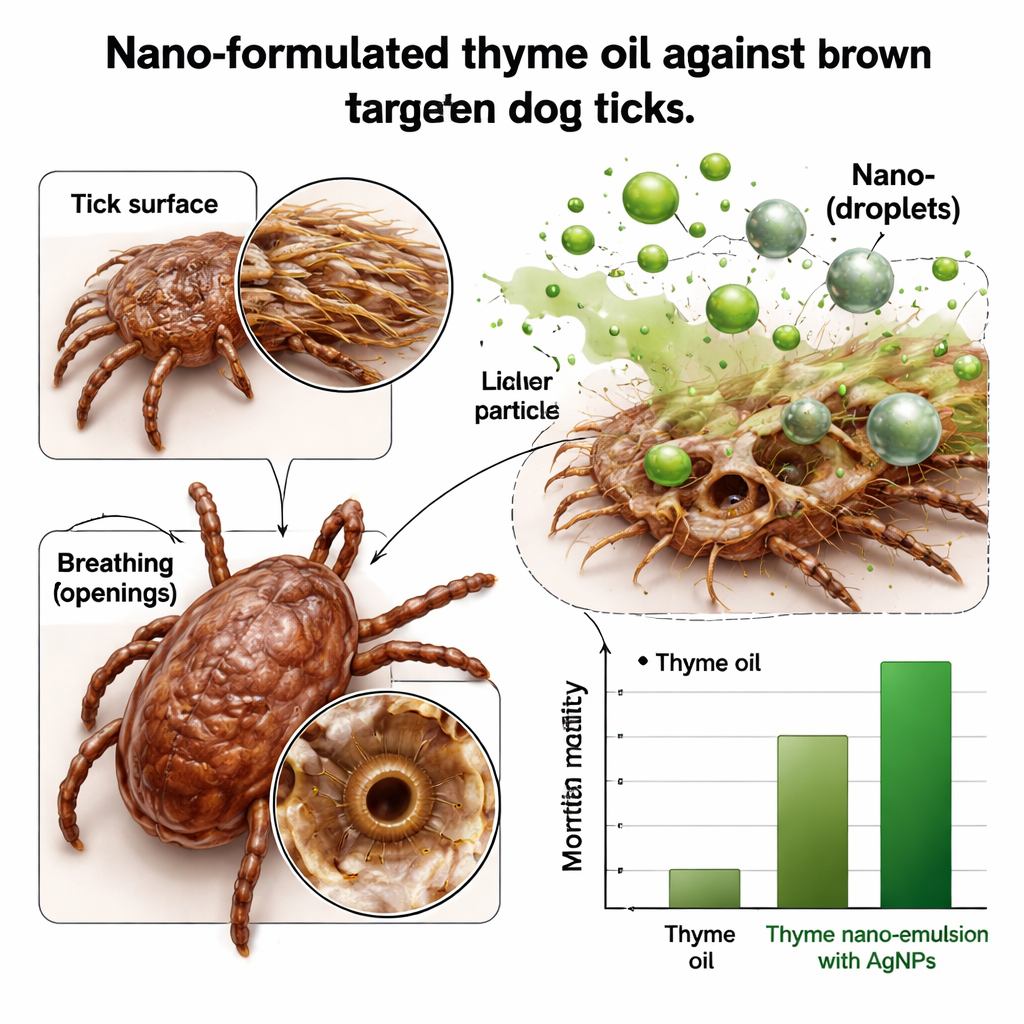
What happened to the ticks
All thyme-based treatments killed ticks, but they did not work equally well. Plain thyme oil required the highest dose, whereas the mixture of thyme nano-emulsion plus silver nanoparticles was the most potent, needing less than a quarter of that dose to reach the same effect. At strong concentrations, the best nano-formulation performed about as well as the commercial chemical product. Microscopic images showed that treated ticks had clear surface damage: the bases of sensory hairs developed irregular patches, air openings on the body were clogged with secretions, and the region around the rear opening became rough and disrupted. These changes are likely to interfere with breathing and sensing their surroundings, helping to explain why the ticks died. Although treated female ticks that survived and fed produced a similar amount of eggs to untreated ones, fewer of those eggs hatched when the females had been exposed to thyme oil or its nano-emulsions.
Promise and limits of a greener tick control
For pet owners and livestock keepers, these findings suggest that thyme essential oil, especially when packaged in modern nano-formulations with silver, could one day provide a more natural way to help control brown dog ticks. The treatments can kill adult ticks and reduce the success of the next generation. However, the experiments were carried out under controlled laboratory conditions and often required relatively high doses and several days to reach full effect. Before such products can replace or supplement current tick treatments in homes, kennels, or farms, further research must confirm their safety for animals and people, test how well they work in real-world settings, and refine the formulations to balance potency, cost, and environmental impact.
Citation: Talep, E.A.A., Abuowarda, M., Abdel-Shafy, S. et al. Efficacy of thyme oil and nano-formulated derivatives against Rhipicephalus sanguineus sensu lato (Acari: Ixodidae). Sci Rep 16, 7384 (2026). https://doi.org/10.1038/s41598-026-37451-9
Keywords: brown dog tick, thyme essential oil, nano-emulsion, silver nanoparticles, natural tick control