Clear Sky Science · en
A scalable hybrid framework for boosting customer experience and operational efficiency in e-commerce
Why Smarter Online Shopping Matters
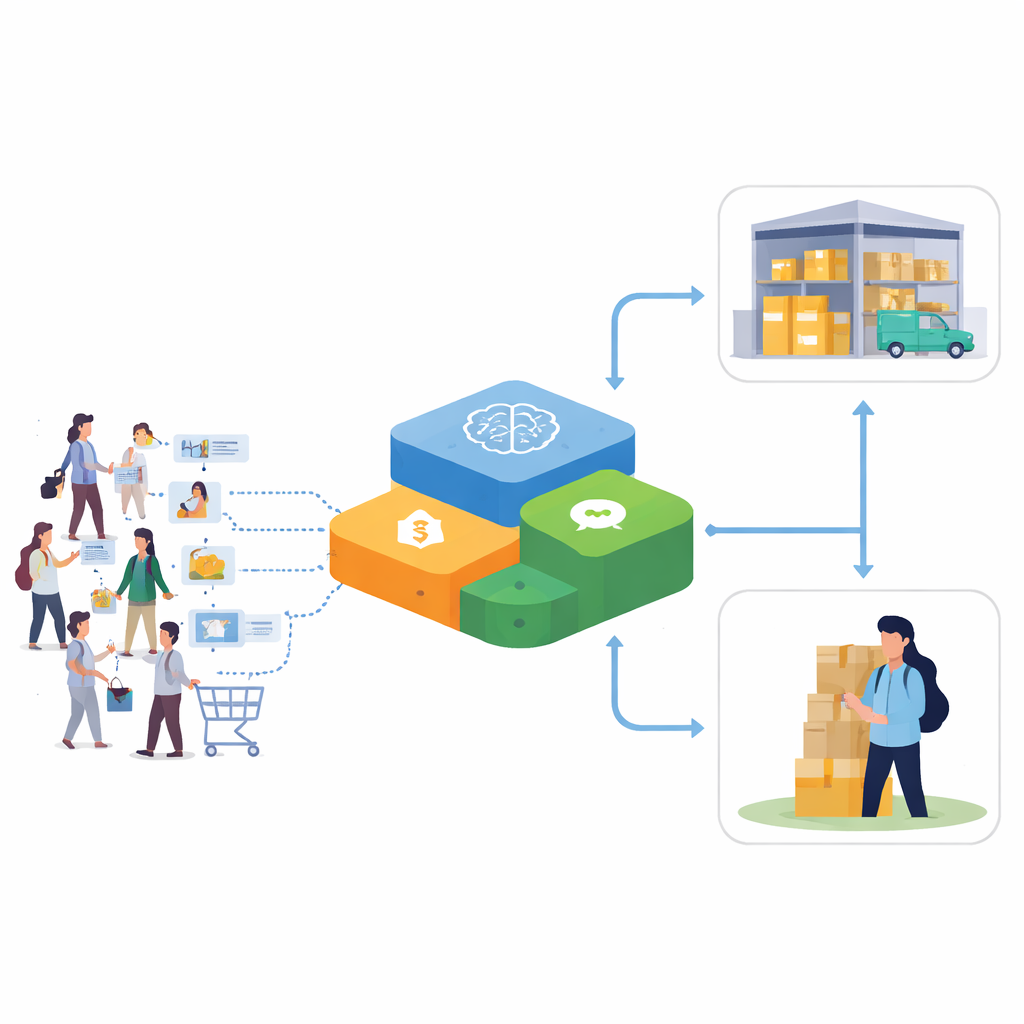
Every time you shop online, invisible algorithms decide what you see, what price you pay, and how quickly your order arrives. This paper explores a new way to make those decisions smarter and fairer—at the same time improving your experience as a shopper and helping stores run more efficiently behind the scenes. Instead of using one technique in isolation, the authors blend several strands of artificial intelligence into a single framework designed for large, modern e-commerce platforms.
Bringing Several Smart Tools Under One Roof
The core idea is to combine three different AI capabilities that usually live apart. First, recommendation methods look at patterns in what people browse and buy, so the system can predict which products you are likely to want next. Second, a learning-based pricing engine tries out different price choices in simulated markets and discovers which strategies earn more revenue without driving customers away. Third, language tools examine written feedback and reviews to estimate how satisfied customers really are. By weaving these three elements together, the framework can suggest products, adjust prices, and guide service teams using a consistent picture of shopper behavior.
Learning From Past Behavior Instead of Constant Tracking
Many online systems aim for real-time reactions, but that can be technically demanding and raise privacy concerns. The authors deliberately design their framework to work mostly offline, training it on large batches of historical data rather than constant live monitoring. They use three public datasets covering millions of interactions: click and purchase logs from an electronics shop, grocery baskets from a delivery service, and detailed product reviews from a major marketplace. Careful preparation—merging files, cleaning missing values, standardizing formats, and converting text into machine-readable form—creates a clean foundation on which the combined models can learn reliable patterns.
How the Pieces Work Together
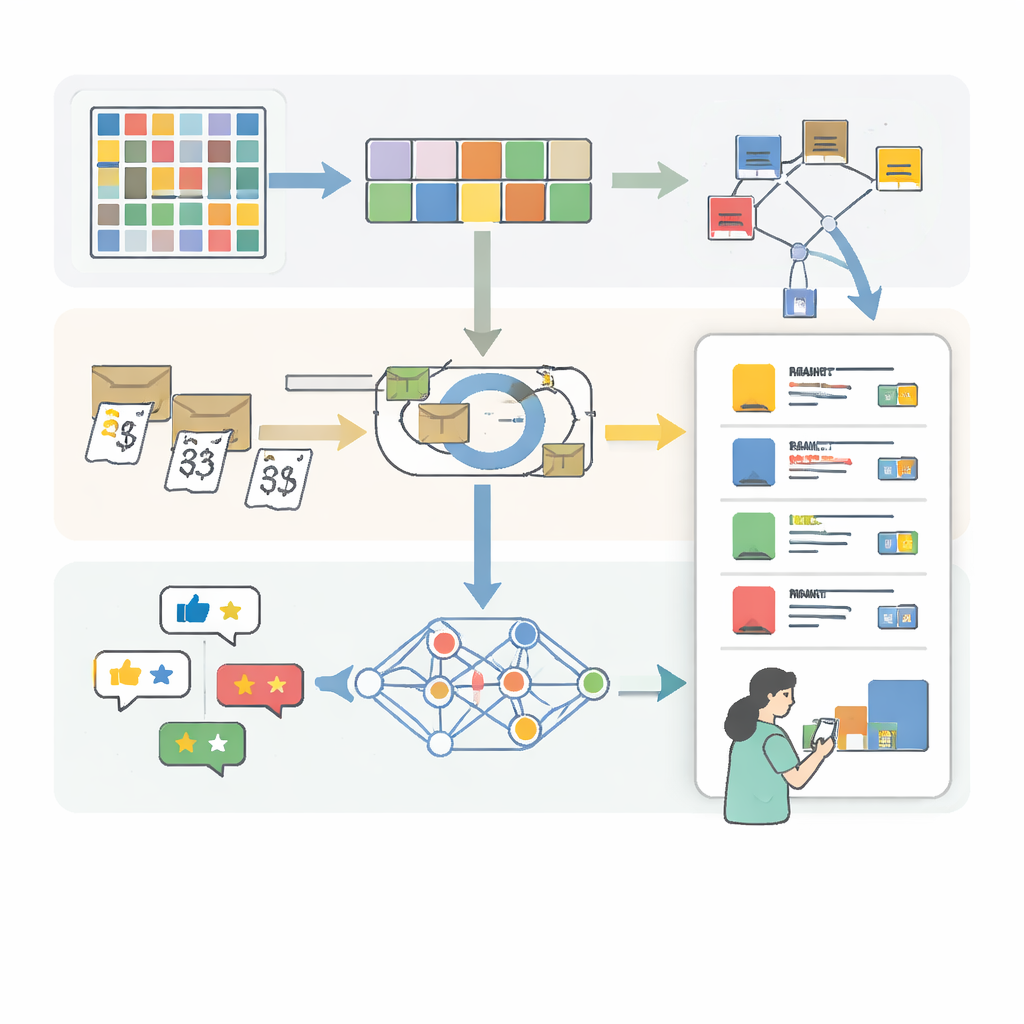
Inside the system, two kinds of recommendation engines work side by side. One looks for shoppers with similar tastes or items that are often chosen together, while another breaks a huge grid of users and products into a smaller set of hidden factors that capture style, price sensitivity, or brand preference. A separate learning agent treats pricing as a series of decisions in a changing environment shaped by demand, stock levels, and competitors. It runs through many simulated “what if” scenarios on past data to discover price adjustments that improve long-term profit. Meanwhile, the language component scores reviews and other feedback as positive, neutral, or negative so that products people secretly dislike do not keep being pushed simply because they sold once.
Testing Against Realistic Benchmarks
To judge whether this hybrid approach is worth the extra complexity, the authors compare it with several widely used baselines, including traditional recommendation models and a popular neural network–based system. They measure not just prediction error, but also business-style indicators: how often recommendations lead to a purchase, how many customers return, how much operating cost is saved, and how much profit rises. Across three different datasets, the hybrid framework increases conversion and repeat buying while cutting errors in predicted ratings and prices. It also scales well in simulations that mimic the heavy traffic of large online stores, maintaining speed and accuracy as the data load grows.
What This Means for Shoppers and Stores
In simple terms, the study shows that using a coordinated mix of pattern spotting, price learning, and mood reading can make online shopping more relevant for customers and more profitable for retailers. Shoppers see items that better match their tastes, at prices that respond to real demand rather than rigid rules, while complaints and praise in reviews are reflected more quickly in what gets promoted. At the same time, warehouses and inventory planners benefit from more stable demand forecasts and fewer mispriced items. The work suggests that future e-commerce systems that treat recommendations, pricing, and customer sentiment as parts of one unified brain may deliver smoother experiences for users and leaner operations for businesses.
Citation: Liu, H., Ismail, F.R., Zhang, W. et al. A scalable hybrid framework for boosting customer experience and operational efficiency in e-commerce. Sci Rep 16, 8042 (2026). https://doi.org/10.1038/s41598-026-37437-7
Keywords: e-commerce personalization, dynamic pricing, recommendation systems, customer sentiment, AI in retail