Clear Sky Science · en
An exploratory investigation into the microbial and cyanobacterial presence on skin epibiotia and orofacial lesions in estuarine common bottlenose dolphins (Tursiops truncatus) through metabarcoding
When Dolphin Skin Tells a Story
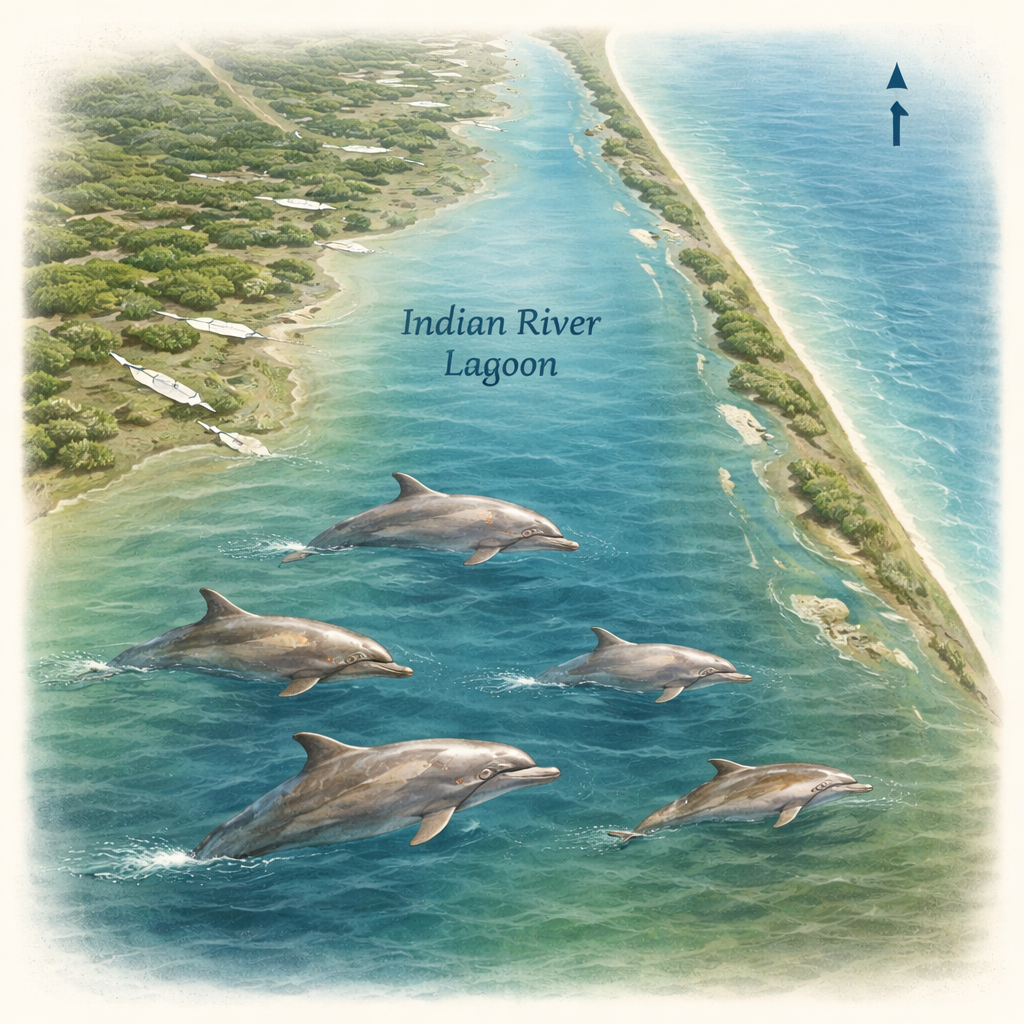
Visitors and locals along Florida’s east coast have increasingly spotted bottlenose dolphins with odd light-brown patches on their skin and, more alarmingly, some with severe damage around the mouth and jaw. These animals live in the Indian River Lagoon, a beautiful yet troubled estuary plagued by pollution and harmful algal blooms. This study asks a deceptively simple question with big implications for wildlife and people: what tiny organisms are living on these dolphins’ damaged skin, and what do they reveal about the health of the animals and their environment?
Strange Marks in a Stressed Lagoon
The Indian River Lagoon is a long, shallow waterway separated from the Atlantic by barrier islands. Its mostly enclosed shape traps nutrients and pollutants that wash in from land. Over the past decade, the lagoon has suffered repeated fish kills, seagrass die-offs, and disease outbreaks in dolphins. Nearly all free-swimming dolphins examined in recent surveys showed some kind of skin abnormality, including light brown growths loosely called “algal sheens” and, in some juveniles, severe rotting of the mouth and jaw bones. Until now, no one had systematically examined whether the organisms coating these lesions are harmless hitchhikers, signs of environmental stress, or potential culprits in the dolphins’ decline.
Reading Microbial Fingerprints
To investigate, researchers collected 13 swab and tissue samples from skin patches and mouth lesions on 11 dolphins that had stranded in the lagoon between 2010 and 2022. Instead of trying to grow microbes in the lab, they used a DNA-based method called metabarcoding. This technique reads a small genetic “barcode” from every bacterium and related microbe present, allowing scientists to identify many species at once, including those that do not grow easily in culture. The team then compared the microbial communities found on the light-brown skin growths with those on the necrotic, or rotting, mouth lesions, and related these patterns to each dolphin’s body condition and life history.
Unexpected Diversity on Sick Skin
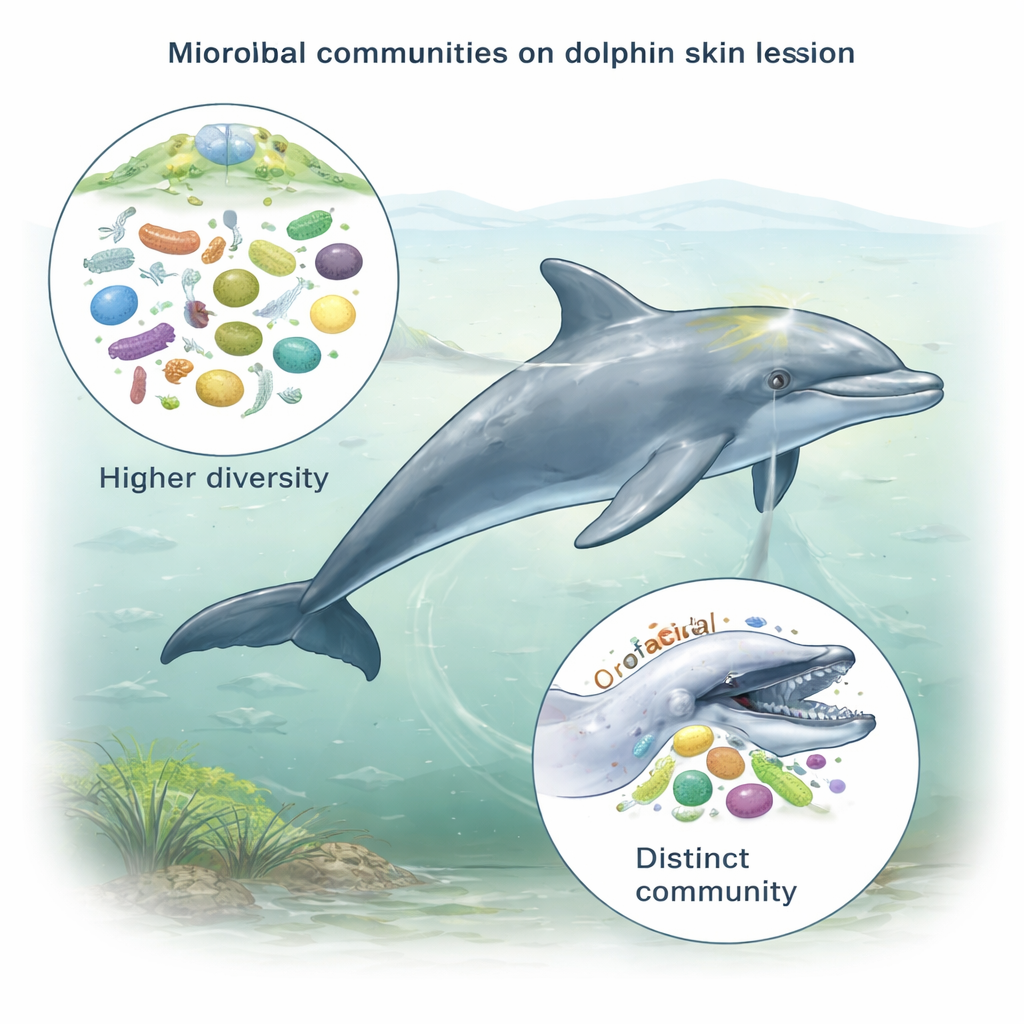
The dolphins’ lesions turned out to host far richer and more varied microbial communities than healthy dolphin skin described in earlier work. No single bacterial type appeared in every sample, but certain groups were common across animals. Many belonged to genera that include known disease-causing species in humans, fish, or other mammals—such as Burkholderia, Clostridium, Tenacibaculum, Porphyromonas, Treponema, and Hathewaya. Some of these are associated with ulcers, mouth erosion, and tissue death in other hosts, raising concern that similar processes may be playing out in dolphins. The overall mix of microbes differed clearly between the two lesion types: the light-brown “algal sheens” generally harbored more kinds of bacteria, while the orofacial lesions formed their own distinct clusters, especially in emaciated juvenile males.
Clues from Blue-Green Bacteria
The team also focused on cyanobacteria, sometimes called blue-green algae, which can thrive in nutrient-rich, polluted waters and occasionally produce toxins. Cyanobacterial DNA appeared on most of the dolphins, both in skin patches and around the mouth. Many of the detected genera are typically found in eutrophic, low-oxygen, or oil-polluted environments, hinting at a link between degraded water quality and dolphin skin colonization. However, the study did not find a single cyanobacterial species responsible for all sheens, nor did it detect a previously described cyanobacterium known from diseased dolphins elsewhere. This suggests that “algal sheens” may be mixed microbial mats rather than the work of one offender, and that some of the colonizers may still be unknown to science.
What This Means for Dolphins and People
Although the study could not pinpoint a single cause for the light-brown sheens or the devastating mouth lesions, it clearly shows that dolphins in the Indian River Lagoon carry complex, abnormal microbial communities on their skin—communities that include many groups with a history of causing disease. These findings reinforce the idea that the lagoon’s stressed environment and the dolphins’ compromised health create opportunities for opportunistic microbes to take hold. Because the lagoon supports major fisheries, tourism, and recreation, and has already seen numerous human infections from local bacteria, understanding these microscopic worlds is more than an academic exercise. The work lays the groundwork for using dolphin skin microbes as sentinels of both ecosystem and public health, and underscores the urgency of restoring water quality in this iconic estuary.
Citation: Brown, A.O., Durden, W.N., McGovern, C. et al. An exploratory investigation into the microbial and cyanobacterial presence on skin epibiotia and orofacial lesions in estuarine common bottlenose dolphins (Tursiops truncatus) through metabarcoding. Sci Rep 16, 6727 (2026). https://doi.org/10.1038/s41598-026-37434-w
Keywords: bottlenose dolphins, skin microbiome, Indian River Lagoon, cyanobacteria, marine pollution