Clear Sky Science · en
Genome-wide association analysis reveals natural genetic variations controlling canopy architecture traits in bread wheat
Why Wheat Leaves Matter for Our Food Future
Most of us think about wheat in terms of bread or chapati, not the angle of a leaf or the shape of a plant’s canopy. Yet these structural details quietly determine how much sunlight a crop captures, how well it copes with heat and drought, and ultimately how much grain it produces. This study explores the hidden architecture of wheat plants grown in Pakistan and uncovers the natural genetic differences that could help breeders design hardier, higher-yielding varieties for a warming world.
Shaping a Better Wheat Canopy
The “canopy” of a wheat field is formed by millions of leaves that intercept sunlight and release water. Plants with upright, narrow upper leaves can let light penetrate more deeply into the crop, boosting photosynthesis and reducing overheating. The researchers focused on key features of this canopy, including the length, width, and area of the topmost “flag” leaf, the angle at which leaves stand, how much of the soil is covered by foliage, and how much the whole canopy leans or stands erect. Using digital imaging instead of slow, manual measurements, they recorded these traits for 161 wheat types, many of them traditional landraces that have been grown in Pakistan for decades. 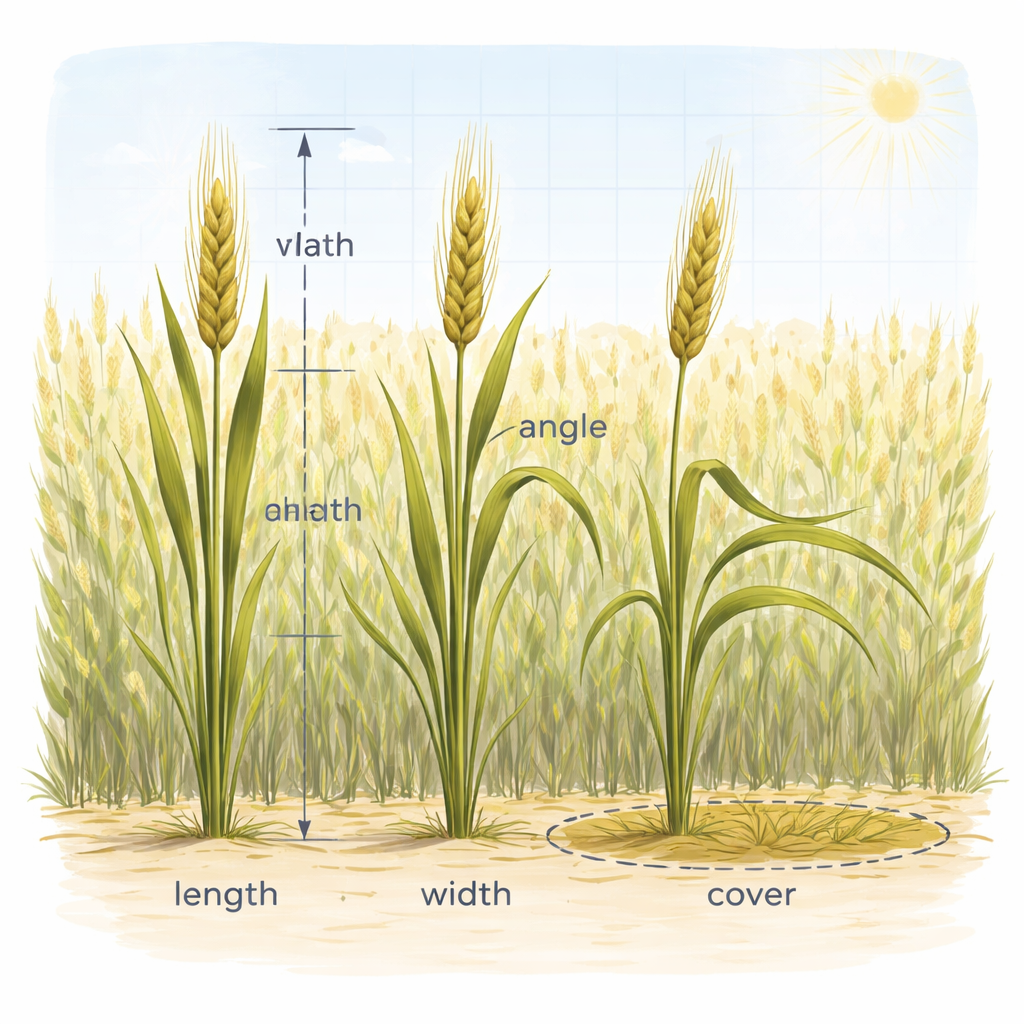
Measuring Diversity in Pakistan’s Wheat
The team found striking differences among varieties. Some plants had very small flag leaves, while others carried large, expansive ones. Leaf angles ranged from almost vertical to strongly drooping, and the overall canopy could be nearly closed over the soil or relatively open. Importantly, many of these traits were consistent enough across two growing seasons to suggest a strong genetic basis rather than just environmental chance. Traits such as flag leaf length, width, and area showed moderate to high heritability, meaning that breeders can reliably select for them. The study also revealed that bigger flag leaves tended to be both longer and wider, and that several canopy traits rose or fell together, hinting that some genetic factors influence multiple aspects of plant shape at once.
From Field Plots to DNA Signals
To connect visible plant form with invisible genetic code, the scientists used a genome-wide association study, or GWAS. They scanned over 28,000 DNA markers spread across all 21 wheat chromosomes and asked which markers tended to appear in plants with particular canopy features. This search turned up 230 distinct genomic regions linked to the six measured traits, including dozens of “pleiotropic” spots where a single region was associated with more than one feature. Some regions were especially stable, consistently influencing traits like flag leaf area or leaf width across both years of testing. By examining how different versions, or alleles, of these markers changed leaf shape, the team could pinpoint which variants were favorable for an upright, efficient canopy.
Clues from Rice and Maize Genes
Finding a DNA marker is only the first step; discovering which nearby genes actually shape the plant comes next. The researchers annotated 158 genes located near the associated markers and then compared them with genes already known to control plant architecture in rice and maize. They identified wheat counterparts of several famous “plant form” genes, including ones that help set leaf angle, panicle density, or response to growth hormones. Using public gene expression data from wheat leaves and stems, they showed that seven of these candidate genes are active at different levels across Pakistani varieties, strengthening the case that they truly help sculpt the canopy. These genes now form a short list for future functional studies and for use in precision breeding programs. 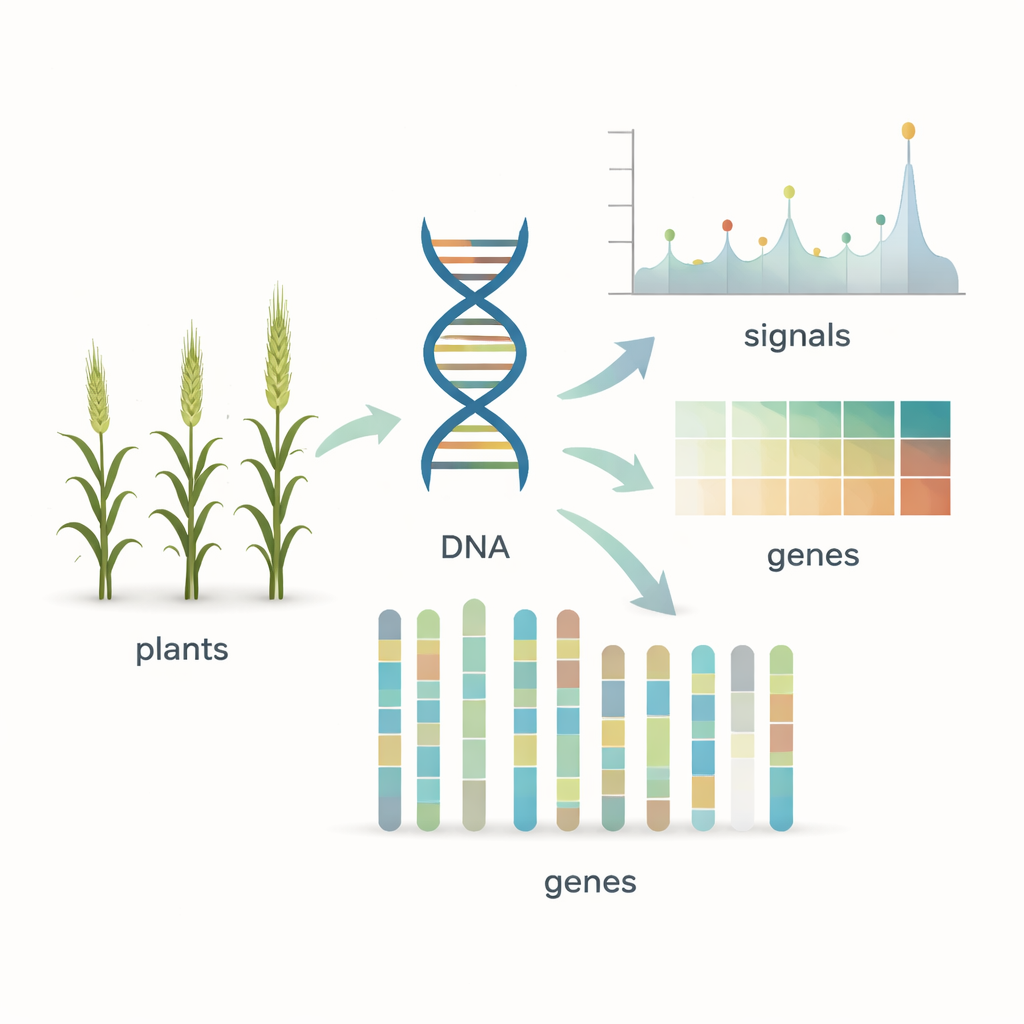
Building Climate-Ready Wheat
For non-specialists, the key message is straightforward: the way a wheat plant is built—how its leaves are arranged and how its canopy captures light—is not fixed. It varies naturally within existing Pakistani germplasm and is tied to specific stretches of DNA that breeders can track. By combining modern imaging, large-scale DNA profiling, and lessons borrowed from rice and maize, this study supplies a genetic map for designing wheat with more erect, efficient canopies. While further field testing and gene-by-gene validation are needed, these discoveries give breeders practical starting points to develop climate-resilient wheat that uses sunlight and water more effectively, helping secure grain yields in the face of heat and drought.
Citation: Farhan, M., Naeem, M.K., Muhammad, A. et al. Genome-wide association analysis reveals natural genetic variations controlling canopy architecture traits in bread wheat. Sci Rep 16, 6433 (2026). https://doi.org/10.1038/s41598-026-37433-x
Keywords: wheat canopy, plant architecture, genome-wide association, climate-resilient crops, flag leaf traits