Clear Sky Science · en
Degradation of pharmaceutical contaminants in sewage wastewater using biosynthesised nanoparticle produced by halophilic bacterial strain and phytotoxicity
Why medicine in water matters
Every time we swallow a painkiller or antibiotic, traces of those drugs can end up leaving our bodies and flowing through sewage plants into rivers and lakes. Many of these leftover chemicals are tough to break down, and even tiny amounts can harm fish, plants, and possibly people. This study explores a nature-inspired way to clean up such pharmaceutical pollution using salt-loving bacteria that not only eat these stubborn chemicals but also build tiny helper particles that speed the clean‑up process.
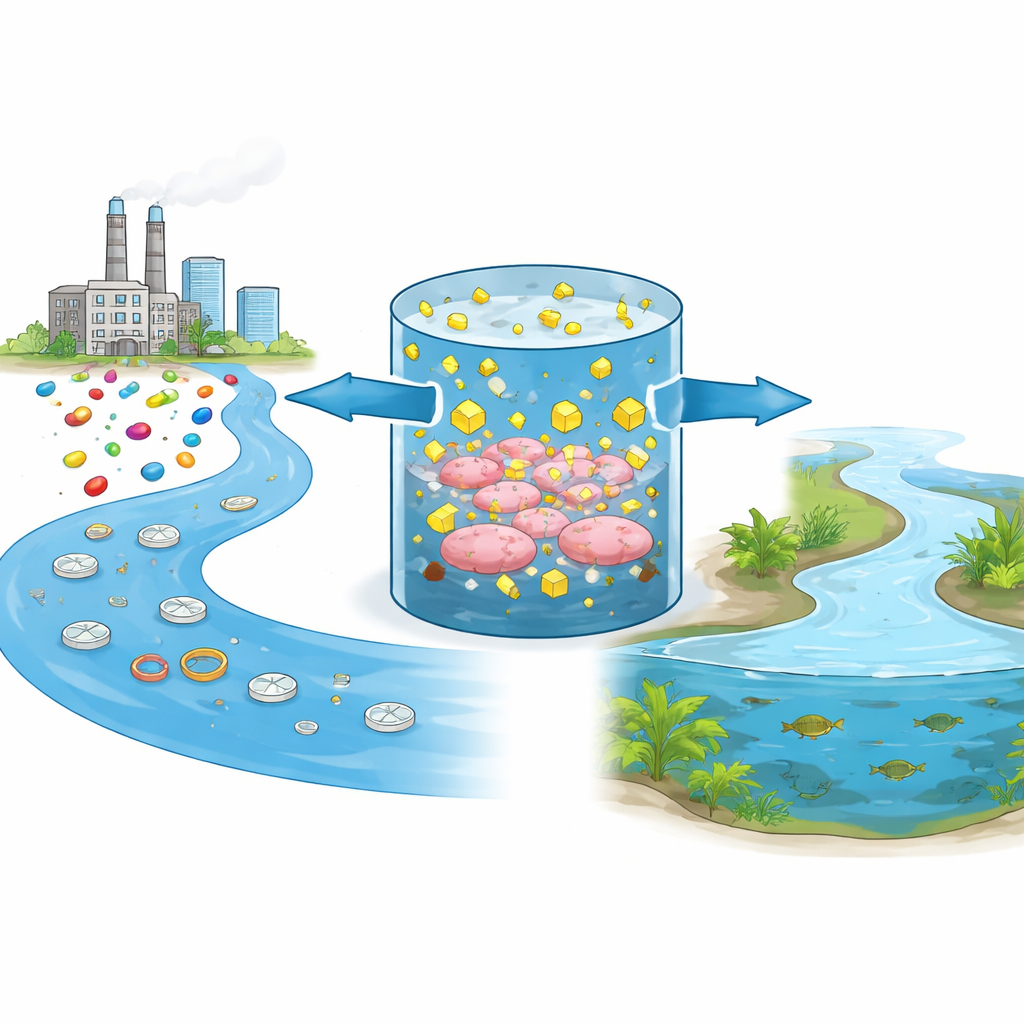
Stubborn chemicals in everyday wastewater
Industrial facilities and hospitals release a mix of medicines and related chemicals into wastewater. Among them are phenolic compounds, used widely in industry, and antibiotics such as amoxicillin. These substances are persistent, can build up in living organisms, and are not removed efficiently by standard treatment methods. Conventional options like strong chemical oxidants or advanced membranes can work, but they are often expensive, energy‑hungry, and can create new waste. The authors looked instead to biology and nanotechnology, aiming to combine the strengths of living microbes with engineered materials in a single, low‑impact treatment.
Salt-loving microbes with a double talent
The team isolated a halophilic, or salt‑tolerant, bacterial strain from marine sediments. This bacterium thrives in conditions similar to seawater, which are common in some industrial effluents. In carefully controlled lab tests, the researchers showed that the microbe could feed on several problematic phenolic chemicals and the antibiotic amoxicillin, both separately and in mixtures. Over several days, the bacteria removed large fractions of these pollutants from simple test solutions and from more realistic synthetic pharmaceutical wastewater. By tracking how the concentrations changed over time, they demonstrated that the microbe stayed active even at relatively high pollutant levels.
Tiny mineral helpers built by bacteria
Remarkably, the same bacterial strain was also used as a miniature factory to produce cerium oxide nanoparticles—ultra‑small mineral cubes only a few dozen billionths of a meter wide. The researchers grew the bacteria, collected the cell‑free liquid, and added a cerium salt. Over a few hours, the solution formed cerium oxide particles, which were then heated and analyzed. A suite of tools confirmed that the particles had a stable crystal structure, were in the nanometer size range, and exposed surface chemical groups suitable for interacting with pollutants. These biosynthesized nanoparticles were then added back into a small treatment reactor along with the bacteria and synthetic wastewater.
Faster clean‑up and safer breakdown products
In a lab‑scale reactor holding several liters of wastewater, the combined action of bacteria and their home‑grown nanoparticles achieved substantial removal of both phenolic compounds and amoxicillin within hours. Detailed chemical analyses showed that the original complex molecules were converted into simpler, less harmful substances through a series of steps: removal of chlorine and fluorine, reduction of nitro groups, opening of aromatic rings, and eventual formation of fatty acid‑like fragments. The team proposed a stepwise pathway that links these intermediate products into a coherent story of how the pollutants are dismantled. 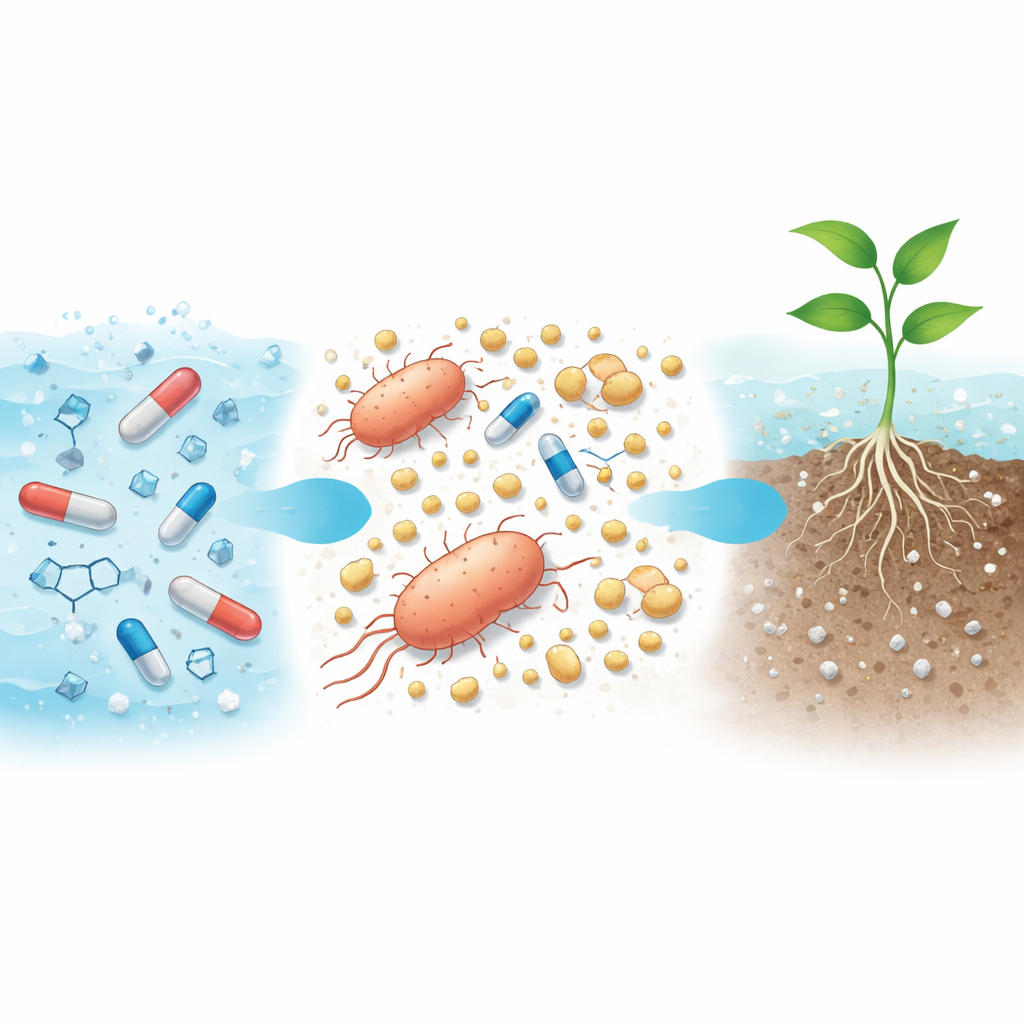
A greener route to cleaner water
For a non‑specialist, the key message is that this work shows how a carefully chosen bacterium can both eat dangerous drug residues and build its own nanoscale tools to help it work faster. By pairing microbial metabolism with biosynthesized cerium oxide nanoparticles, the researchers created an integrated system that breaks down stubborn pharmaceuticals into gentler pieces and produces water that is far less harmful to plants. While still at laboratory scale, this approach points toward future wastewater treatments that rely more on living, self‑renewing systems and less on harsh chemicals or energy‑intensive hardware, offering a promising path to keep our rivers and food chains safer from the hidden leftovers of modern medicine.
Citation: Fathima, M.M., Harini, N.P., Rangasamy, G. et al. Degradation of pharmaceutical contaminants in sewage wastewater using biosynthesised nanoparticle produced by halophilic bacterial strain and phytotoxicity. Sci Rep 16, 8039 (2026). https://doi.org/10.1038/s41598-026-37427-9
Keywords: pharmaceutical wastewater, biodegradation, nanoparticles, halophilic bacteria, environmental remediation