Clear Sky Science · en
Metabolomic assessment reveals depletion of amino acids and energy metabolites in skeletal muscle after ischemic acute kidney injury in mice
Why Injured Kidneys Can Sap Your Strength
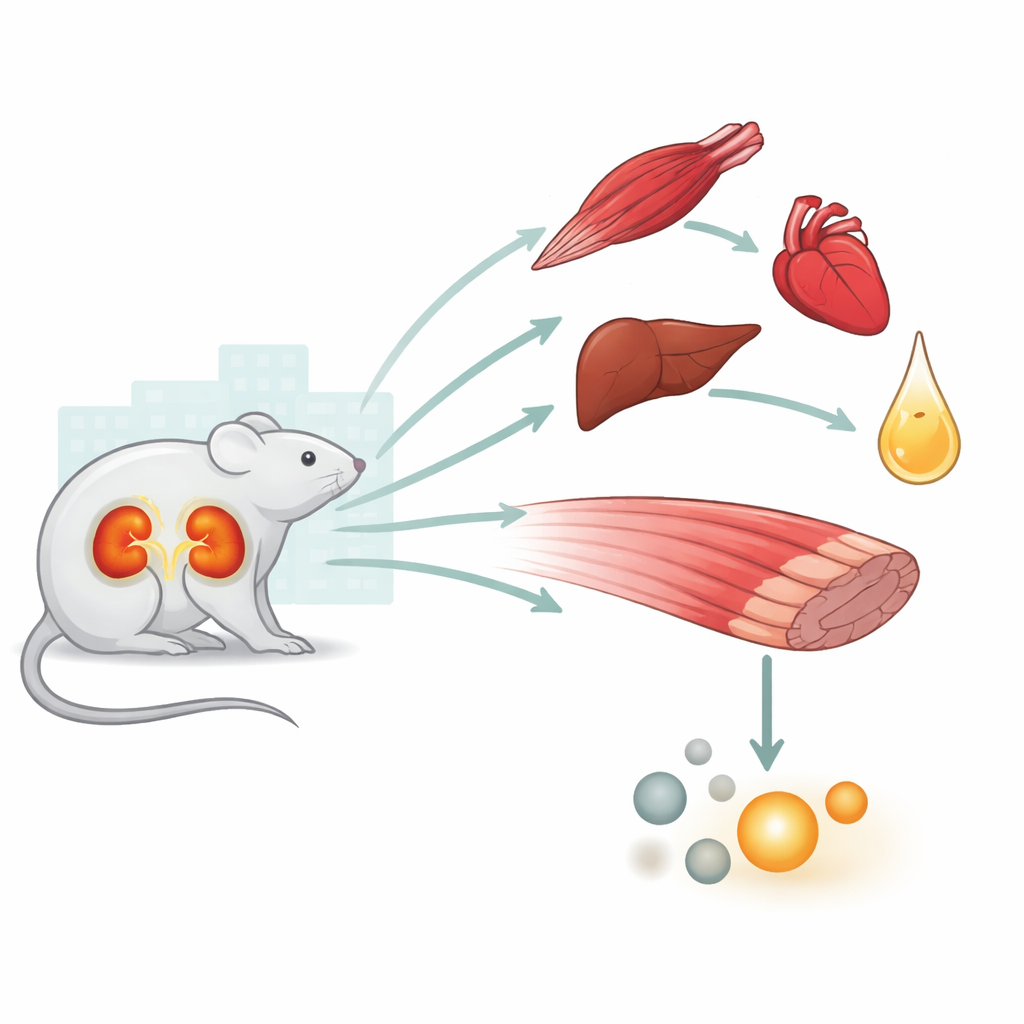
People with sudden kidney failure often notice something that seems unrelated to urine or blood tests: their muscles feel weak, and recovery is slow. This study asks a simple but important question—when the kidneys are suddenly injured, what actually happens inside our muscles’ fuel and building blocks? Using a detailed chemical survey of mouse muscles, the researchers show that acute kidney injury triggers a body‑wide drain on key nutrients and energy molecules, leaving skeletal muscle in a depleted, energy‑poor state.
A Whole‑Body Crisis, Not Just a Kidney Problem
Acute kidney injury (AKI) is common in hospitalized and critically ill patients and is strongly linked to higher risk of death. Doctors have long observed that AKI behaves like a whole‑body stress state, affecting the heart, lungs, liver, brain, and muscles. Earlier work from this group showed that after temporary loss of blood flow to the kidneys in mice, the heart, liver, lungs, and the kidneys themselves all showed chemical signs of low energy and oxidative stress. Building on that, the current study focuses on skeletal muscle, a major reservoir of carbohydrates and amino acids that the body can tap during severe stress.
How the Study Was Done in Mice
Researchers induced ischemic AKI in young adult male mice by briefly clamping both kidney blood supplies, then allowing blood flow to return. They compared these animals with sham‑operated mice and completely unoperated controls. At 24 and 72 hours, they collected a key leg muscle (the gastrocnemius) and used an untargeted metabolomics approach—an ultra‑sensitive chemical scan—to measure 175 small molecules, including amino acids, antioxidants, and energy‑related compounds. Statistical and pattern‑recognition methods were used to determine which molecules changed most and how muscle chemistry differed between groups.
Muscle Fuel and Antioxidants Run Low
The most striking changes appeared 24 hours after kidney injury. About two‑fifths of all detected metabolites were altered, and the overall pattern was clear: many key compounds in muscle were depleted compared with sham surgery. Essential and non‑essential amino acids such as alanine, valine, lysine, methionine, and tyrosine dropped, as did several molecules in the urea cycle (arginine, citrulline, ornithine, argininosuccinate) that help handle nitrogen waste and support creatine production. The main cellular antioxidant, glutathione, and its building blocks (including methionine and a cysteine‑glycine dipeptide) were also reduced, pointing to heightened oxidative stress. Energy‑related molecules, including creatine and intermediates of central energy pathways, trended downward as well, suggesting that muscle was sacrificing its own reserves to support the rest of the body.
Connecting Muscle to Other Organs
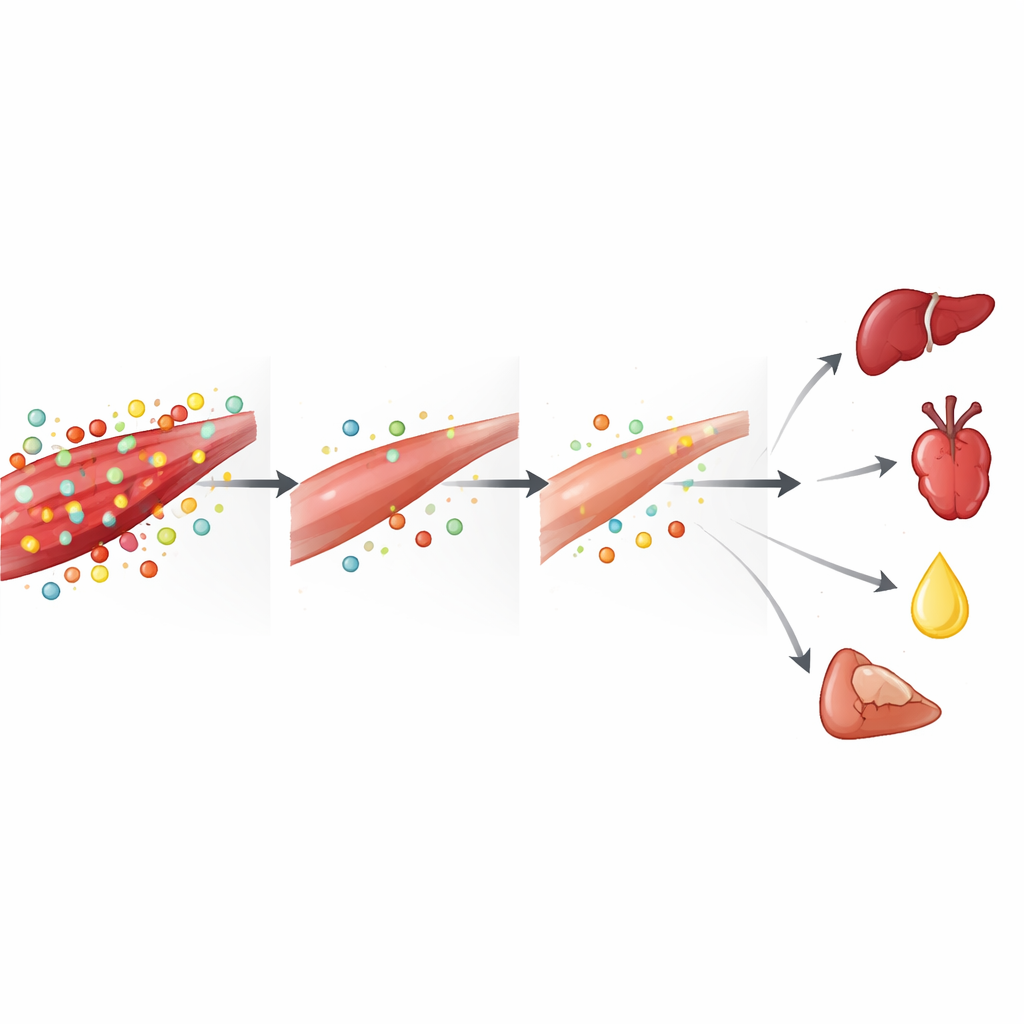
To see the bigger picture, the team compared muscle data with previously collected metabolomic profiles from the kidney, liver, heart, and blood plasma at the same 24‑hour time point. Across all these sites, certain themes repeated: widespread depletion of glutathione and its precursors, lower alanine, and consistent disruption of arginine‑ and urea‑cycle‑related chemistry. At the same time, some breakdown products, such as allantoin (a marker of oxidative stress), rose in multiple organs and in the bloodstream. Creatine and its high‑energy form, phosphocreatine, were relatively increased in the liver, kidney, and blood, even as arginine and amino acids fell in muscle and plasma, hinting that skeletal muscle may be exporting substrates so that other organs—and especially the injured kidneys—can keep making energy under duress.
What This Means for Patients and Future Therapies
Viewed in everyday terms, the study depicts AKI as a metabolic "cash‑out" event for the body: skeletal muscle breaks down its protein and antioxidant stores to help power and protect vital organs, leaving muscles themselves short on fuel and defenses. This helps explain why people with serious kidney injury are prone to muscle wasting, weakness, and poor functional recovery. It also raises the possibility that carefully targeted nutrient support—particularly amino acids and compounds that bolster glutathione and creatine‑phosphocreatine systems—could one day help protect both kidneys and muscles during acute illness. While these findings come from mice and rely on chemical snapshots rather than direct tracing of flows, they provide a detailed map of how muscle chemistry is disturbed by kidney injury and point toward new strategies to preserve strength and improve outcomes when the kidneys fail suddenly.
Citation: Li, A.S., Baker, P.R., Park, S. et al. Metabolomic assessment reveals depletion of amino acids and energy metabolites in skeletal muscle after ischemic acute kidney injury in mice. Sci Rep 16, 8823 (2026). https://doi.org/10.1038/s41598-026-37424-y
Keywords: acute kidney injury, skeletal muscle metabolism, amino acid depletion, oxidative stress, metabolomics