Clear Sky Science · en
Myo-Inositol modulates AKT signalling, mitochondrial protein expression and intracellular Ca²⁺dynamics in human dermal fibroblasts
Why a sugar-like molecule in your cells matters
Myo-inositol is a vitamin-like substance found in many foods and already used as a supplement for conditions such as polycystic ovary syndrome and metabolic syndrome. Yet, despite its growing popularity, we still know surprisingly little about what myo-inositol actually does inside healthy human cells. This study looks at ordinary skin cells grown in the lab and reveals that myo-inositol quietly rewires several core cell functions: how cells manage energy in their mitochondria, how a key growth-control switch behaves, and how cells handle bursts of calcium signals.
A closer look at everyday skin cells
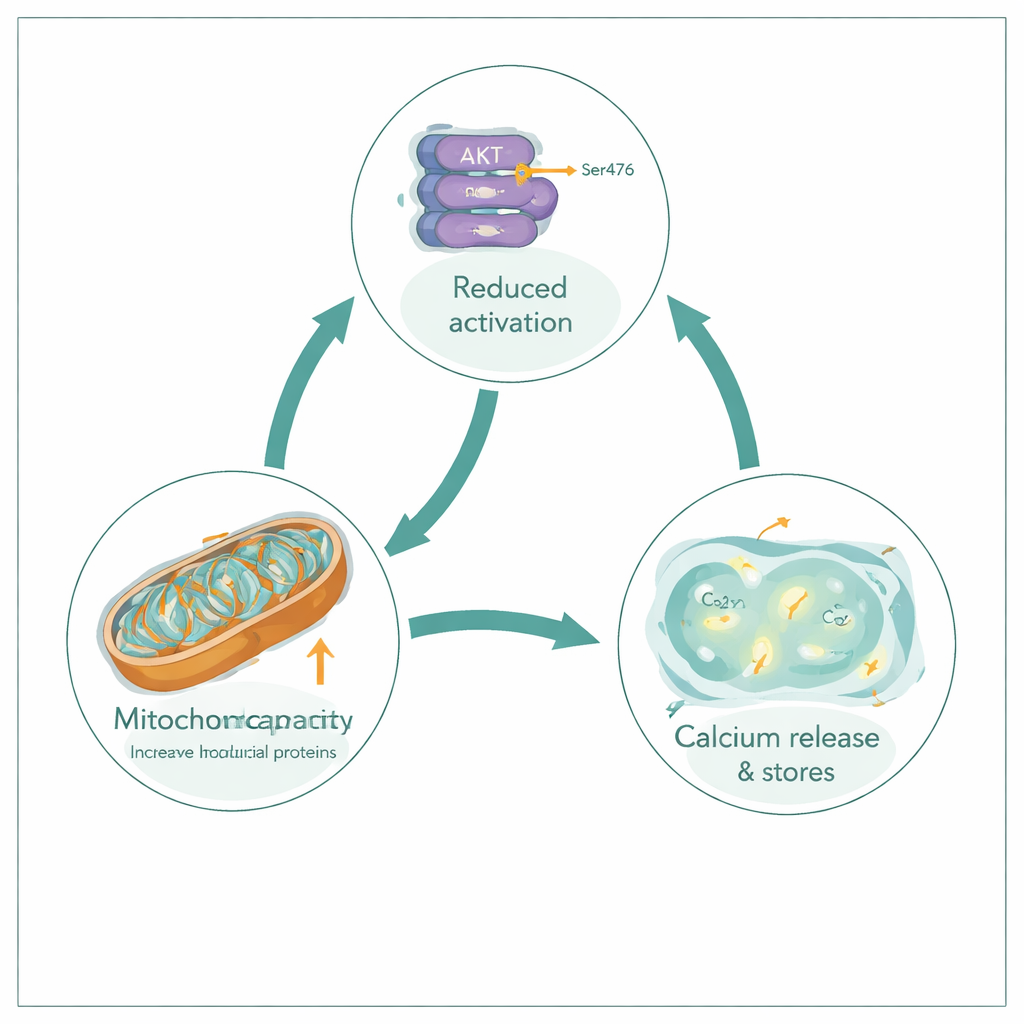
The researchers worked with primary human dermal fibroblasts—cells from the connective tissue of the skin that are widely used as a model for normal human cells. They exposed these fibroblasts to levels of myo-inositol similar to those that can accumulate inside our tissues. Then they tracked three main features: activity of AKT (a protein that helps control cell survival and metabolism), the makeup and performance of mitochondria (the cell’s power stations), and the way cells respond to chemical cues that trigger calcium waves inside the cell.
Tuning a central growth and survival switch
AKT is a central switch in many cells, helping decide whether they grow, divide, or conserve resources. It is activated when specific spots on the protein are tagged with phosphate groups. The team found that myo-inositol selectively lowered phosphorylation at one of these sites, called Ser473, while leaving another key site, Thr308, unchanged. This suggests myo-inositol does not simply shut off the whole AKT pathway, but instead fine-tunes a particular branch of it. Interestingly, this selective effect appeared both in normal fibroblasts and in fibroblasts from a patient with a rare nerve disease involving disturbed lipid signalling, implying that this AKT adjustment does not require a completely intact lipid-signalling network.
Quiet remodeling of the cell’s power stations
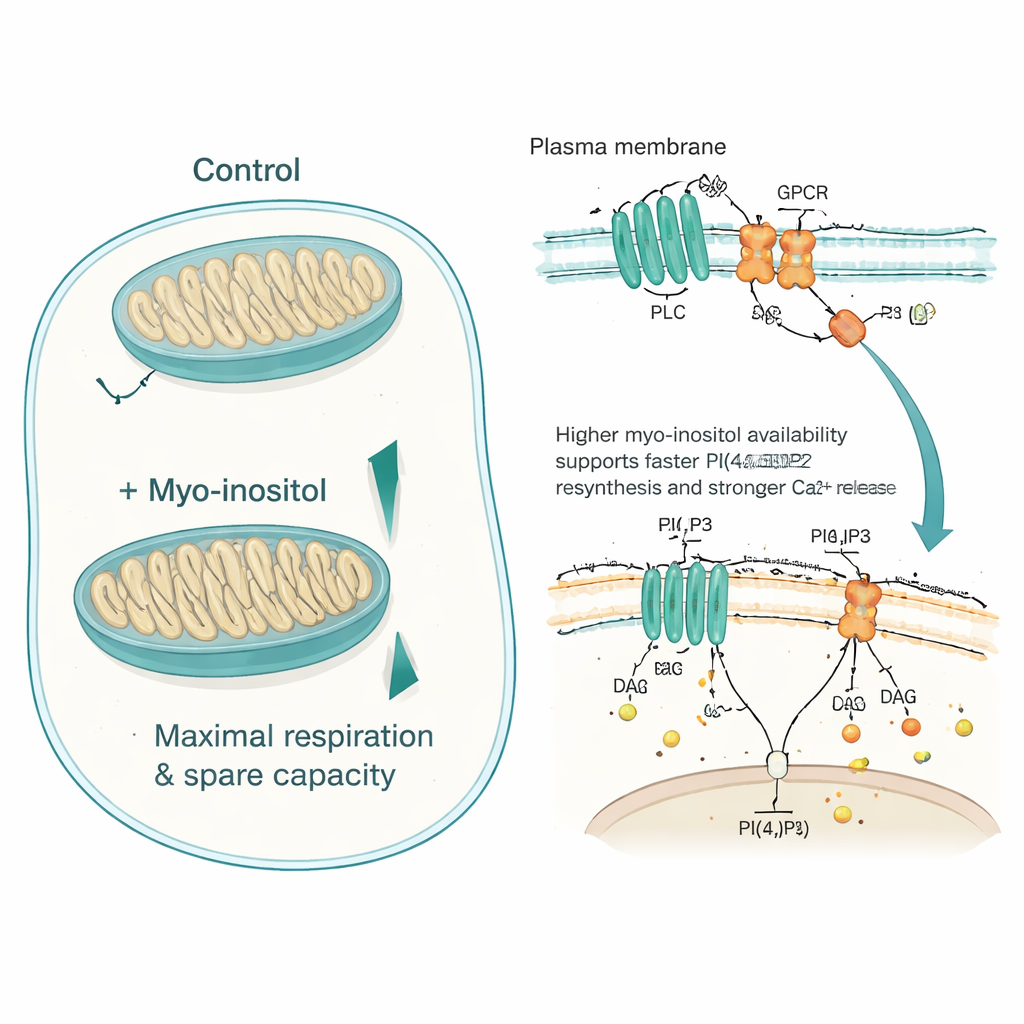
Mitochondria can change their protein content to adapt to a cell’s needs. After myo-inositol treatment, fibroblasts showed higher levels of several proteins that belong to the mitochondrial energy chain, as well as a protein that helps control mitochondrial DNA activity. However, the total amount of mitochondrial material, the mitochondrial membrane voltage, and the number of mitochondrial DNA copies stayed the same, and there was no sign of extra oxidative stress. When the researchers measured oxygen consumption, they discovered that mitochondria kept their normal baseline workload but gained extra “reserve capacity” to ramp up energy output when pushed. This points to a qualitative tune-up rather than a full-scale increase in mitochondrial number. Notably, this mitochondrial remodeling did not occur in the nerve-disease fibroblasts, suggesting that proper phosphoinositide signalling is needed for myo-inositol to enhance mitochondrial machinery.
Boosting internal calcium messages
Calcium ions act as rapid-fire messengers inside cells, shaping how they react to hormones and stress. Myo-inositol is a building block for molecules that link surface receptors to calcium release from internal stores. In these fibroblasts, brief exposure to myo-inositol made ATP-evoked calcium spikes larger, without disturbing how quickly cells recovered. Single-cell imaging revealed that signals triggered by histamine—a classic activator of a calcium-releasing pathway—became stronger and faster, and that the total calcium stored inside the cell was modestly increased. Experiments with a drug that blocks mitochondrial fission showed that myo-inositol and mitochondrial shape changes influence calcium signals in different ways, supporting the idea that myo-inositol mainly works by improving how the inositol-based signalling cycle feeds calcium release rather than by reshaping mitochondria.
What this means for health and supplements
For non-specialists, the key message is that myo-inositol is not just a passive nutrient or simple blood-sugar helper. In normal human skin cells, it subtly dials down part of a major growth-control switch, upgrades mitochondrial energy flexibility without overdriving the system, and makes internal calcium messages stronger and quicker. These changes occur under otherwise resting conditions, suggesting myo-inositol helps cells stay ready to respond to future demands. While this work does not directly test clinical outcomes, it clarifies how a widely used supplement can shape fundamental cell behaviours and highlights the cellular context needed for these effects to unfold.
Citation: Zanfardino, P., Amati, A., Iacobellis, D. et al. Myo-Inositol modulates AKT signalling, mitochondrial protein expression and intracellular Ca²⁺dynamics in human dermal fibroblasts. Sci Rep 16, 6545 (2026). https://doi.org/10.1038/s41598-026-37423-z
Keywords: myo-inositol, cell signalling, mitochondria, calcium dynamics, AKT pathway