Clear Sky Science · en
County-level surveillance for the American dog tick (Dermacentor variabilis) and Rickettsia species in Kentucky
Why tick tracking matters to you
Most people in Kentucky spend time outdoors—walking dogs, hiking, hunting, or working on farms—and that means crossing paths with ticks. Some of these tiny arachnids carry bacteria that can make people seriously ill. This study set out to learn where one common species, the American dog tick, is found across the state and how often it carries different disease-causing germs. The results help explain local risks and when and where Kentuckians should be most alert to tick bites.
A closer look at a common backyard biter
The American dog tick is widespread in the eastern United States and is known as a major carrier of the bacterium that causes Rocky Mountain spotted fever, a severe and sometimes deadly illness. But doctors and scientists have long suspected that other, lesser-known relatives in the same bacterial family may be responsible for many spotted fever cases, especially because routine blood tests cannot easily tell these infections apart. That uncertainty is especially troubling in Kentucky, which has reported high rates of spotted fever–like illness for years without a clear picture of exactly which germs are involved.
How the researchers watched ticks across the state
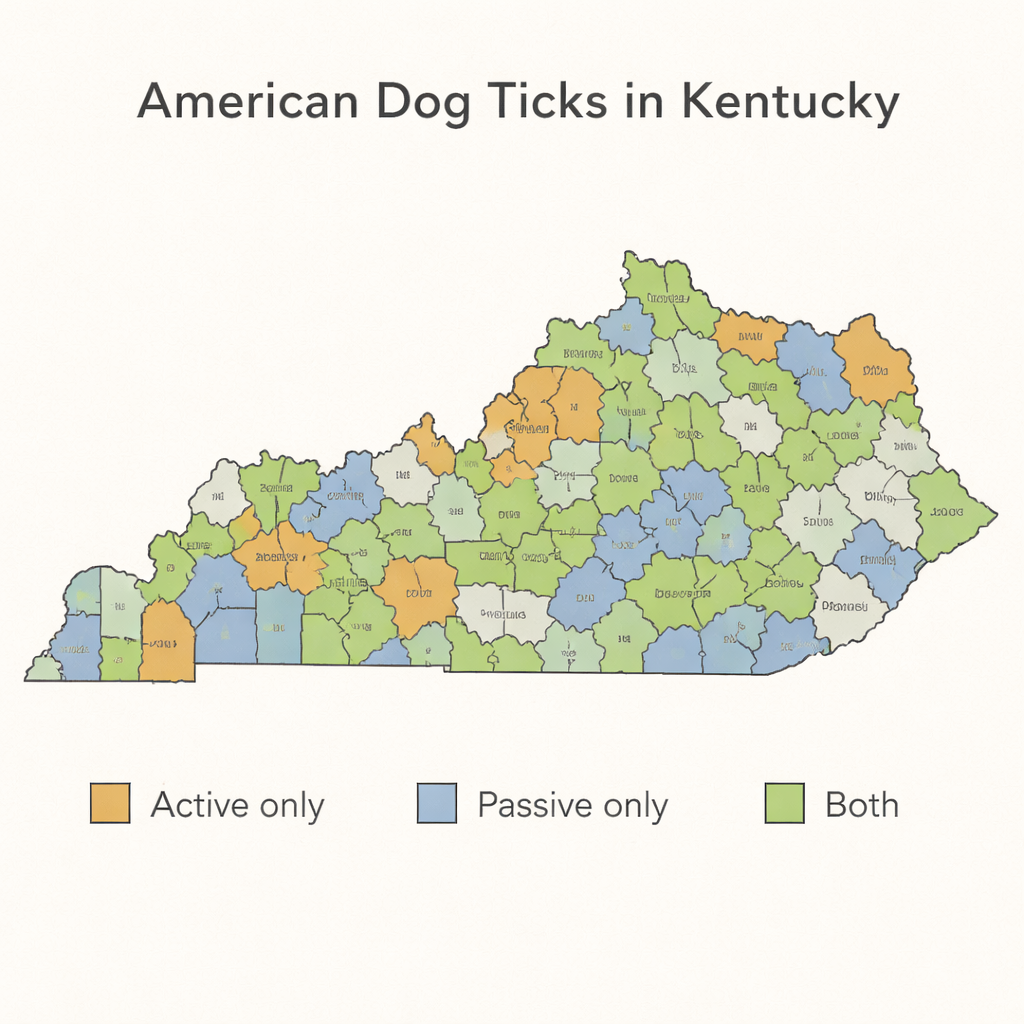
To fill in these gaps, scientists at the University of Kentucky ran a six-year surveillance project from 2019 through 2024. They used two main approaches. First, they performed “active” sampling by dragging a white cloth along trails, parks, and fields in many counties and collecting any ticks that climbed on. Second, they set up a public submission program so veterinarians, health departments, county extension offices, and residents could send in ticks removed from people, pets, livestock, and wildlife. In total, they gathered 2,023 American dog ticks from 114 of Kentucky’s 120 counties, showing that this species is widely established and commonly encountered by both humans and animals.
What they found inside the ticks
From the ticks they collected, 1,484 were in good enough condition to test for bacteria. The team extracted DNA from each tick or small pools of ticks and used molecular tools to look for spotted fever group Rickettsia, the family of bacteria that includes the agent of Rocky Mountain spotted fever. They detected Rickettsia in about 1 percent of all tested American dog ticks. When they sequenced the DNA to see which species were present, they found three: Rickettsia montanensis, Rickettsia parkeri, and Rickettsia amblyommatis. Notably, they did not detect Rickettsia rickettsii, the classic Rocky Mountain spotted fever agent, in any of the ticks.
Seasonal patterns and what low infection really means
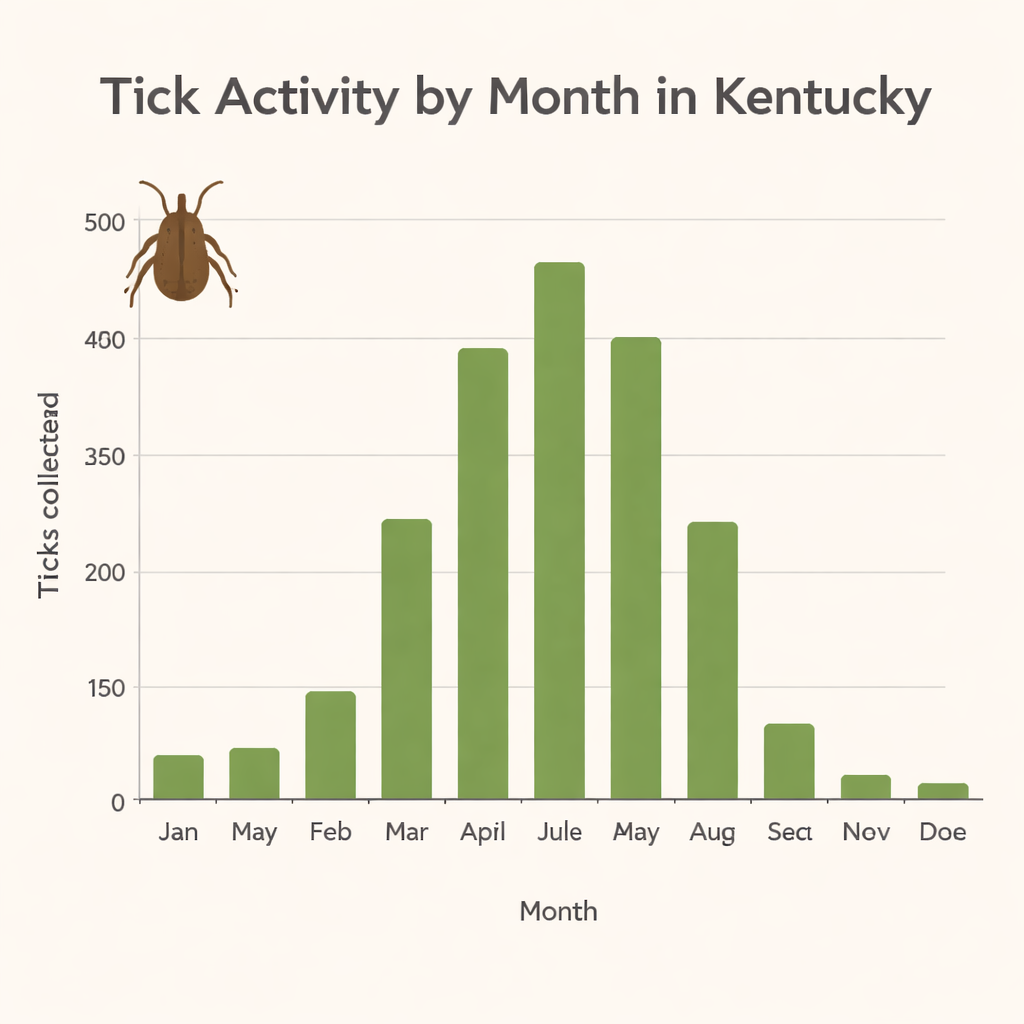
The timing of tick activity followed a clear seasonal pattern. American dog ticks were most active from March through October, with strong peaks in May and June, exactly when many Kentuckians are outside the most. Even though only about one in a hundred ticks carried Rickettsia, the sheer number of ticks and their wide distribution mean that exposure is still possible, especially in late spring and early summer. The authors also note that their methods may miss mixed infections, and that other tick species—such as the lone star tick, which is abundant in Kentucky and often carries Rickettsia—may play a bigger role in human disease than the American dog tick alone.
What this means for health and prevention
For the average person, the key takeaway is that tick-borne spotted fevers in Kentucky are real but may not always be caused by the classic Rocky Mountain spotted fever germ. Instead, several related bacteria appear to be circulating at low levels in common ticks. Because routine tests cannot easily distinguish among these infections, doctors and public health officials need good local data on which germs are present in which tick species. This study provides that foundation for the American dog tick and underscores the need for continued, multi-species tick surveillance. For now, the most practical advice remains simple: avoid tick bites when you can, check yourself, your children, and your animals after time outdoors, and seek medical care promptly if you develop fever or rash after a tick bite, since early treatment is crucial regardless of which Rickettsia species is responsible.
Citation: Vandegriff, C.W., Ryoo, J.S., Carrasquilla, M.C. et al. County-level surveillance for the American dog tick (Dermacentor variabilis) and Rickettsia species in Kentucky. Sci Rep 16, 7404 (2026). https://doi.org/10.1038/s41598-026-37422-0
Keywords: ticks, Rocky Mountain spotted fever, Rickettsia, Kentucky, tick-borne disease