Clear Sky Science · en
Environmental toxicant ochratoxin A induces psoriasis based on network toxicology machine learning and molecular docking analyses
Why a common food mold toxin matters for skin health
Psoriasis is often seen as just a stubborn rash, but it is actually a lifelong immune disease that can damage the skin and the whole body. This study asks a simple but unsettling question: could a mold toxin that quietly contaminates everyday foods, called ochratoxin A (OTA), be one of the hidden sparks that sets psoriasis in motion or makes it worse? By tracing OTA’s footprints from food and skin exposure all the way down to genes and immune cells, the researchers show how an invisible chemical in our diet may help fan the flames of this visible skin disease. 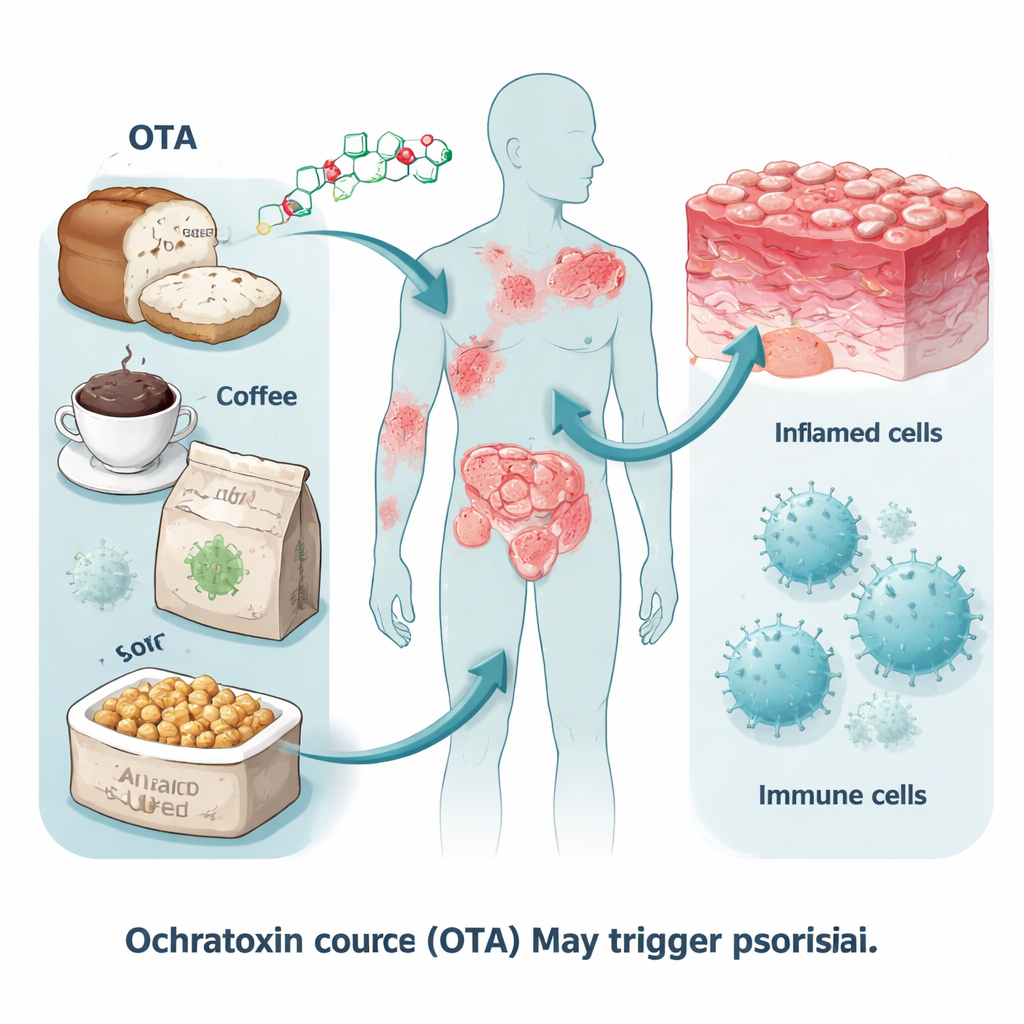
A hidden guest in food and on skin
OTA is produced by common molds that grow on grains, coffee, and animal feed. Because it survives processing and lingers in the body for a long time, low levels of OTA are frequently found in human blood. It is already known to harm organs such as the kidneys and to disturb the immune system. Psoriasis, on the other hand, is driven by an overactive immune response in the skin, leading to red, scaly plaques and sometimes heart and joint problems. Earlier work hinted that various pollutants and chemicals may trigger or worsen psoriasis. This study brings OTA into that picture, asking whether long-term exposure to this toxin might be one of the environmental pushes that tip a susceptible person toward disease.
Mining big data to connect toxin and disease
Instead of relying on a single experiment, the team used a “systems” approach that pulls together many types of biological data. First, they searched several chemical and genetic databases to list hundreds of proteins in the body that OTA is predicted to affect. They then compared this list with nearly five thousand genes linked to psoriasis and found 242 that overlapped. These shared targets were enriched in pathways that control inflammation, stress responses, and cell death, especially those driven by well-known psoriasis messengers such as IL-17 and TNF. In other words, the molecular pathways that OTA likes to disturb are the same ones that go wrong in psoriatic skin.
Finding a fingerprint of five key genes
Next, the researchers turned to large public datasets of skin samples from people with and without psoriasis. Using advanced statistics and network tools, they looked for groups of genes that move together with the disease and then narrowed in on those that were also tied to OTA. They combined this with nine different machine learning methods—computer models that learn patterns in data—to identify a small, reliable set of genes that best distinguished psoriatic from normal skin. Five stood out: PNP, LCN2, HSPE1, TYMP, and CXCR2. A diagnostic model based on these five genes was able to separate diseased and healthy samples with near-perfect accuracy, even when tested on an independent dataset, suggesting this gene set captures a core signature of OTA-related psoriasis biology. 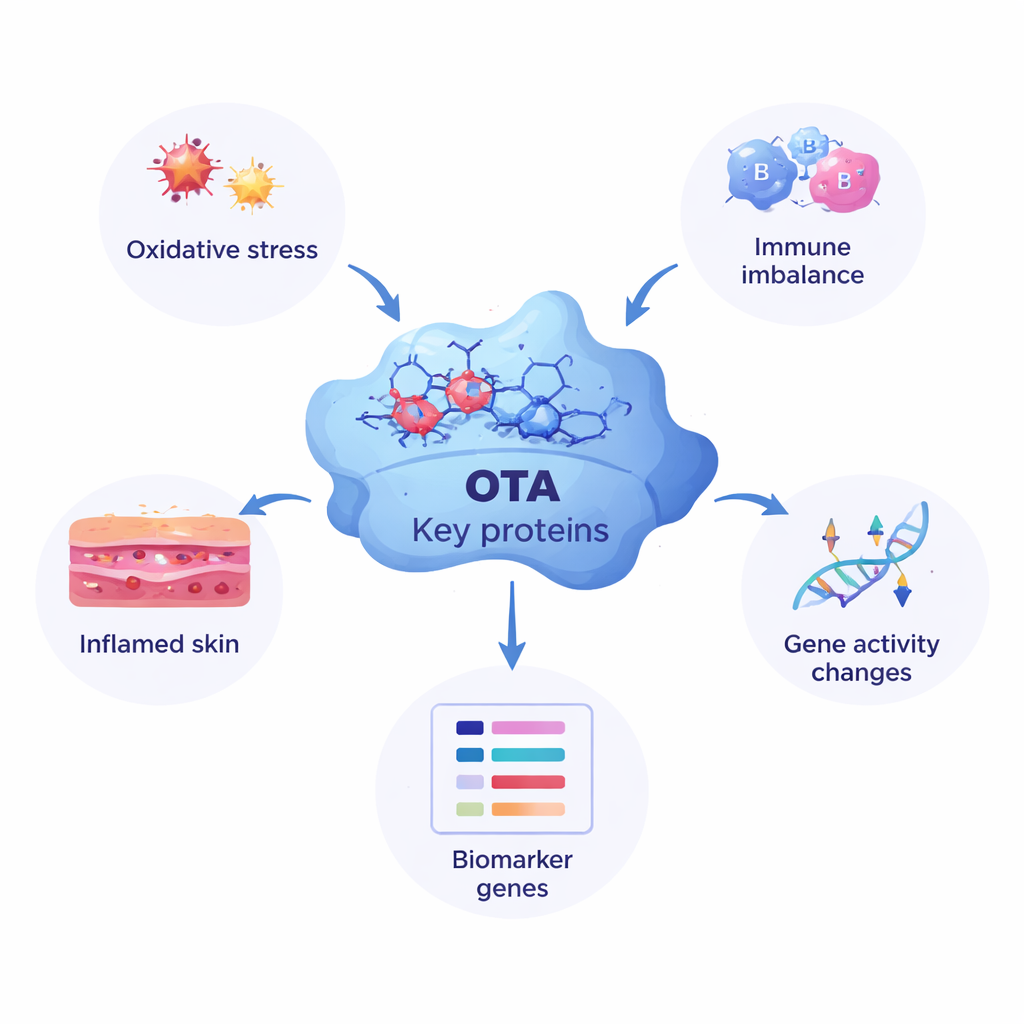
From molecules to immune cells and inflamed skin
To understand how OTA might act physically, the team used computer simulations to “dock” OTA onto the 3D shapes of the five proteins encoded by these genes. OTA fit snugly into pockets on each protein, forming stable contacts that would be expected if it truly bound them in living cells. Longer simulations suggested that these bonds remained steady over time, hinting that OTA could directly alter how these proteins function. When the researchers examined the mix of immune cells in psoriatic skin, they found that higher levels of the five genes went hand in hand with more activated dendritic cells, eosinophils, and certain T cells—cells known to drive inflammation—and fewer “resting” cells that normally help keep responses in check. Together, this paints a picture in which OTA helps push the skin’s immune system into a chronic, overexcited state.
What it all means for people living with psoriasis
For a general reader, the takeaway is not that OTA has been definitively proven to cause psoriasis, but that it is a strong suspect in the line-up of environmental triggers. This work shows that OTA and psoriasis intersect at critical immune and stress pathways, that a small set of OTA-linked genes can accurately flag psoriatic skin, and that the toxin can plausibly latch onto proteins that shape inflammation. While more laboratory and human studies are needed, the findings support the idea that reducing lifelong exposure to OTA-contaminated foods and better tracking such toxins may one day become part of preventing or tailoring treatment for psoriasis.
Citation: Hu, J., Tang, M., Zheng, Qy. et al. Environmental toxicant ochratoxin A induces psoriasis based on network toxicology machine learning and molecular docking analyses. Sci Rep 16, 6419 (2026). https://doi.org/10.1038/s41598-026-37417-x
Keywords: psoriasis, ochratoxin A, environmental toxin, skin inflammation, immune dysregulation