Clear Sky Science · en
Dysregulated expression of cell cycle regulators CDC20, PLK1, BUB1, CDC45, CDCA5 in pancreatic ductal adenocarcinoma
Why this study matters
Pancreatic cancer is one of the deadliest cancers, largely because it is usually discovered too late. Doctors urgently need ways to spot it earlier and to tell which tumors are likely to behave aggressively. This study focuses on a handful of genes that control how cells divide, asking whether their abnormal activity could serve as warning lights for pancreatic ductal adenocarcinoma (PDAC), especially in patients from Pakistan, a population that has been underrepresented in genomic research.
Looking for warning signs in tumor genes
The researchers began by examining messenger RNA, the molecular readout of which genes are switched on or off in a cell. They generated RNA sequencing data from tumor samples and nearby noncancerous tissue taken from Pakistani patients with PDAC. To strengthen their search, they combined these new data with seven large, publicly available international datasets of pancreatic tumors. This pooling created a much bigger picture of which genes consistently change their activity in cancer compared to healthy tissue, regardless of where the patients live.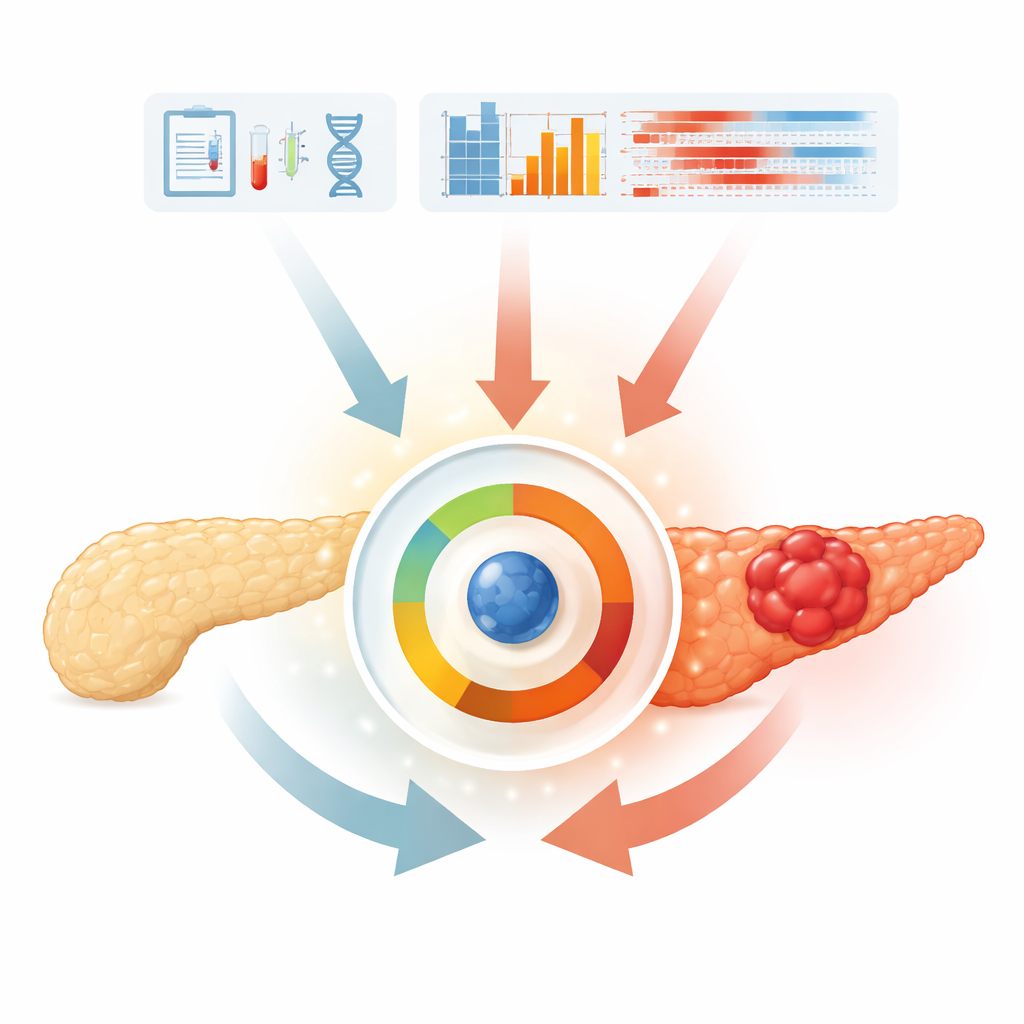
Finding a core set of overactive cell-division genes
From thousands of altered genes, the team narrowed the list to those that were repeatedly and strongly different between tumor and normal samples across all datasets. Using network analysis tools, they looked for genes that sat at the “hubs” of interaction maps—genes whose protein products connect to many others and help coordinate vital processes. Five genes stood out: CDC20, PLK1, BUB1, CDC45, and CDCA5. All of them play key roles in the cell cycle, the tightly controlled series of steps that a cell follows as it prepares to divide. In PDAC tumors, these genes were uniformly more active than in healthy pancreas tissue, suggesting that the cancer cells may be pushing the division machinery into overdrive.
Checking patterns across stages and patient outcomes
The scientists then asked how these genes behave over the course of disease and whether they relate to patient survival. Drawing on large cancer databases, they found that the five genes were already elevated at the earliest detectable stage of PDAC and remained high as the cancer advanced. In particular, PLK1 showed meaningful variation with stage, hinting that its activity might track disease progression. When the team examined survival data, patients whose tumors had higher levels of any of these genes tended to have shorter periods before their disease worsened. This pattern links the overactive cell-cycle genes not only to the presence of cancer but also to how aggressively it behaves.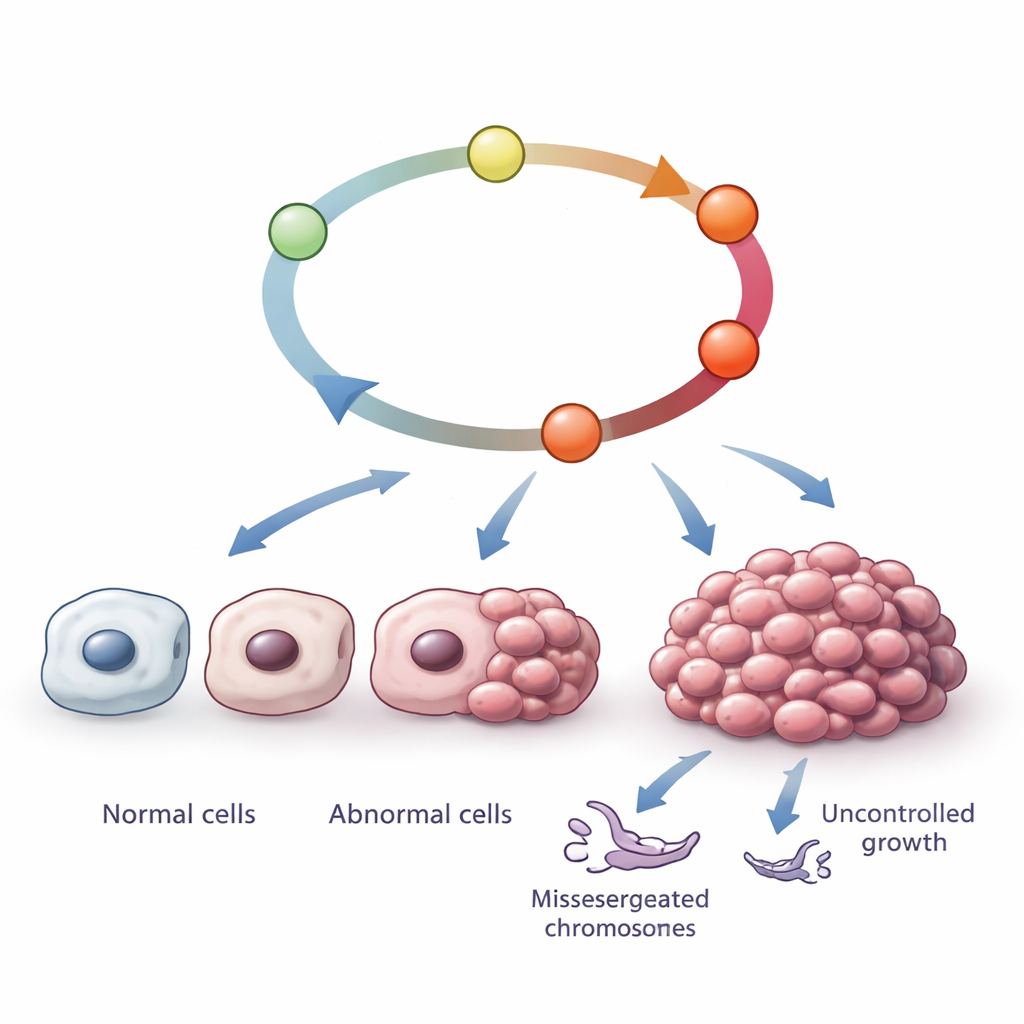
Zooming in on regulation and DNA changes
To explore why these genes are misbehaving, the researchers looked at two additional layers of control. First, they used computational tools to identify small regulatory molecules, called microRNAs, and RNA-binding proteins that might normally keep the five genes in check. One microRNA (miR-1197) and one protein (TIA1) emerged as key players, but both appeared reduced in pancreatic tumors, potentially lifting the brakes on cell division. Second, they performed whole-exome DNA sequencing on the same Pakistani tumors. Most of the genetic variants they found in the five genes lay in noncoding regions that may subtly tune gene activity. Notably, they discovered a previously unreported change in the BUB1 gene that alters its protein structure in a region important for accurate chromosome separation—an intriguing finding that now needs functional testing.
Confirming signals in real tumor samples
Crucially, the team validated their computational discoveries in the laboratory. Using a sensitive technique that measures gene activity (RT-qPCR), they tested nine pairs of tumor and nearby normal tissues from Pakistani patients. In every case, the five cell-cycle genes were much more active in the cancer samples—often several-fold higher—mirroring the patterns seen in the large global datasets. Many of these tumors were at surgically treatable stages, indicating that the abnormal signals arise early enough to be useful for diagnosis, not just for studying advanced disease.
What this could mean for patients
This work suggests that a small group of cell-division genes—CDC20, PLK1, BUB1, CDC45, and CDCA5—form a core signature of pancreatic ductal adenocarcinoma. Because they are consistently switched on in tumors across different populations and are already elevated in early-stage disease, they may help design tests that flag pancreatic cancer sooner and classify which tumors are most dangerous. Some of these genes, particularly PLK1, are also being explored as drug targets, raising the possibility of treatments that directly dial down runaway cell division. While larger studies and functional experiments are still needed, this research provides a focused starting point for developing better diagnostic tools and targeted therapies for one of the most lethal cancers.
Citation: Naeem, M., Qadeer, K., Jabeen, I. et al. Dysregulated expression of cell cycle regulators CDC20, PLK1, BUB1, CDC45, CDCA5 in pancreatic ductal adenocarcinoma. Sci Rep 16, 9409 (2026). https://doi.org/10.1038/s41598-026-37399-w
Keywords: pancreatic cancer, cell cycle genes, biomarkers, RNA sequencing, precision oncology