Clear Sky Science · en
Development and content validation of an educational manual for promoting physical activity among older adults in India
Why staying active in later life matters
Across India, more people are living into their 60s, 70s, and beyond. While this is a triumph of modern life, it also brings new challenges: long-term illnesses, loss of strength, and fear of falling can make everyday tasks harder. One of the simplest ways to protect health in older age is regular physical activity—but many seniors are unsure what is safe, where to start, or why it really matters. This study describes how researchers in India worked closely with older adults and health experts to develop and thoroughly test an easy-to-read exercise booklet designed especially for Indian seniors.
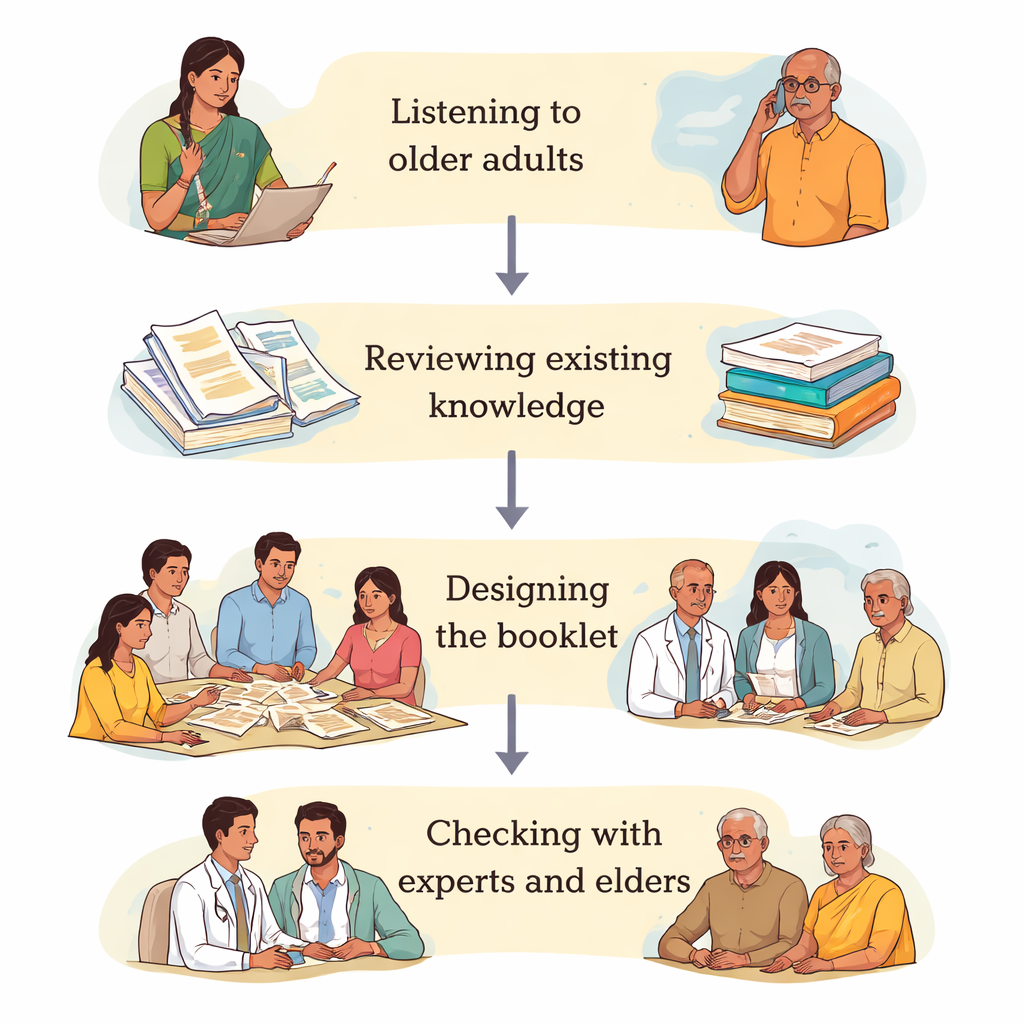
Listening to older adults first
The project began not with a pre-written plan, but with conversations. The researchers conducted in-depth telephone interviews with 13 older adults, both men and women, most in their late 60s. Instead of just asking if they exercised, they explored what physical activity meant to them, what helped them stay active, and what got in the way. From the recorded and carefully analysed interviews, four main storylines emerged: the perceived benefits of being active, the barriers that made activity difficult, the personal and social factors that motivated them, and the different ways movement shows up in daily life—from planned exercise to chores and walking for errands.
Hopes, hurdles, and everyday movement
Participants spoke warmly about how moving more helped them feel better overall, stay independent, and enjoy social connection. At the same time, they described common obstacles: worries about getting hurt, existing health problems, tiredness, and a lack of clear, trustworthy guidance on safe exercises for someone their age. Some felt their surroundings—busy streets, lack of parks, or absence of guidance—made regular activity difficult. Others mentioned that encouragement from family or health professionals could nudge them to be more active. These voices made it clear that telling older adults simply to “exercise more” is not enough; advice has to fit their bodies, fears, routines, and local environment.
Designing a booklet seniors actually want to use
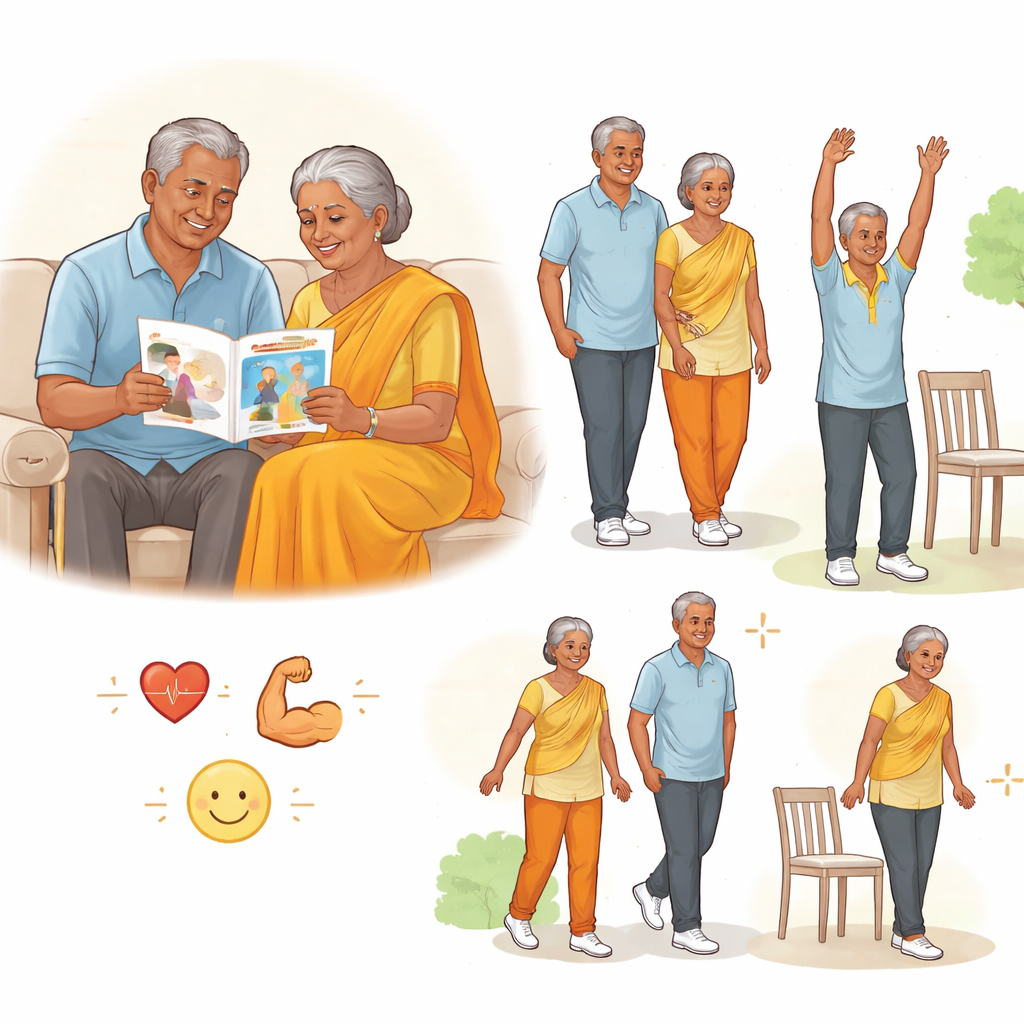
Guided by what they heard, the team reviewed scientific studies on exercise education for older people and then drafted a booklet called “fit4function.” They worked with a fine arts specialist and a graphic designer so that pictures, layout, and colors would be appealing and easy to follow, even for readers with limited schooling. The booklet covers aging and why activity matters, common worries and how to handle them, safety tips, warm-up and cool-down routines, simple aerobic options, strength exercises for arms and legs, flexibility work, and balance training with and without support. Text was kept short, everyday words were used instead of technical terms, and illustrations were chosen to show each movement clearly. A readability test showed that the language could be understood by someone with about a sixth-grade education.
Putting the booklet to the test
The researchers then checked whether the content was truly helpful and relevant. Six experts in physiotherapy, exercise science, nutrition, psychology, and geriatric care carefully scored each part of the first version. Using a standard scoring method called the content validity index, they judged which items were clear and important, and which needed revision. Feedback led to changes in the title, wording, some pictures, and the order of topics. A second round of review, now with four experts, rated every item as relevant. Next, ten older adults from the community reviewed the revised booklet. They evaluated how attractive it looked, how simple the language was, whether the images matched the text, and if the content fit Indian culture and daily life. Their ratings showed very high acceptance, with nearly all items judged fully relevant. They also suggested helpful improvements, such as enlarging some images and adding brief exercise descriptions.
What this means for healthy aging
The final result is a validated, culturally tailored exercise booklet that Indian older adults can use on their own, with family, or alongside healthcare providers. High scores for clarity, relevance, and ease of reading suggest that the manual can support seniors in understanding why movement matters and how to be active safely. While the study did not yet track long-term changes in exercise habits or health, it lays the groundwork for community programs, clinics, and senior centers to use a common, user-friendly tool. For lay readers, the takeaway is simple: when health information is built with older adults—not just for them—it becomes more likely to guide real-world action and help people stay strong, steady, and independent for longer.
Citation: Mahatme, S., Sinha, M.K., Ravindran, S.K. et al. Development and content validation of an educational manual for promoting physical activity among older adults in India. Sci Rep 16, 7614 (2026). https://doi.org/10.1038/s41598-026-37388-z
Keywords: older adults, physical activity, health education, India, active aging