Clear Sky Science · en
Biogeographic variation in the diet of juvenile blacktip sharks across the Galapagos Archipelago
Why young sharks in Galapagos bays matter
Along the shores of the Galapagos Islands, shallow, mangrove-fringed bays shelter clouds of baby sharks. These young blacktip sharks are growing fast, and what they eat helps determine whether they survive to adulthood. This study follows their menu across the archipelago and through changing ocean conditions, revealing how geography and climate-driven events like El Niño and La Niña ripple through the food web to shape the lives of these small but important predators.
Island nurseries as shark playgrounds
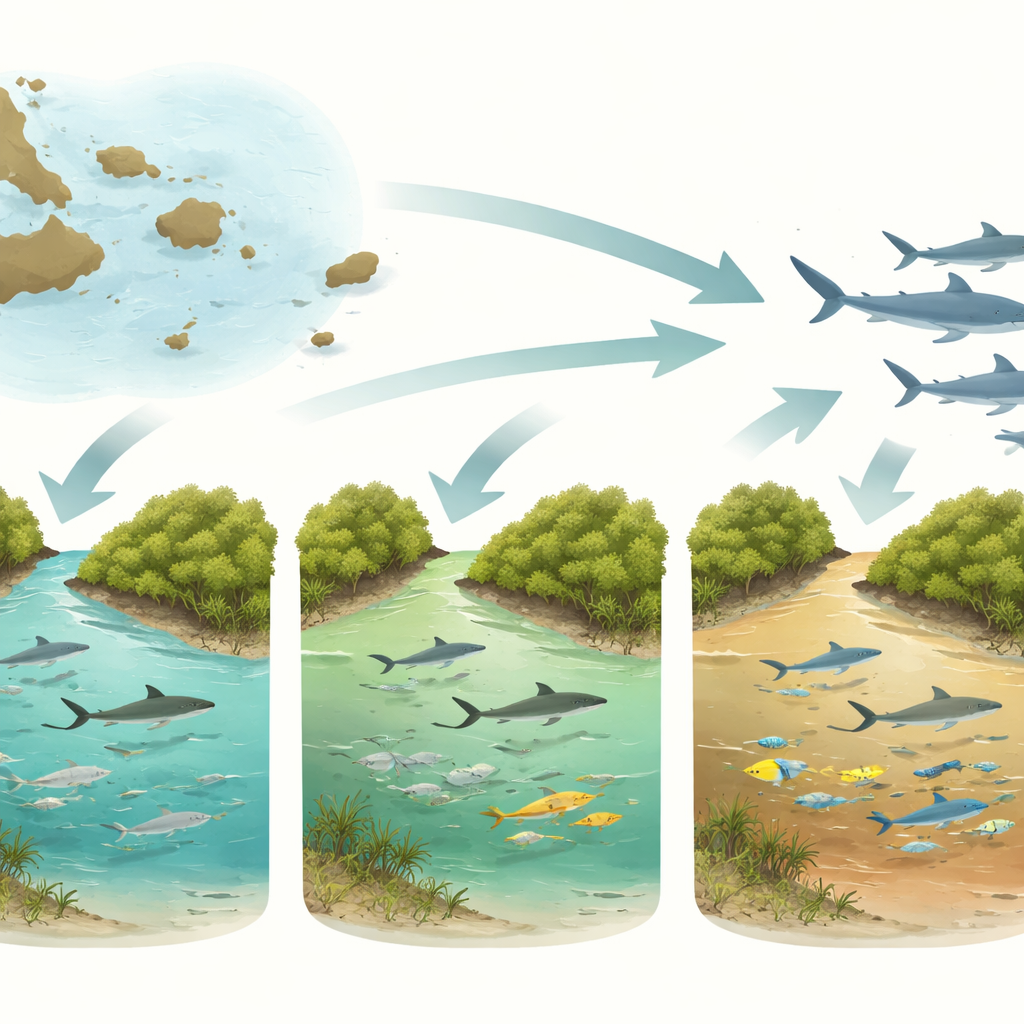
The researchers focused on juvenile blacktip sharks that use quiet coastal bays as nurseries—safe places with plentiful food and some shelter from larger predators. These nurseries ring several of the Galapagos Islands, but the surrounding waters differ. The western islands are cooler and support fewer fish species, while the eastern islands are warmer and host a richer mix of tropical fishes. Because predators usually eat what is most available, the team expected young blacktips in the east to enjoy a more varied diet than those growing up in the west.
A gentle way to read a shark’s last meal
Instead of cutting open stomachs, scientists used a non-lethal approach that leaves every shark alive. They briefly captured 107 juvenile blacktips from 14 bays on four islands, gently swabbed the inside of the cloaca—an opening that collects waste—and released each shark within minutes. Those swabs contained traces of digested prey DNA. In the lab, the team amplified and sequenced specific genetic fragments that act like bar codes for different fish and invertebrates. Comparing these genetic bar codes to large reference databases allowed them to identify what species the sharks had recently eaten, often down to the exact species rather than just a broad group.
What is on the blacktip menu?
The DNA evidence showed that juvenile blacktip sharks in the Galapagos are almost exclusively fish eaters. Out of 25 kinds of prey detected, the clear favorite was Thoburn’s mullet, a fish found only in the Galapagos, followed by sergeant-major damselfishes, Galapagos ringtail damselfish, scalloped hammerhead sharks, and yellowtail damselfish. Most young blacktips had several prey types in their guts, averaging nearly four different taxa per individual. Surprisingly, some blacktips had recently eaten young scalloped hammerhead sharks, either hunting them directly or scavenging their carcasses—an unexpected predator–predator link inside these nursery bays.
Where you grow up and when you feed
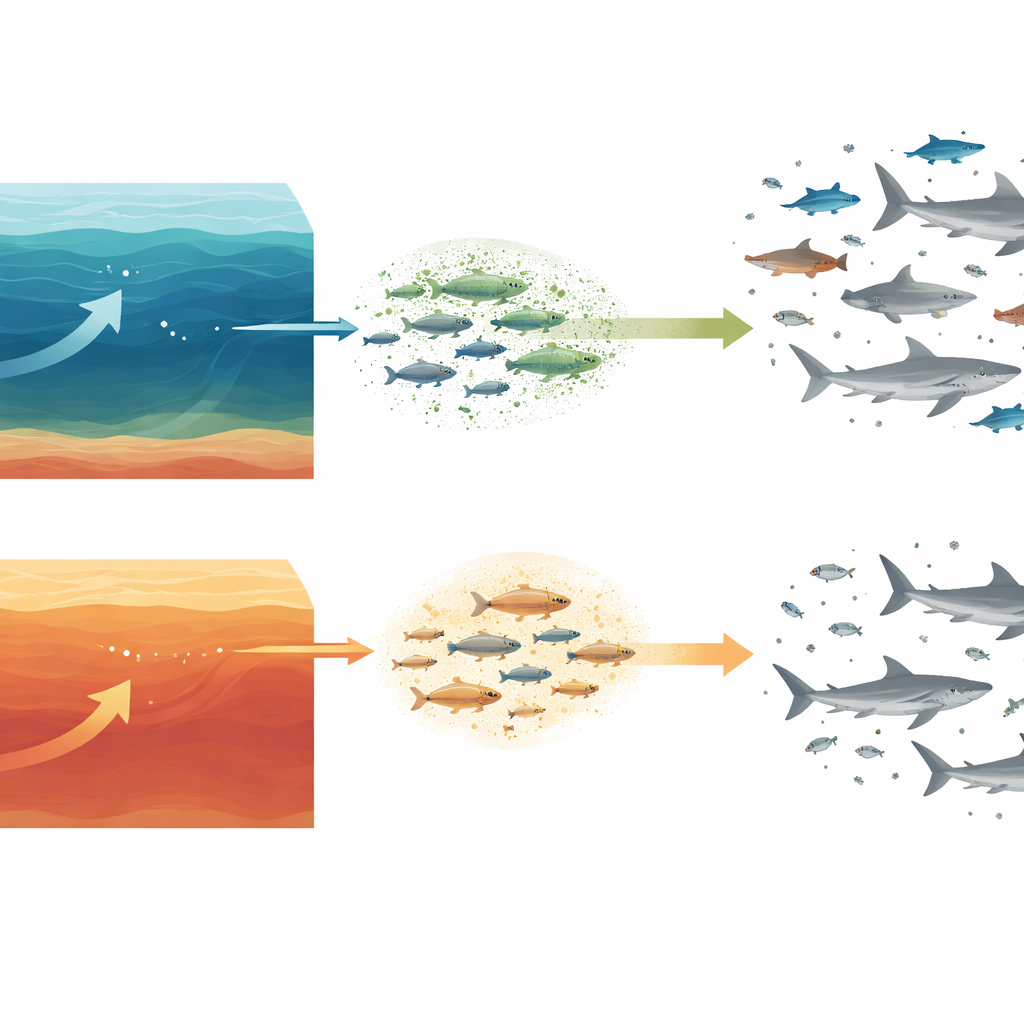
Diet turned out to vary strongly from bay to bay. Sharks from San Cristobal Island, on the eastern side of the archipelago, had the highest prey richness and included all of the crustaceans and many fish species detected in the study. Nurseries around the cooler western islands had fewer prey types in shark diets, reflecting lower local fish diversity. The team also took advantage of natural climate swings: one bay, Rosa Blanca 2, was sampled during a cooler La Niña year and again during a warmer El Niño year. During La Niña, juvenile blacktips there fed on a broader array of prey, including two damselfish species and scalloped hammerheads. During El Niño, when productivity and fish numbers across the region are known to drop, these prey types disappeared from shark diets and overall dietary variety declined.
Climate, fishing, and the fate of mullet
The study highlights Thoburn’s mullet as a keystone species for both sharks and people. This endemic fish is heavily targeted by local artisanal fishers and also makes up the largest share of young blacktips’ diet. Past El Niño events have already shown that mullet numbers fall when warm conditions reduce ocean productivity. If climate change makes intense El Niño events more frequent and fishing pressure remains high, mullet populations could shrink, squeezing a major food source for young sharks at the same time.
What this means for shark survival
To a layperson, the bottom line is simple: young blacktip sharks are eating what the ocean and humans leave for them. Where fish diversity is high and cool, nutrient-rich waters support abundant prey, juvenile sharks enjoy a varied diet. When warming events like El Niño or heavy fishing reduce prey richness, their menu narrows. By using DNA traces from harmless swabs, this study paints a detailed picture of how geography and climate shape shark diets. That insight can guide protections for key nursery bays and for crucial prey species such as Thoburn’s mullet, helping ensure that these coastal nurseries continue to raise the next generation of Galapagos sharks.
Citation: Ryburn, S.J., Wisely, E., Espinoza, E. et al. Biogeographic variation in the diet of juvenile blacktip sharks across the Galapagos Archipelago. Sci Rep 16, 9110 (2026). https://doi.org/10.1038/s41598-026-37386-1
Keywords: Galapagos sharks, juvenile blacktip diet, DNA metabarcoding, El Niño La Niña, mangrove nurseries