Clear Sky Science · en
Longitudinal and cross-sectional associations of myocardial stress markers with kidney function and chronic kidney disease in the BiomarCaRE project
Why Heart Signals Matter for Kidney Health
Most people think of heart disease and kidney disease as separate problems, but doctors increasingly see them as two sides of the same coin. This large European study asked a simple but important question: can blood tests usually used to assess heart strain also warn us about declining kidney function and chronic kidney disease (CKD) early on? If so, routine heart checks could double as an early-warning system for the kidneys, long before symptoms appear.
Listening to Chemical Messages from the Heart
The researchers focused on three substances in the blood that rise when the heart is under stress: MR-proADM, MR-proANP, and NT-proBNP. These are stable stand-ins for hormones that help widen blood vessels and get rid of excess salt and water. Levels of these markers go up when the heart walls are stretched by too much pressure or fluid. At the same time, the kidneys help clear these substances from the blood, so their levels also reflect how well the kidneys are working. This dual role makes them promising candidates as simple blood-based indicators of kidney health.
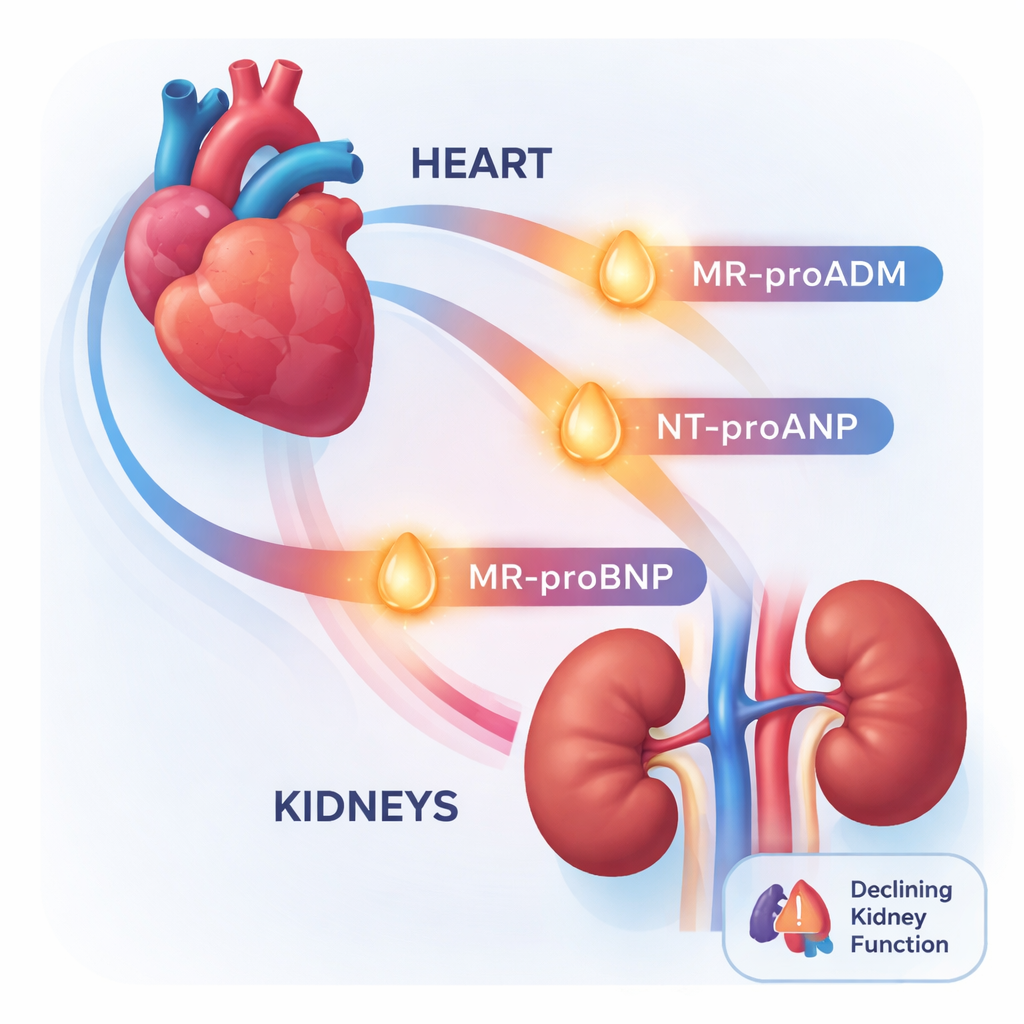
A Pan-European Look at Heart Markers and Kidneys
To explore these connections, the team pooled data from seven large population studies across Europe, including more than 61,000 adults. Everyone had their kidney function estimated from standard blood tests and their heart-stress markers measured. For NT-proBNP, one of the most widely used markers in heart clinics, a subset of about 4,200 people was followed over roughly 11 years, allowing the researchers to see how kidney function changed over time. They compared people with low, medium, and high levels of these markers while accounting for age, sex, blood pressure, smoking, cholesterol, diabetes, and previous heart disease.
Higher Marker Levels, Lower Kidney Function
Across the board, people with higher levels of all three heart markers had worse kidney function and were more likely to have CKD at the time of testing. For example, those in the highest NT-proBNP group were more than five times as likely to have CKD as those with the lowest levels. Similar patterns appeared for the other two markers, MR-proADM and MR-proANP. The links were especially strong in people who already had cardiovascular disease or diabetes, conditions known to strain both the heart and kidneys. This suggests that in high-risk patients, a raised heart marker may be an even clearer warning sign that the kidneys are in trouble.
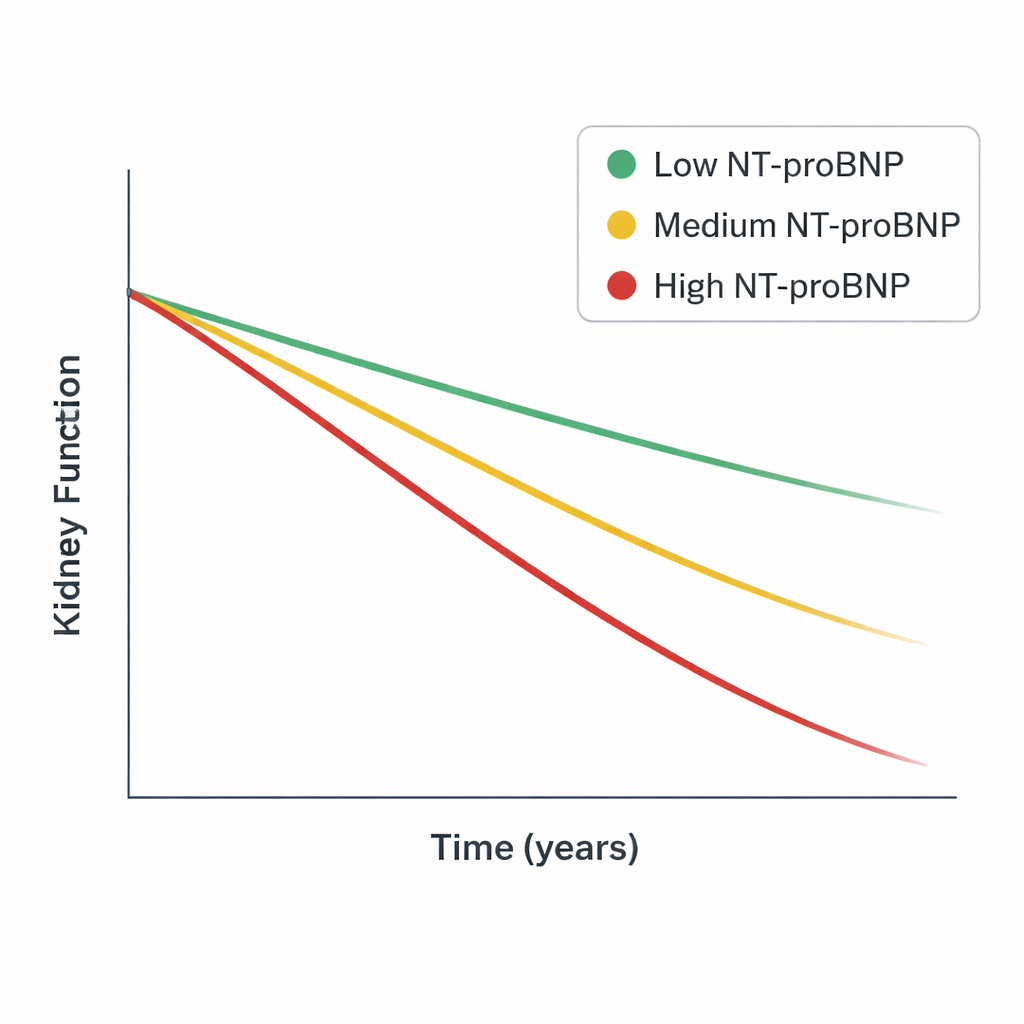
Watching Kidneys Decline Over Time
The long-term follow-up analysis provided a dynamic picture. People starting out with higher NT-proBNP levels lost kidney function more quickly over ten years than those with lower levels, and they were more likely to newly develop CKD during the study period. Even after adjusting for many other health factors, those in the highest NT-proBNP group had more than four times the risk of developing CKD compared with those in the lowest group. Importantly, these relationships held up when the researchers used different ways of estimating kidney function and in sensitivity tests designed to probe how robust the findings were.
What This Means for Patients and Prevention
Taken together, the findings show that three heart-related blood tests—already used in many hospitals—also carry valuable information about kidney health. Higher levels of MR-proADM, MR-proANP, and especially NT-proBNP signal lower kidney function and a greater chance of developing chronic kidney disease, with the strongest signals seen in people who have heart disease or diabetes. For patients, this raises the possibility that a single blood draw could help doctors keep a closer eye on both organs at once, enabling earlier lifestyle changes or treatments to slow kidney decline. More work is needed to define exact cutoff values for everyday clinical use, but this research suggests that what the heart is "saying" in the bloodstream may help protect the kidneys too.
Citation: Lin, Js., Zeller, T., Koenig, W. et al. Longitudinal and cross-sectional associations of myocardial stress markers with kidney function and chronic kidney disease in the BiomarCaRE project. Sci Rep 16, 7488 (2026). https://doi.org/10.1038/s41598-026-37377-2
Keywords: chronic kidney disease, cardiorenal syndrome, heart biomarkers, NT-proBNP, kidney function decline