Clear Sky Science · en
Oxidative stress-associated genes TPPP3 and VEGFA in COPD revealed by bulk and single-cell sequencing analysis
Why this lung study matters to you
Chronic obstructive pulmonary disease (COPD) makes breathing steadily harder over many years and is now the world’s third leading cause of death. Smoking and air pollution are known culprits, but doctors still lack precise tools to catch the disease early or stop the slow damage inside the lungs. This study uses large genetic datasets, single-cell analysis, and lab experiments to uncover specific genes tied to “oxidative stress” – damage caused when harmful oxygen by-products overwhelm the body’s defenses – and shows how they may drive lung scarring and remodeling in COPD.
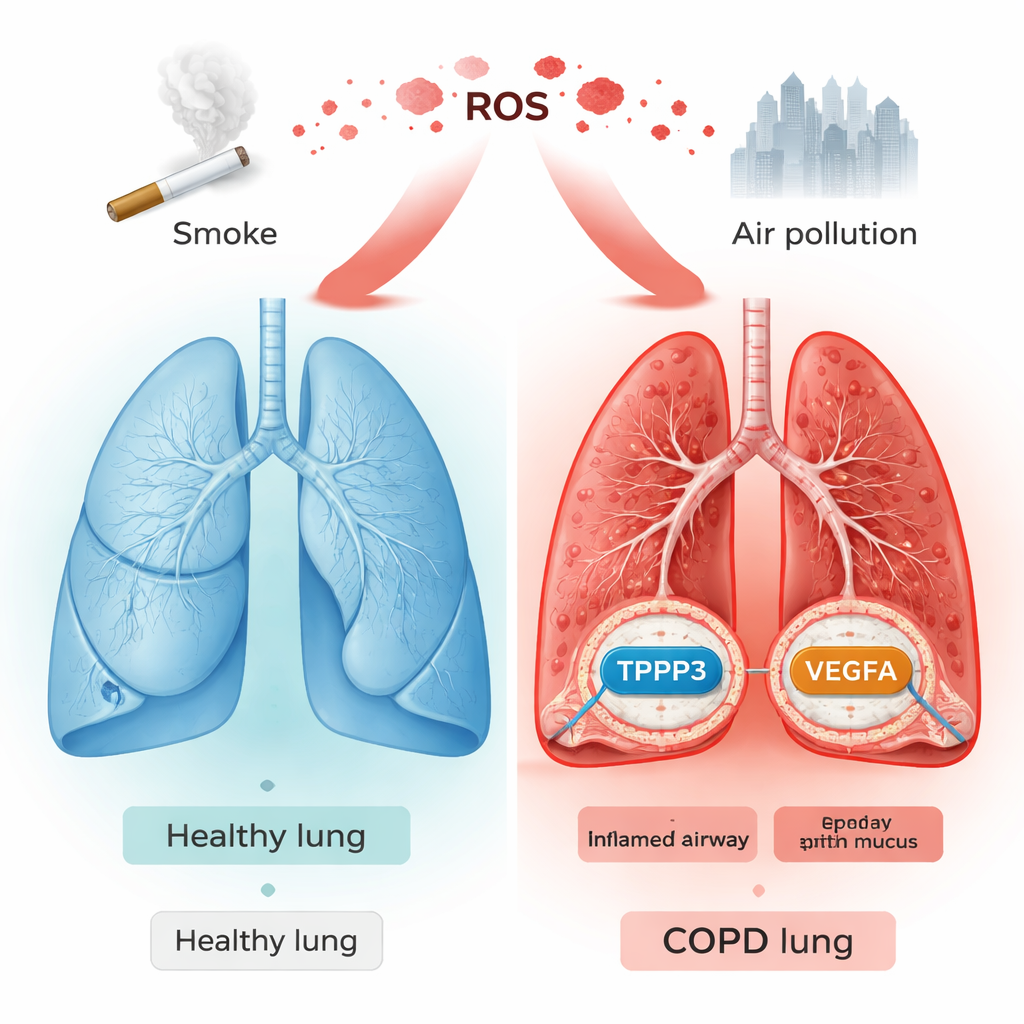
Damaging sparks inside the lungs
Every breath brings in not just oxygen but also particles and chemicals, especially from cigarette smoke. These can generate reactive oxygen species (ROS) – unstable molecules that behave like tiny sparks, injuring cells and triggering chronic inflammation. In COPD, these sparks appear to burn for years, gradually narrowing airways and destroying air sacs. The authors set out to find which human genes are most closely linked to this oxidative stress in COPD, in hopes of pinpointing markers that flag the disease earlier and targets that future drugs could safely turn down.
Mining big data to find risky genes
The team first collected publicly available gene activity data from lung samples of smokers with and without COPD. They focused on genes already associated with oxidative stress and asked which of these were switched up or down in COPD lungs. Using advanced statistical and machine-learning tools similar to those used in modern image recognition, they narrowed thousands of candidates down to 76 oxidative stress–related genes that differed between COPD patients and controls. From this group, two separate algorithms converged on a core set of 12 “hub” genes that best distinguished diseased lungs from healthy ones, suggesting these genes sit at key crossroads in COPD biology.
Looking cell by cell inside the airway
Traditional tissue samples mix many cell types together, but lungs are mosaics of specialized cells. To see where the hub genes act, the researchers turned to single-cell RNA sequencing data, which reads gene activity in individual cells. They identified major lung cell types such as epithelial cells lining the airways, immune cells, and blood vessel cells. Two genes, TPPP3 and VEGFA, stood out: both were most strongly active in airway epithelial cells and closely linked to pathways involving ROS. Because these surface cells form the first barrier to smoke and pollution, their altered gene activity hints at how long-term irritation can turn into lasting structural damage.
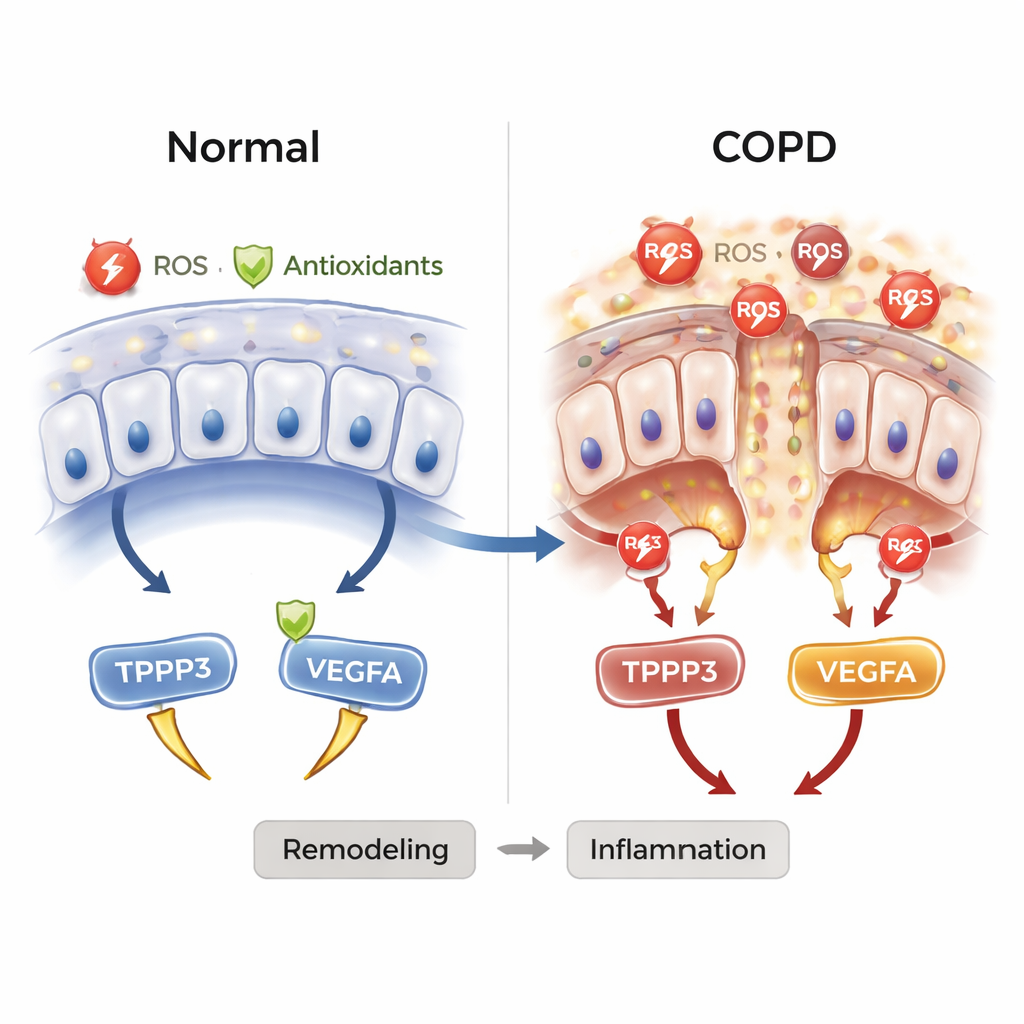
Recreating smoke damage in the lab
To test their computer-based predictions, the team exposed human bronchial epithelial cells grown in dishes to cigarette smoke extract, mimicking a smoker’s airway. Under the microscope, smoke-treated cells lit up with far more ROS, while natural antioxidant defenses dropped. Inflammatory molecules that are typical of COPD also surged. Importantly, the levels of TPPP3 and VEGFA rose markedly in these stressed cells, confirming that smoke-driven oxidative stress can push these genes into higher gear. This experimental model supports the idea that TPPP3 and VEGFA help connect oxidative damage with inflammation and structural remodeling in the airways.
What this means for future care
For non-specialists, the core message is that this study maps some of the molecular wiring that turns years of smoke and pollution exposure into permanent breathing problems. By homing in on 12 key oxidative stress–related genes, and especially TPPP3 and VEGFA in airway-lining cells, the work highlights potential blood or tissue markers that might one day help diagnose COPD earlier or sort patients into more precise subtypes. It also points to new molecular switches that future drugs could target in attempts to slow or even prevent the airway thickening and scarring that make COPD so disabling.
Citation: Choi, W., Wu, Y., Chen, W. et al. Oxidative stress-associated genes TPPP3 and VEGFA in COPD revealed by bulk and single-cell sequencing analysis. Sci Rep 16, 6801 (2026). https://doi.org/10.1038/s41598-026-37375-4
Keywords: COPD, oxidative stress, TPPP3, VEGFA, airway remodeling