Clear Sky Science · en
Factors associated with preterm birth and low birth weight among infants with congenital heart disease in Changsha City, China, 2022–2024
Why tiny hearts and tiny babies matter
When a baby is born too early or too small, every gram and every day of pregnancy can mean the difference between a smooth start in life and weeks in intensive care. This is even more critical for infants born with congenital heart disease, a structural problem with the heart present at birth. Researchers in Changsha, a large city in southern China, analyzed which family and pregnancy factors make these fragile babies more likely to arrive early or at a low birth weight, and which factors may actually protect them. Their findings point to specific, practical steps that could help more newborns with heart defects survive and thrive.
A closer look at heart defects in newborns
Congenital heart disease is the most common birth defect worldwide and a leading cause of newborn death. In this study, scientists examined all live births in Changsha between 2022 and 2024, more than 238,000 babies in total. Among them, 1,460 infants were diagnosed with a heart defect in the first week of life. The team focused on two outcomes that strongly influence a child’s early health and long-term development: preterm birth, defined as birth between 28 and 37 weeks of pregnancy, and low birth weight, defined as less than 2,500 grams at birth. They then compared babies’ outcomes with detailed information about the mothers’ health, pregnancy history, living conditions and the babies’ own characteristics.
How often babies arrive early or too small
The researchers found that preterm birth and low birth weight were notably common among infants with heart defects. About one in six of these babies was born preterm, and about one in seven had a low birth weight. These rates were lower than those reported in similar studies from Canada and other countries but still clearly higher than in the general newborn population in China or other nations. Over the three years studied, the rate of preterm birth in babies with heart defects stayed relatively stable. In contrast, the share of babies with both heart defects and low birth weight crept upward, suggesting that advances in care may be helping more very small, high‑risk infants survive to be counted.
Pregnancy care that helps—or harms
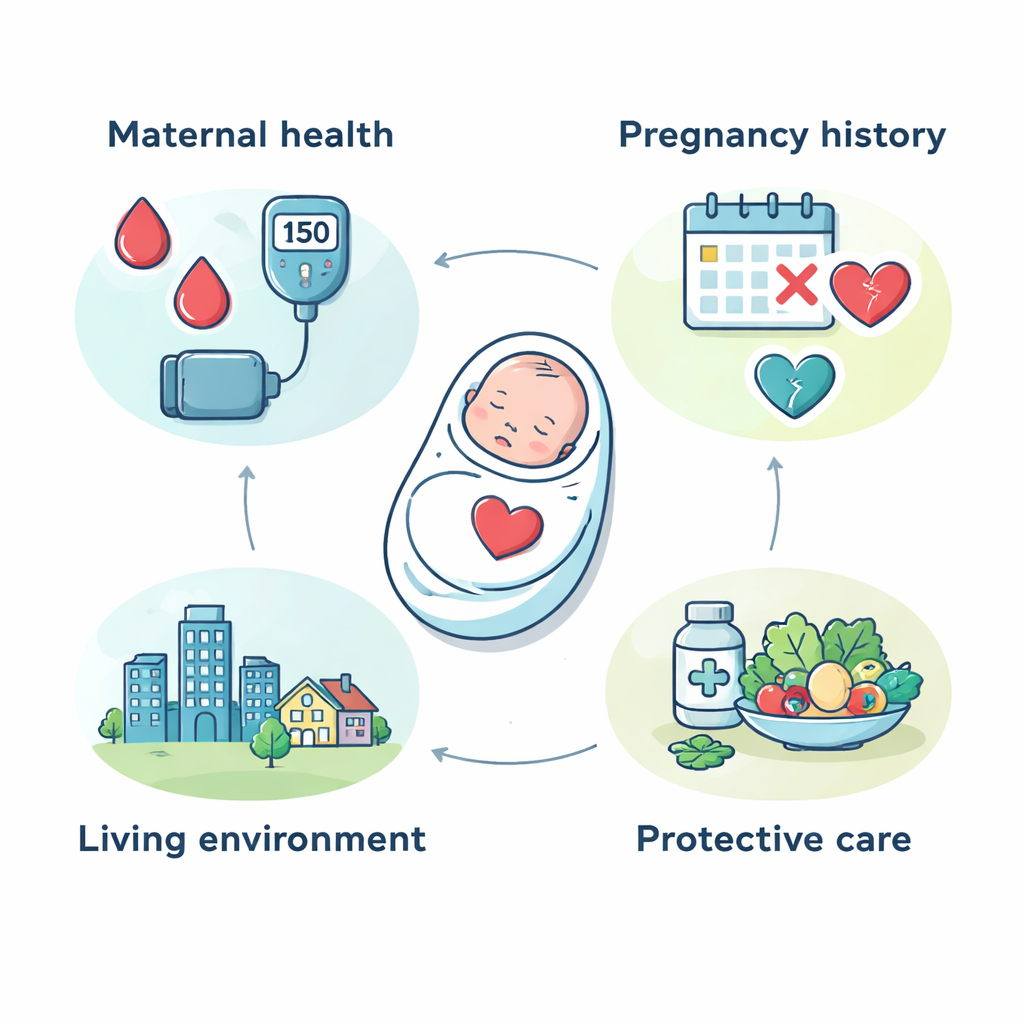
Some of the strongest signals in the data involved the mother’s health during pregnancy. Mothers who took folic acid supplements, a common vitamin recommended before and during early pregnancy, were much less likely to deliver a baby with a heart defect preterm. In contrast, mothers who developed gestational diabetes—a form of high blood sugar that appears during pregnancy—had more than triple the odds of a preterm birth in their baby with a heart defect. If the baby had additional birth defects beyond the heart problem, the chances of both preterm birth and low birth weight rose sharply. High blood pressure that starts in pregnancy was also tied to a greater risk of low birth weight, likely because it can interfere with the placenta’s ability to nourish the fetus.
Family background and baby’s own traits
Where and to whom the mother was born also mattered. Infants with heart defects whose mothers lived in rural areas were more likely to be low birth weight than those from urban families, reflecting differences in income, nutrition and access to prenatal care. A previous spontaneous miscarriage raised the chance that a later baby with a heart defect would be born underweight, possibly because underlying problems with the cervix or uterus make it harder to carry a pregnancy to term. Interestingly, babies from minority ethnic groups in Changsha were less likely to be low birth weight, hinting at protective cultural, genetic or lifestyle factors that deserve further study. Among the newborns themselves, girls with heart defects were more likely than boys to have a low birth weight, echoing patterns seen in some other regions.
What the findings mean for parents and clinicians
For families and health providers, this study delivers both a warning and a roadmap. It confirms that babies with congenital heart disease face higher odds of being born too early or too small, outcomes that can worsen surgery risks and long‑term development. But it also highlights steps that may reduce those risks: ensuring women have access to folic acid before and during early pregnancy, closely monitoring and treating blood sugar and blood pressure, paying extra attention to mothers with a history of miscarriage, and improving prenatal care in rural areas. Although more work is needed to understand the full range of influences and the differences among specific types of heart defects, the message is clear: targeted, high‑quality pregnancy care can give vulnerable babies with heart problems a stronger start in life.
Citation: Fu, J., Liu, J., Zhang, B. et al. Factors associated with preterm birth and low birth weight among infants with congenital heart disease in Changsha City, China, 2022–2024. Sci Rep 16, 6308 (2026). https://doi.org/10.1038/s41598-026-37371-8
Keywords: congenital heart disease, preterm birth, low birth weight, maternal health, prenatal care