Clear Sky Science · en
Influence of nutrition pattern on exercise performance, inflammation and muscle damage biomarkers in a non-athlete healthy young cohort
Why What You Eat Matters When You Work Out
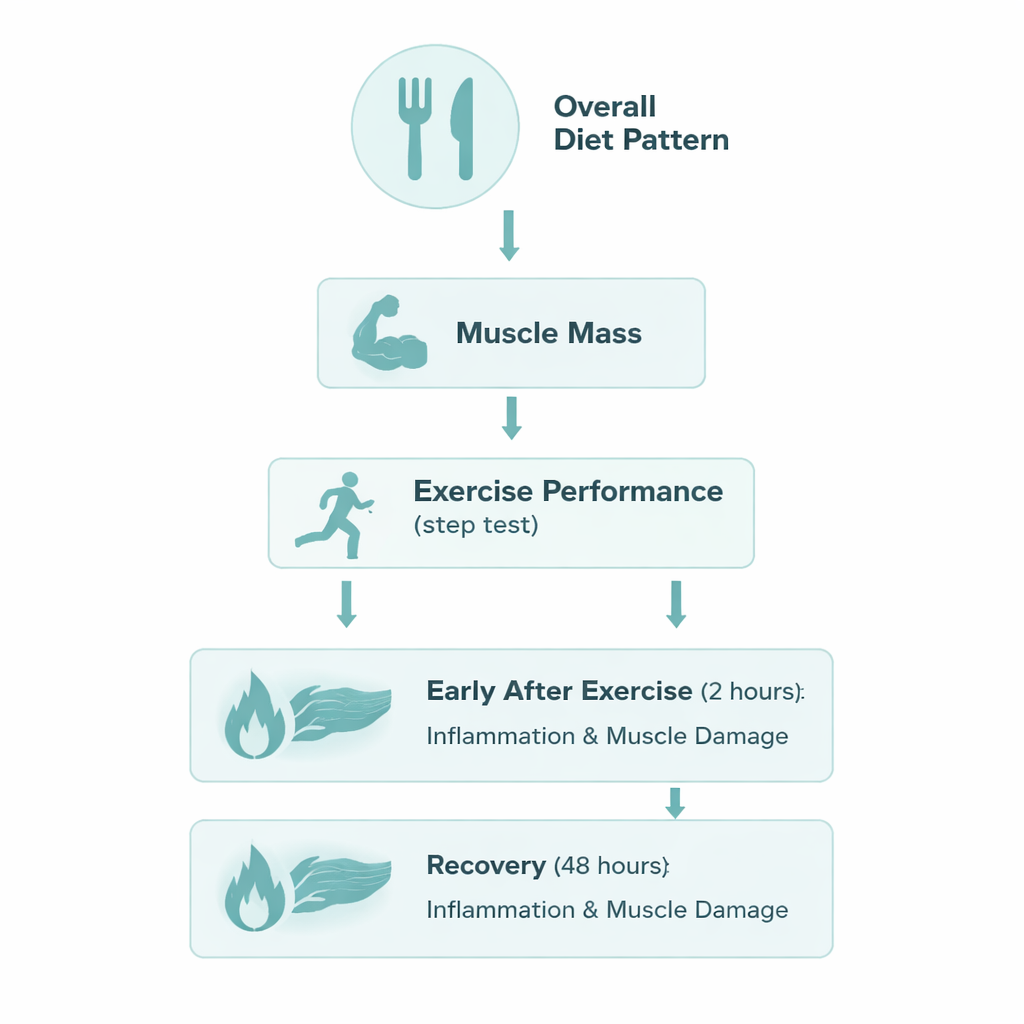
Many people who exercise for fun—not as competitive athletes—still worry about sore muscles, fatigue, and how to get more out of their workouts. This study asked a simple question with big everyday implications: can your usual eating habits change how hard you can push yourself, how much muscle you build, and how well your body handles the short-term inflammation and muscle damage that follow a tough exercise session?
A Closer Look at Food and Fitness in Everyday Young Adults
Researchers in Spain studied 78 healthy university students, all in their early twenties, who were physically active but not trained athletes. The volunteers reported their habitual diet using a detailed food questionnaire that estimated daily intake of carbohydrates, proteins, fats (including saturated, monounsaturated, and polyunsaturated types), fiber, folate, and vitamin D. The team also measured body composition, focusing on muscle mass and fat mass, and then put participants through a demanding step-up/step-down test done to exhaustion to gauge real-world exercise performance.
How the Body Reacts After a Hard Effort
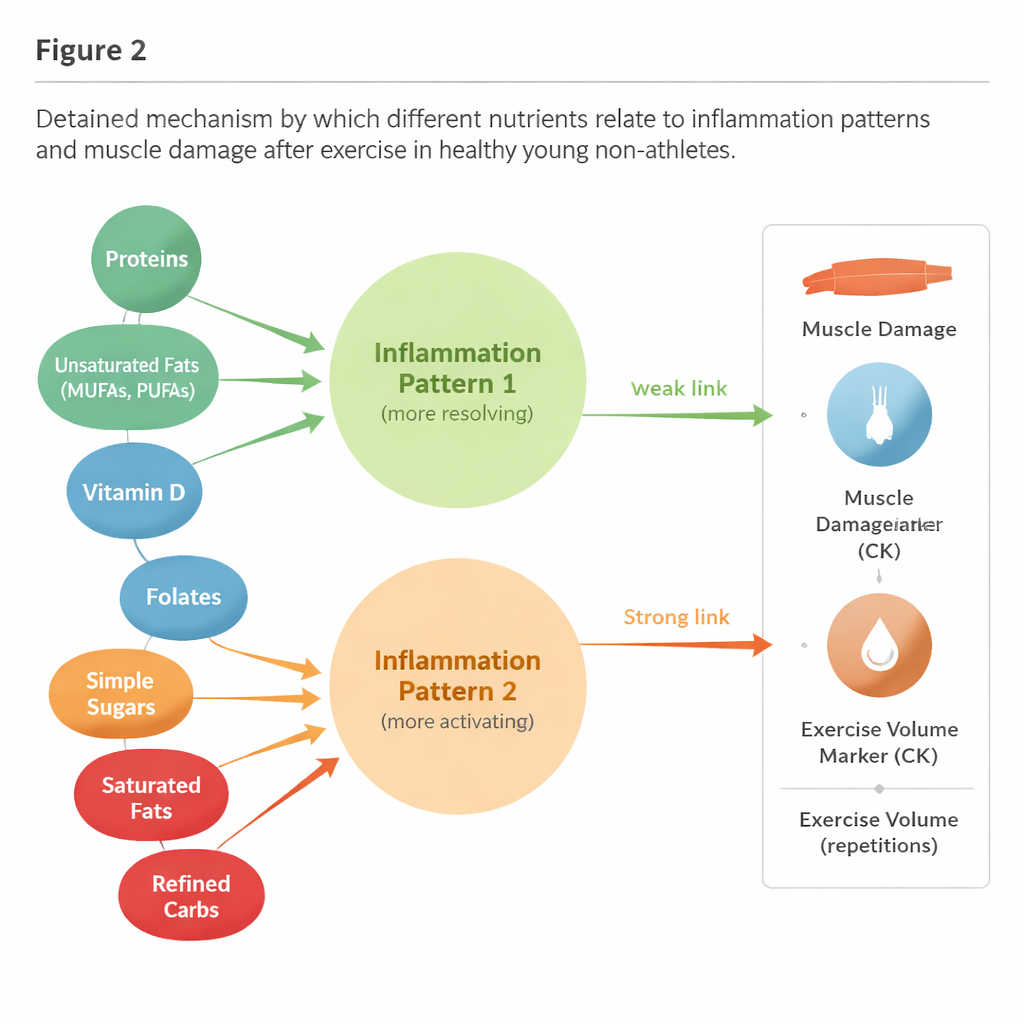
To track what happens inside the body, small blood samples were taken before exercise, two hours afterward, and again 48 hours later. The scientists measured eight signaling proteins of the immune system, known as cytokines, which rise and fall as part of the body’s normal inflammatory response. They also measured two classic indicators of muscle damage, the enzymes creatine kinase (CK) and lactate dehydrogenase (LDH), which leak into the bloodstream when muscle fibers are stressed or injured. Using statistical tools, they combined the cytokines into two main “inflammation scores” that captured overall patterns rather than focusing on any single molecule.
What a “Better” Diet Looked Like in This Study
Instead of evaluating nutrients one by one, the researchers built an overall nutritional pattern to see how different foods tended to cluster together in people’s diets. They found that a pattern rich in proteins, total fats—especially healthier unsaturated fats—and adequate carbohydrates was linked to better exercise performance, largely because it was associated with greater muscle mass. In contrast, higher intakes of simple sugars and saturated fats tended to track with an inflammatory profile that looked less favorable. Interestingly, nutrients like unsaturated fats, folate, and vitamin D were tied to a quieter, more balanced inflammation pattern, suggesting that these components may support the body’s ability to manage the normal stress of exercise.
Exercise Volume, Inflammation, and Muscle Damage
As expected, participants who managed more step repetitions showed higher short-term CK levels, meaning their muscles experienced more mechanical strain. Yet the volume of exercise had a clearer impact on early inflammatory responses than on longer-term muscle damage markers. Two hours after exercise, one of the inflammation scores rose in step with how hard people had worked, but by 48 hours this pattern began to settle down, indicating that recovery was underway. Notably, men and women showed similar inflammatory and muscle damage responses once differences in muscle mass were taken into account, highlighting that having more muscle—not biological sex itself—was the main driver of performance in this young group.
From Lab Results to Everyday Choices
Put simply, the study suggests that for young, non-athlete adults, eating a nutrient-dense diet that emphasizes healthy fats (like those from fish, nuts, and olive oil), sufficient protein, and fewer refined sugars may help build or preserve muscle and support better performance during demanding exercise. At the same time, these eating patterns appear to shape how the body inflames and heals after a workout, potentially easing recovery. While the research cannot prove cause and effect and was limited to a specific age group, it challenges the idea that protein alone is the star nutrient for fitness. Instead, it points to overall dietary quality—especially the type and amount of fat—as a key, and often overlooked, part of feeling and performing better when you move.
Citation: Ramiro-Cortijo, D., de Celada, R.A., Rodríguez-Rodríguez, P. et al. Influence of nutrition pattern on exercise performance, inflammation and muscle damage biomarkers in a non-athlete healthy young cohort. Sci Rep 16, 6167 (2026). https://doi.org/10.1038/s41598-026-37363-8
Keywords: exercise nutrition, muscle recovery, healthy fats, inflammation, non-athlete fitness