Clear Sky Science · en
Osteoporosis and cardiac remodeling in middle-aged and older adults: a cross-sectional study
Why Bone Health Matters to Your Heart
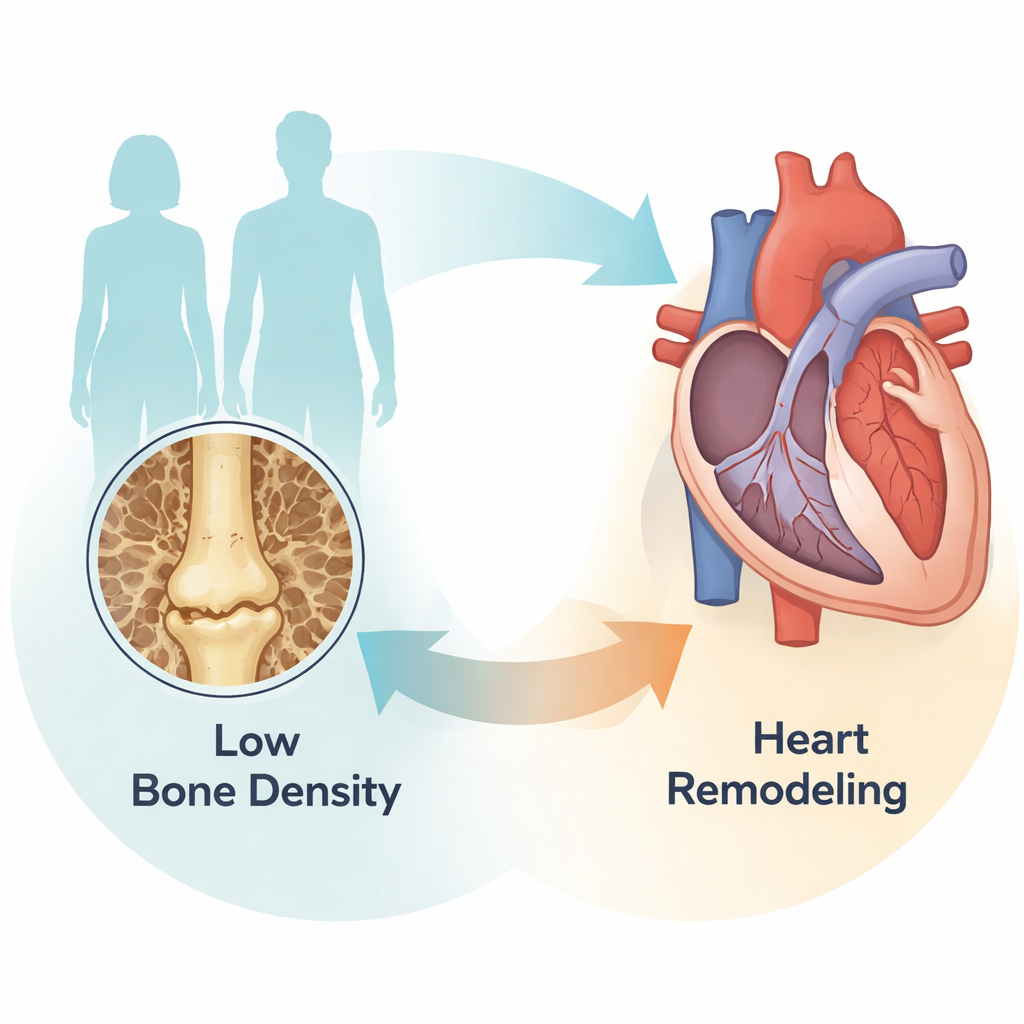
Many people think of osteoporosis as a problem only for fragile bones and hip fractures. This study suggests that thinning bones may also whisper early warnings about the heart. By looking at more than a thousand adults in China, researchers found that lower bone strength was quietly linked to small but measurable changes in heart structure, especially in women and younger adults. These hidden changes do not cause symptoms right away, but over time they may raise the risk of heart problems.
Looking at Bones and Hearts Together
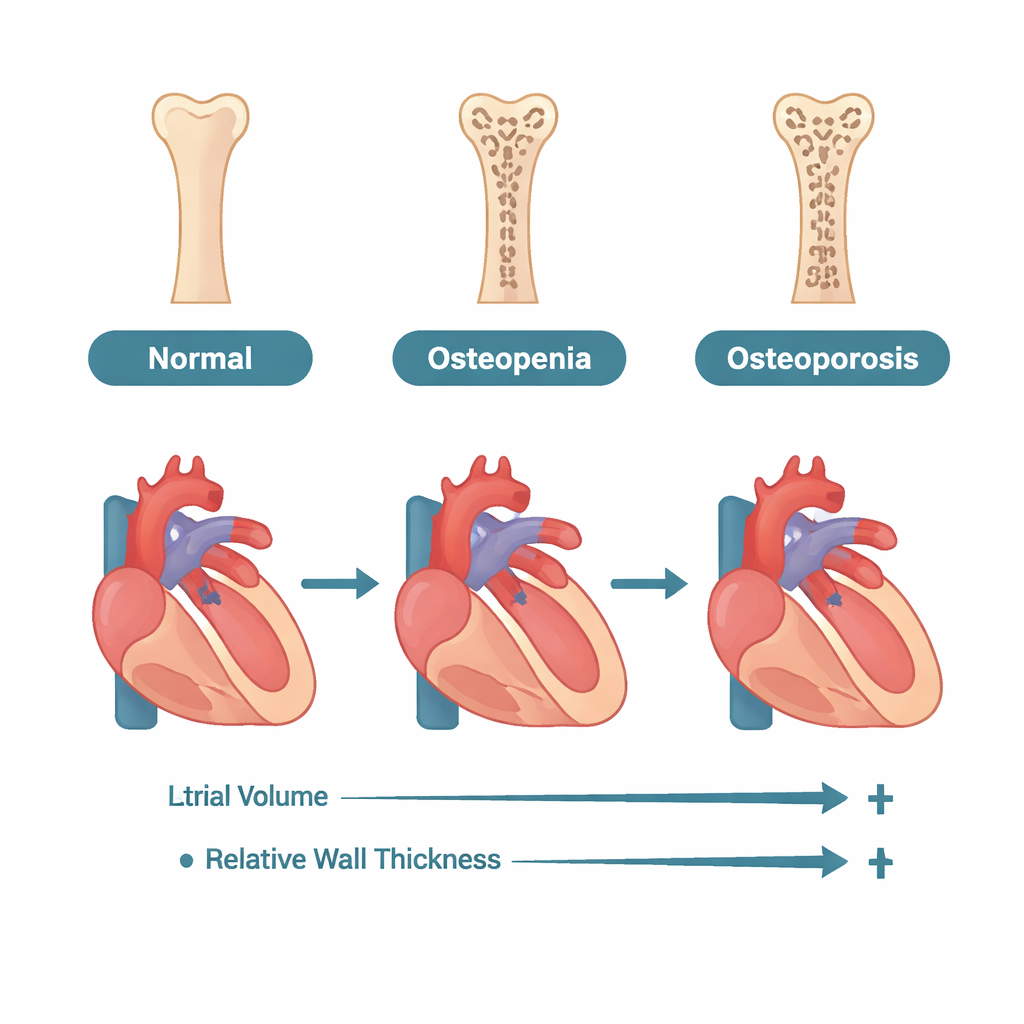
To explore this bone–heart connection, scientists drew on data from over 1,200 people aged 35 to 75 who took part in a long-term health study. None were selected because of known heart failure or recent heart attacks; instead, they represent a community sample of middle-aged and older adults. Each person had their bone strength checked at the shin using a quick ultrasound scan, and their heart carefully imaged by echocardiography, a standard ultrasound test that shows the heart’s size and pumping function. Based on bone results, participants were grouped into normal bone density, mild bone loss (osteopenia), or clear osteoporosis. The team then compared key heart measurements across these groups while also accounting for age, sex, blood pressure, cholesterol, diabetes, and other common risk factors.
Subtle Changes Inside the Heart
The heart measurements told an interesting story. People with osteoporosis tended to have a slightly larger left upper heart chamber (the left atrium) and a somewhat thicker main pumping wall compared with people who had normal bones. These changes—called left atrial enlargement and increased relative wall thickness—are signs of “remodeling,” meaning the heart is slowly adapting its shape and structure over time. Yet, other major features like overall heart pumping ability and signs of stiff filling were not different between bone groups. In other words, the heart still worked well, but its architecture had started to shift in those with weaker bones.
Who Seems Most Affected
When the researchers dug deeper, they found that the link between low bone density and left atrial size was stronger in women than in men, and more noticeable in participants younger than 50 than in older age groups. For every step down in bone score, women and younger adults showed a bigger rise in left atrial volume compared with others. The thickening of the heart’s main wall also appeared more tightly tied to low bone density in the youngest age group. These patterns suggest that the bone–heart relationship may show up early in life and may be especially important for women, possibly reflecting shifts in hormones such as estrogen around menopause.
Possible Shared Pathways
What might connect fragile bones with a remodeling heart? The authors point to several shared biological routes. Changes in sex hormones can weaken bones and at the same time promote inflammation and scarring in heart tissue. Oxidative stress—an overload of damaging oxygen-based molecules—can harm both the skeleton and the cardiovascular system. Bone-derived hormones, such as osteocalcin, may also influence blood vessels and heart muscle. Although this study did not measure these molecules directly, its findings fit with earlier research showing that people with low bone density are more likely to have artery disease and later heart events, hinting at a common underlying network between the two organs.
What This Means for Everyday Health
For patients and clinicians, the message is not that osteoporosis immediately leads to heart failure, but that low bone density may be a red flag for early, quiet changes in the heart. Because this study looked at a single point in time, it cannot prove cause and effect, and it is too soon to call for universal heart scans in everyone with osteoporosis. Still, the work strengthens the idea that bone and heart health are closely intertwined. Paying attention to bone loss—through lifestyle changes, screening, and treatment where appropriate—may also help doctors identify people who could benefit from closer cardiovascular monitoring. In simple terms, caring for your skeleton may also be one way of looking after your heart.
Citation: Wang, H., Wang, Q., He, B. et al. Osteoporosis and cardiac remodeling in middle-aged and older adults: a cross-sectional study. Sci Rep 16, 6511 (2026). https://doi.org/10.1038/s41598-026-37360-x
Keywords: osteoporosis, bone mineral density, heart remodeling, left atrial enlargement, cardiovascular health