Clear Sky Science · en
Characterization of the flavor profile and microbial-driven mechanism of characteristic flavor formation in Yuxi Taihe Douchi
A High-Altitude Taste of Tradition
Yuxi Taihe Douchi is a salty, richly aromatic fermented soybean condiment from the mountains of Yunnan in southwest China. For local families it is everyday comfort food, yet until now, no one had carefully mapped out what gives it its special smell and taste. This study lifts the lid on that mystery, showing how beans, microbes, and time work together to create the complex flavors that make this regional specialty stand out—and how that knowledge could help producers make it more consistently and share it with wider markets.
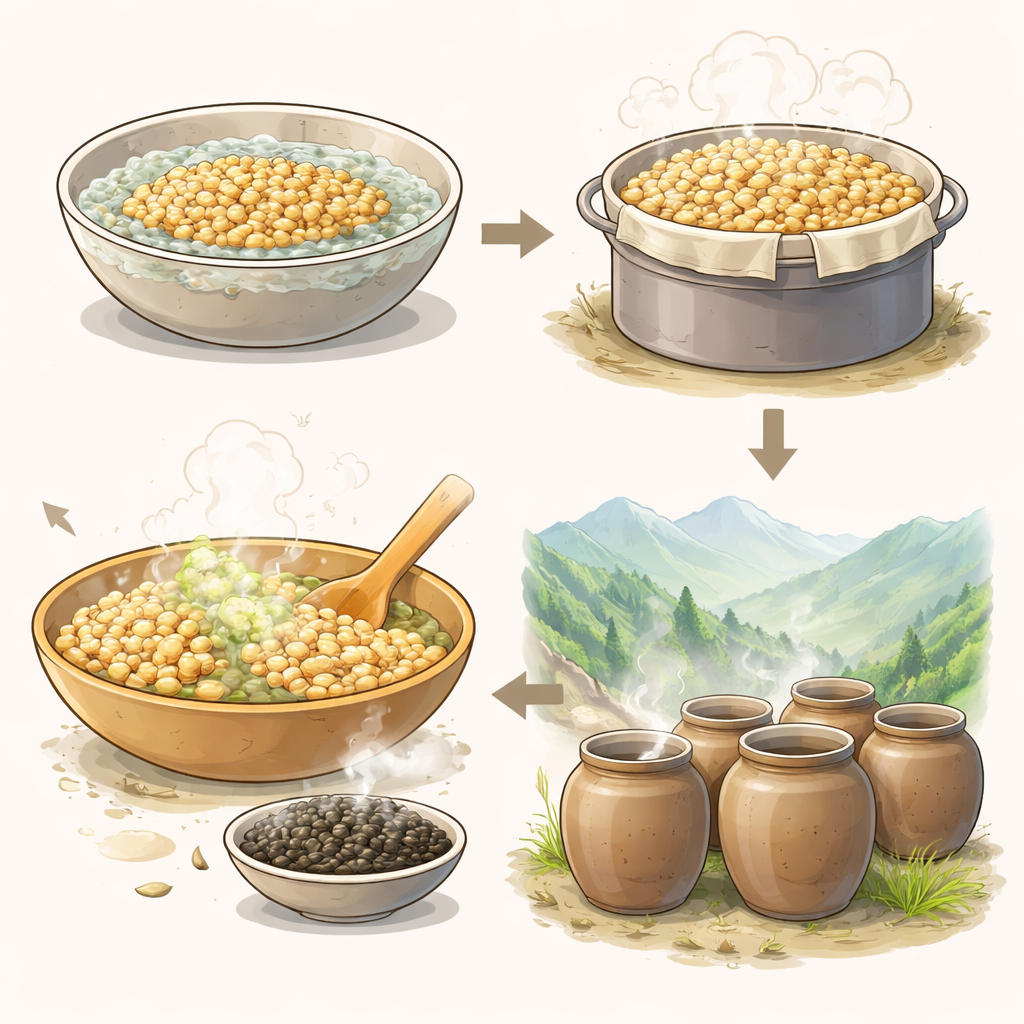
From Simple Beans to Deep Flavor
The researchers followed Taihe Douchi through its month-long industrial fermentation. First, soybeans are soaked, steamed, and mixed with wheat flour and spores of a helpful mold, Aspergillus oryzae. Salt, sugar, and spices are then added, and the mixture is sealed to ferment at room temperature for 30 days in Yuxi’s cool, high-altitude climate. Samples were taken at six time points, from day 0 to day 30, and combined from different parts of the fermentation containers to get a representative picture of what was happening inside. The team then measured acidity, sugars, protein breakdown products, flavor molecules, and the changing cast of microbes.
How the Taste Builds Over Time
As fermentation progressed, the mixture gradually became more acidic, while reducing sugars and amino acid nitrogen (a marker of protein breakdown) climbed and then leveled off after about two weeks. Free amino acids—tiny building blocks released as proteins are cut apart—rose steadily, especially those that taste savory (like glutamic acid) or sweet (like proline and alanine). By around day 22, the total amino acid content peaked, and key savory amino acids had grown enough to strongly shape taste. Interestingly, bitter-tasting amino acids were present in high amounts, but their individual impact on bitterness was modest because most stayed below their sensory thresholds.
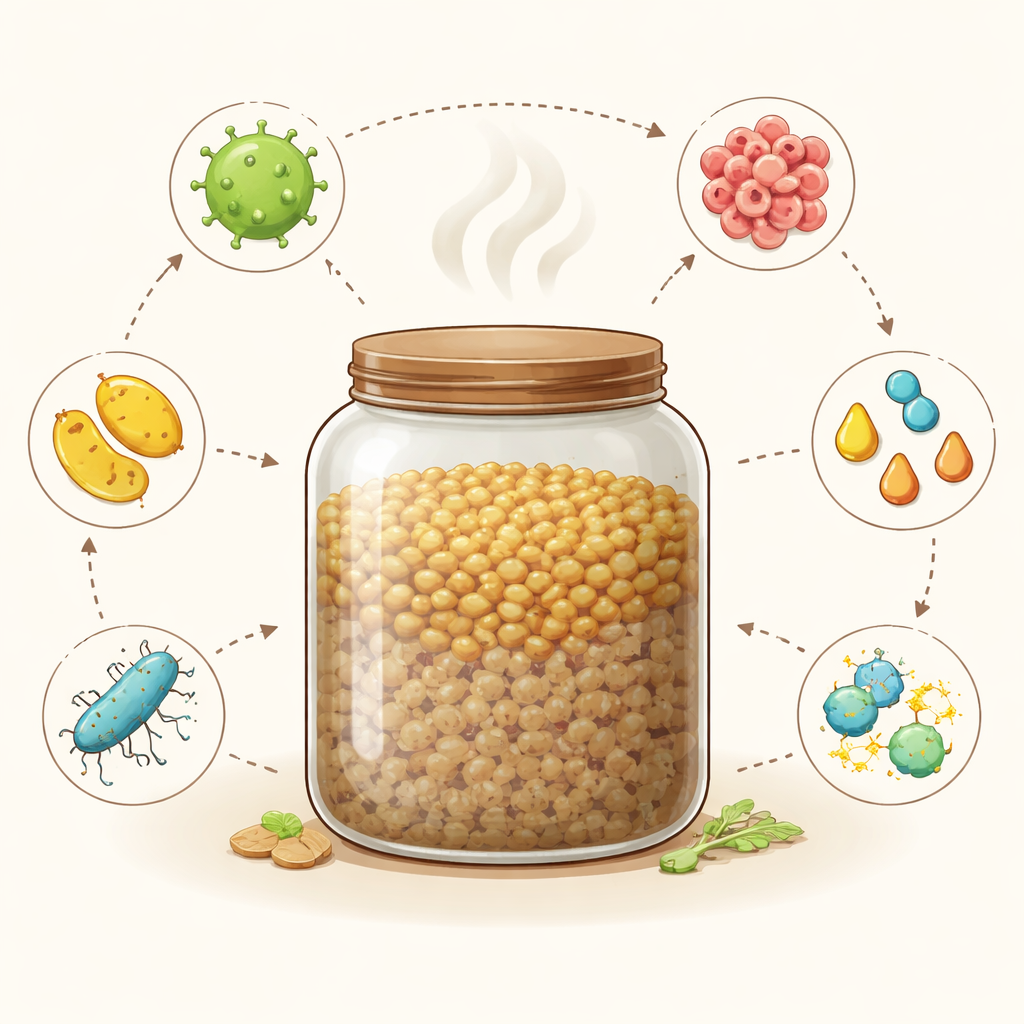
The Aroma Puzzle: Hundreds of Scents, Dozens That Matter
To understand aroma, the scientists captured and analyzed airborne compounds rising from the fermenting beans. They detected 193 different volatile substances, including esters, alcohols, aldehydes, phenols, ketones, and more. Overall aroma intensity swelled and then dipped, reaching its height again around day 22. By combining chemical data with models that weigh how strongly each compound can be smelled, they narrowed this list to 22 key contributors. Standout molecules included 1-octen-3-ol (mushroom-like), methional (cooked potato), benzene acetaldehyde (floral), and 4-vinylguaiacol (smoky, bacon-like). Spices added later in the process contributed notes of anise, clove, citrus, and onion, rounding out the profile.
The Microbial Cast Behind the Flavors
Modern DNA sequencing revealed which microbes flourished on the beans. Bacteria were diverse and dynamic: genera such as Staphylococcus, Bacillus, Weissella, Klebsiella, and Enterococcus rose and fell over time, with overall diversity peaking between days 15 and 22. Fungi were simpler: the starter mold Aspergillus dominated almost entirely, with a late appearance of the yeast Zygosaccharomyces at day 30. By statistically linking microbes to taste and aroma compounds, the authors highlighted several likely “core” players—especially Enterobacter, Acinetobacter, Achromobacter, and Aspergillus—that were closely associated with rises in sugars, amino acids, and key aromatic molecules.
Linking Microscopic Life to Everyday Flavor
Although correlation alone cannot prove cause and effect, the patterns are strong enough to guide future experiments and starter-culture design. The work shows that the most intense and desirable flavor stage of Yuxi Taihe Douchi occurs roughly three weeks into fermentation, when microbial diversity and key aroma compounds peak together. By understanding which microbes are present and which flavor molecules they track with, producers can begin to fine-tune fermentation conditions or even select specific strains to reliably produce a bold, balanced Douchi with clear regional character. In other words, this study translates the invisible work of microbes into practical knowledge that can help preserve tradition while improving quality and consistency.
Citation: Wu, C., Wu, H., Jin, R. et al. Characterization of the flavor profile and microbial-driven mechanism of characteristic flavor formation in Yuxi Taihe Douchi. Sci Rep 16, 6568 (2026). https://doi.org/10.1038/s41598-026-37349-6
Keywords: fermented soybeans, food microbiology, traditional condiments, flavor chemistry, Yunnan cuisine