Clear Sky Science · en
Modified design TWCI-based high step-up DC-DC converter with reduced elements and low input current ripple for renewable applications
Turning Sunlight into Usable Power
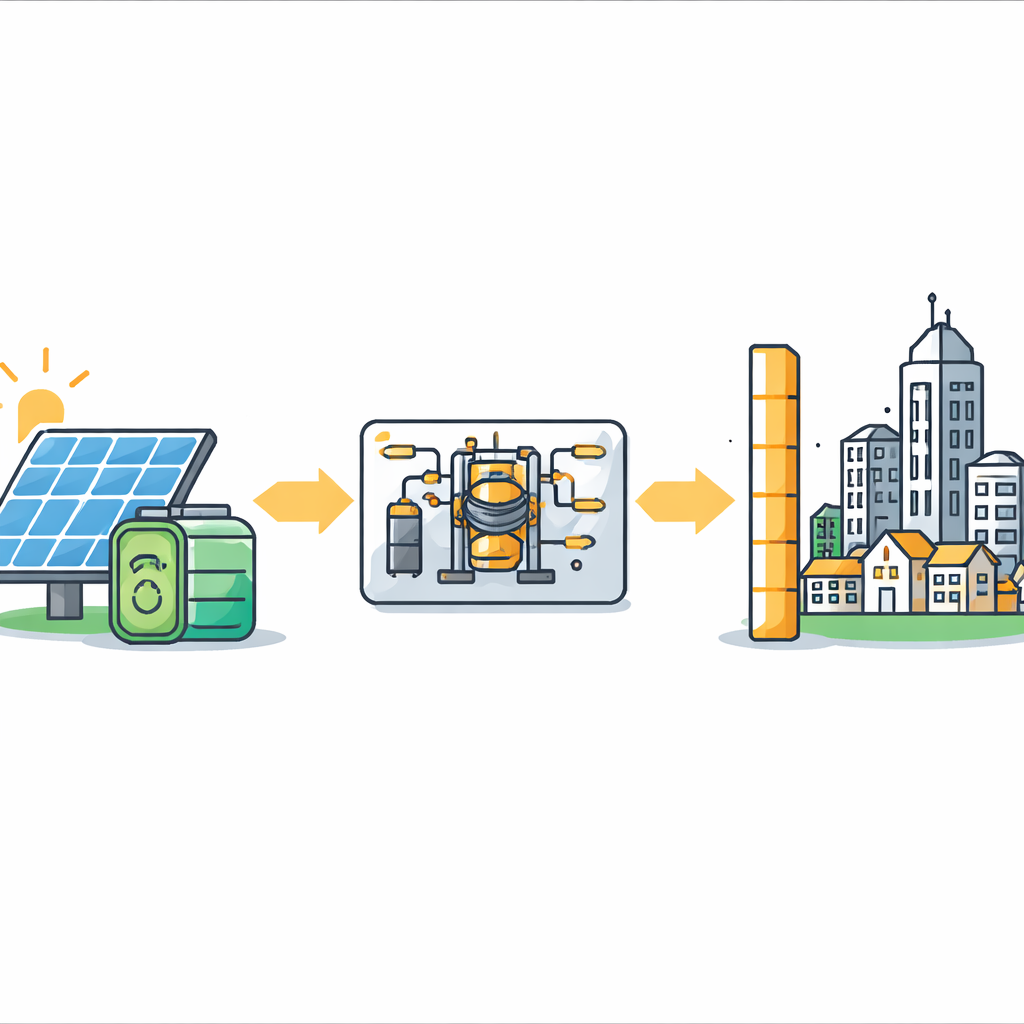
Solar panels and fuel cells produce clean electricity, but they typically deliver low voltages that are not directly usable by home microgrids, electric vehicles, or industrial systems. To bridge this gap, engineers rely on electronic "step-up" circuits that boost low voltages to the higher levels needed on a power bus. This paper introduces a new kind of step-up converter that can raise voltage from, for example, 24 volts to about 400 volts with high efficiency, using fewer parts and treating the energy source more gently than many existing designs.
Why Voltage Boosters Matter for Clean Energy
Inside a modern direct-current (DC) microgrid, many devices share a common high-voltage backbone, often around a few hundred volts. Solar panels, batteries, and fuel cells, however, usually sit down at a few tens of volts. Converters between these worlds must do more than simply raise voltage: they should waste as little power as possible, keep currents smooth to avoid stressing panels and batteries, and stay affordable and compact. Many existing high-gain designs meet some of these goals but fall short on others, suffering from large current ripples, complex multi-stage structures, or high electrical stress on key components.
A New Way to Squeeze More Voltage from Less Hardware
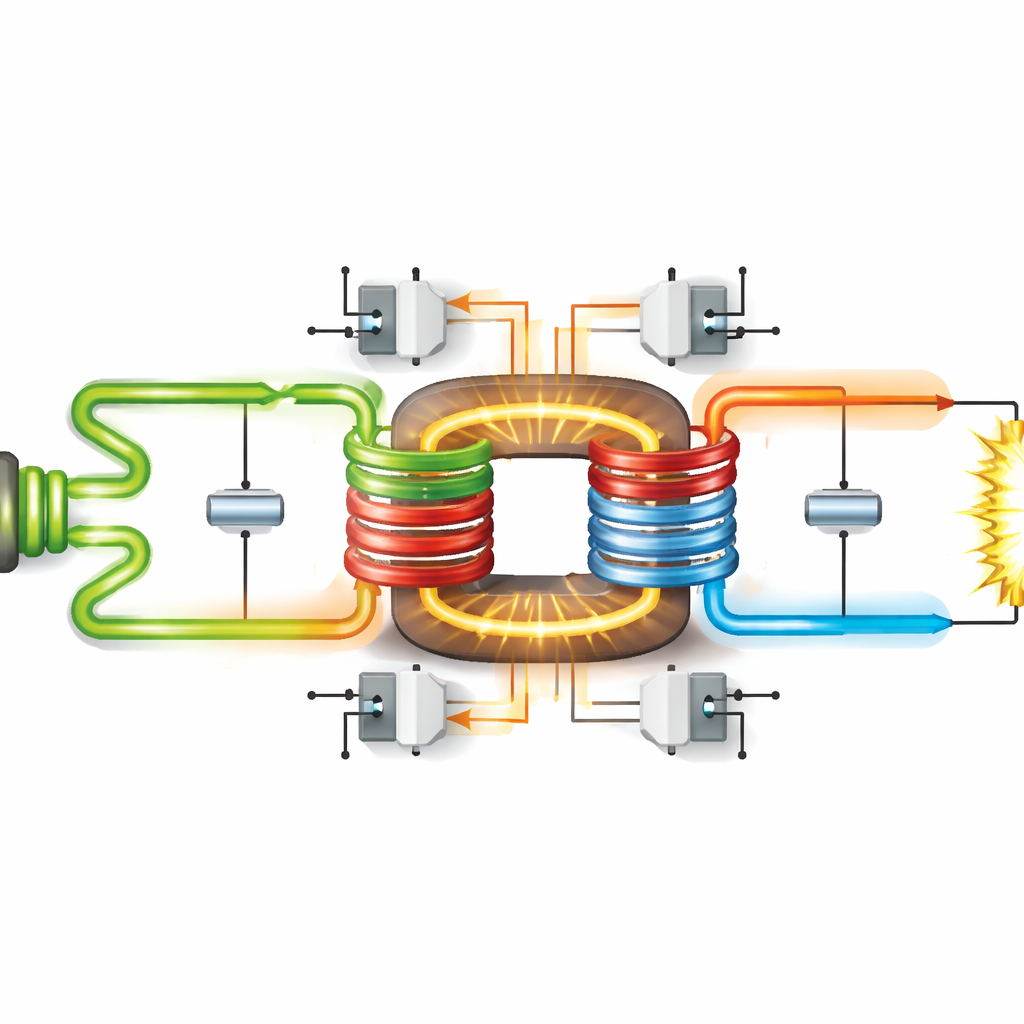
The authors propose a non-isolated DC–DC converter built around a special three-winding magnetic component. This part, a coupled inductor with three coils on a single core, acts like a compact energy hub. By carefully arranging two electronic switches, a few diodes, and a pair of capacitors around this hub, the circuit multiplies voltage in stages while sharing the stress among components. The design achieves very high output voltages at moderate switch timing (duty cycles), so it does not have to push the switches to extreme on-times that typically increase losses and reduce reliability.
Smoother Current and Gentler Treatment of the Source
Many earlier high-gain converters draw current from the source in sharp pulses. For solar panels and fuel cells, these pulses can reduce efficiency and complicate maximum power point tracking, the process that keeps them operating at their sweet spot. In contrast, the new circuit guides the input current through an inductor in a way that keeps it nearly continuous, with low ripple. Detailed analysis of the different operating steps shows how energy is shuffled among the magnetic core and capacitors so that the source always sees a relatively steady demand. At the same time, the way the three windings and capacitors interact keeps the voltage seen by the switches and diodes well below the final output level, allowing the use of lower-rated, cheaper, and more efficient parts.
Careful Design, Testing, and Fair Comparison
The researchers go beyond the basic idea to work out how large the inductors and capacitors must be to keep currents and voltages within safe limits, and how to choose a suitable magnetic core so it does not overheat or saturate. They then examine where energy is lost in real hardware, including the tiny resistances in windings, switches, diodes, and capacitors. Using these models, they estimate efficiency and also test how sensitive performance is to less-than-ideal components. A side-by-side comparison with many other recently published converters shows that their approach offers higher voltage gain for a given level of complexity, lower stress on switches, and significantly smaller ripples in the input current.
From Theory to a Working Prototype
To prove that the concept works outside of simulations, the team built a 250-watt prototype. With a 24-volt input and a switching frequency of 50 kilohertz, the hardware produced about 400 volts at the output. Measurements of the voltages and currents on each device closely matched the analytical predictions, including the reduced stress on most switches and diodes. Across a wide range of power levels, from 80 to 400 watts, the converter kept its efficiency above 90 percent, reaching a peak of about 95 percent. The tests also confirmed the low ripple in the input current and the ability to use standard, readily available components.
What This Means for Future Renewable Systems
For readers interested in the practical rollout of clean energy, this work demonstrates a way to move more power from low-voltage sources to high-voltage grids without a penalty in size, cost, or reliability. By combining a clever magnetic winding scheme with a streamlined set of switches and capacitors, the proposed converter delivers strong voltage boosting, smooth current behavior, and high efficiency in a compact package. Such circuits can make solar panels, fuel cells, and battery banks easier to integrate into DC microgrids and other emerging power systems, helping clean energy sources plug in more seamlessly to the infrastructure of the future.
Citation: Tehranidoost Tabrizi, M.H., Sabahi, M., Bannae Sharifian, M. et al. Modified design TWCI-based high step-up DC-DC converter with reduced elements and low input current ripple for renewable applications. Sci Rep 16, 8037 (2026). https://doi.org/10.1038/s41598-026-37346-9
Keywords: DC-DC converter, coupled inductor, renewable energy, DC microgrid, high voltage gain