Clear Sky Science · en
Quercetin alleviates incontinence-associated dermatitis via IKK/NF-κB pathway
Why sore skin from incontinence matters
For many older adults and people who are very ill, constantly wearing pads or lying in a wet bed is more than just uncomfortable—it can damage the skin so badly that it becomes painful, infected, and slow to heal. This condition, called incontinence-associated dermatitis, affects the delicate skin around the buttocks and genitals when it is repeatedly exposed to urine and stool. The study summarized here explores whether quercetin, a plant compound found in common foods like apples and onions, can calm this irritation and help the skin repair itself. 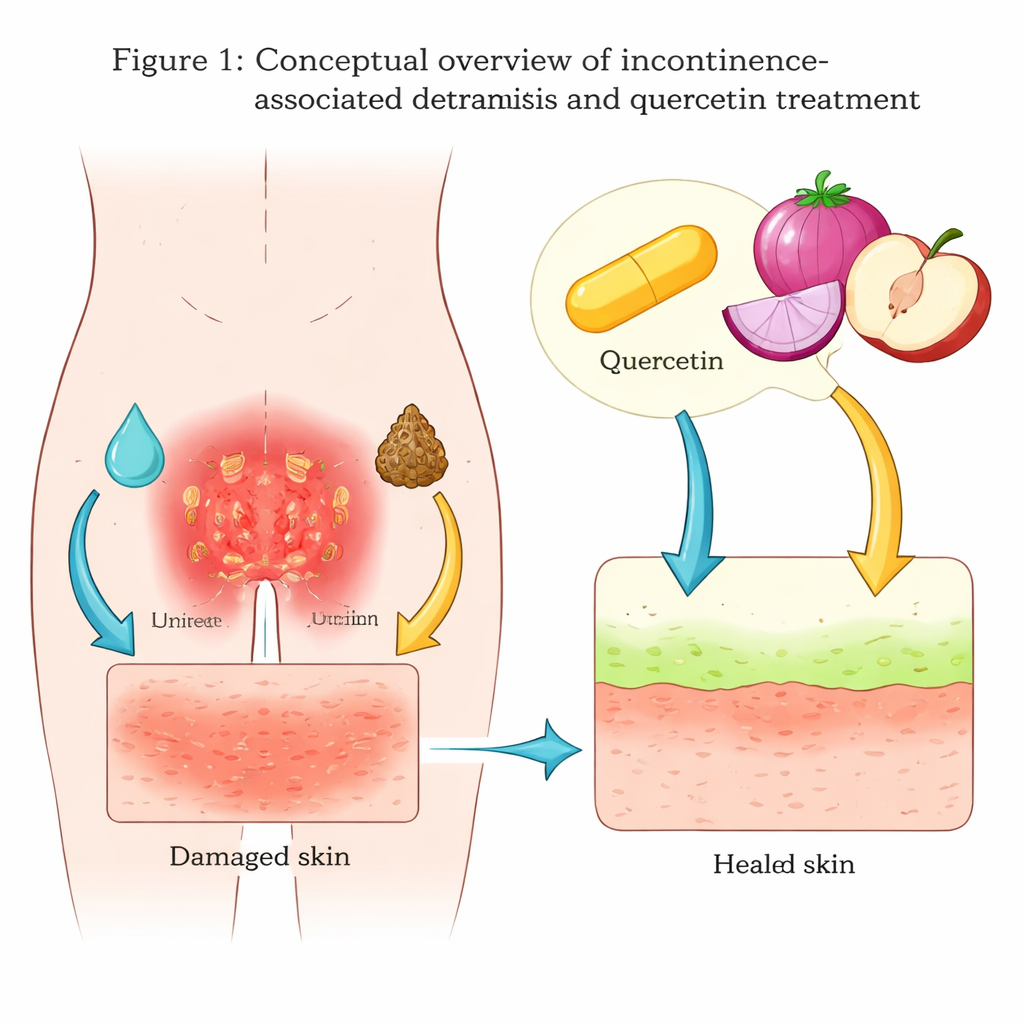
A common but often hidden problem
Incontinence-associated dermatitis is surprisingly widespread in hospitals and nursing homes, especially in intensive care units, where up to half of patients may be affected. The skin in the perianal and perineal areas stays damp and is repeatedly exposed to irritants such as urea, ammonia, and digestive enzymes. Over time, this can cause redness, raw patches, burning pain, and even open sores. These injuries make people more vulnerable to pressure ulcers and infections, which in turn lengthen hospital stays, increase costs, and may even raise the risk of death. Current care focuses mainly on keeping the skin clean and dry and using protective creams, but these measures do not always address the underlying inflammation that drives the damage.
How irritation turns into chronic skin damage
The authors explain that the skin damage in this condition is not just mechanical rubbing or simple irritation. Chemical components of urine and feces can switch on a powerful internal alarm system inside skin cells known as the IKK/NF-κB pathway. When this pathway is activated, cells begin to pump out large amounts of inflammatory messengers such as TNF-α, IL-6, IL-1β, and IFN-γ. These signals attract immune cells and keep the area in a constant state of inflammation. At the same time, they reduce the production of key structural proteins such as filaggrin, which help seal the outermost layer of skin. The result is a vicious cycle: a weaker barrier lets in more irritants, which triggers more inflammation, which further weakens the barrier.
Testing a plant compound as a skin protector
Quercetin is a natural flavonoid that has long been studied for its antioxidant and anti-inflammatory effects in many tissues. To see whether it could help with incontinence-related skin damage, the researchers created a controlled rat model of the disease. They exposed a patch of rat back skin to a synthetic urine mixture containing digestive enzymes, which produced redness, surface loss, and increased water loss through the skin—signs of a leaky barrier. They then gave different groups of rats daily oral doses of quercetin or a control oil. In animals with incontinence-like skin injury but no quercetin, levels of inflammatory messengers and activity of the IKK/NF-κB pathway were high, and filaggrin was greatly reduced. In contrast, rats treated with moderate to higher doses of quercetin showed visibly healthier skin, a steady drop in water loss, and a clear rise in filaggrin levels, pointing to barrier repair. 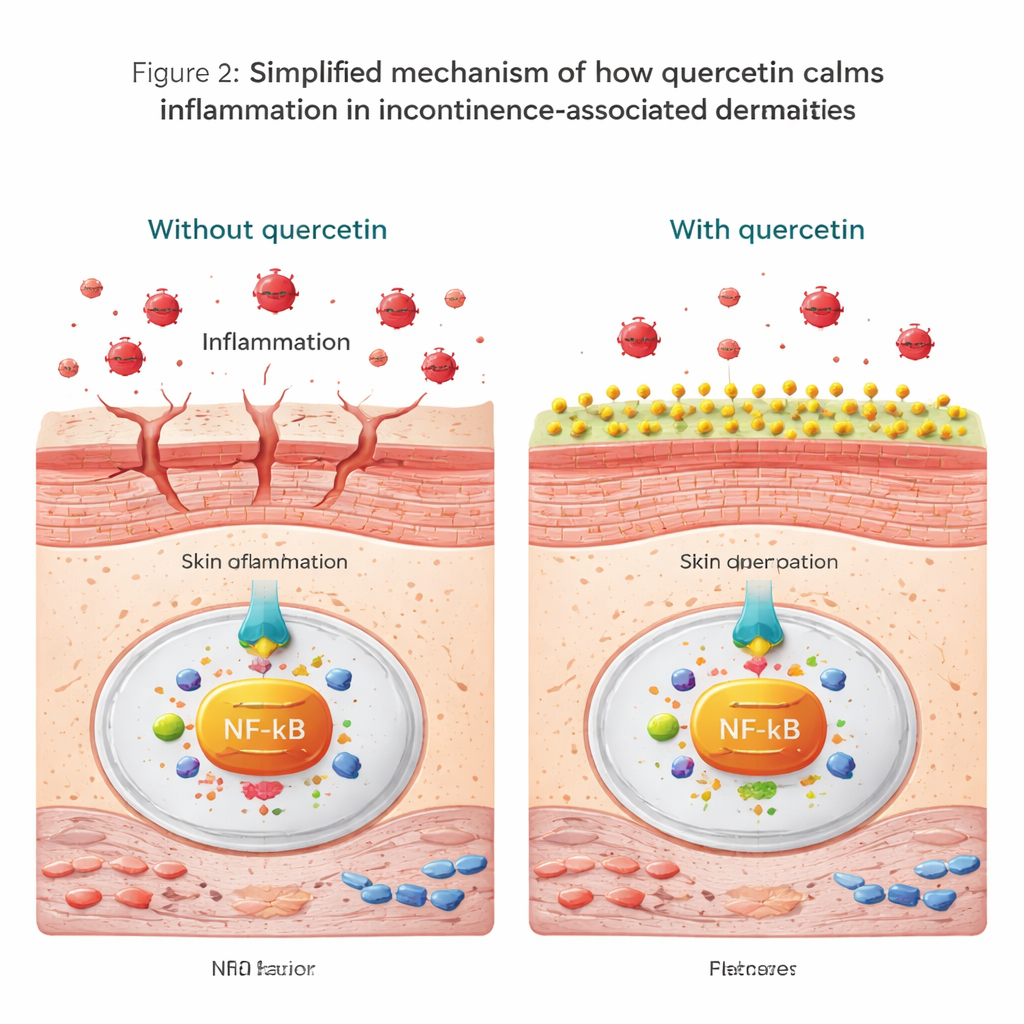
Dialing down inflammation and cell death
Closer microscopic examination revealed that quercetin did more than just improve the surface. In untreated injured skin, the upper layers were thin or missing, and there was a dense swarm of cells in the underlying tissue, including many macrophages—immune cells involved in inflammation. Many skin cells were undergoing programmed cell death. With quercetin, especially at 50 and 100 mg per kilogram of body weight, the outer layer of skin looked more complete, the number of invading immune cells fell, and far fewer cells were dying. Laboratory tests on skin samples confirmed that quercetin sharply reduced both the amount and the activated forms of the IKK and NF-κB proteins, and cut inflammatory messenger levels by roughly 40–70 percent.
What this could mean for patients
For non-specialists, the message is that a natural compound already present in many fruits and vegetables may help break the destructive cycle of irritation and inflammation that underlies incontinence-associated skin damage. In this rat study, quercetin calmed the skin’s internal alarm signals, reduced harmful inflammation, and supported rebuilding of the skin’s outer barrier, all without obvious side effects. Although more research is needed—especially human trials and better ways to deliver quercetin directly to the skin—these findings suggest that future creams or treatments based on this molecule could one day make life more comfortable and safer for people living with incontinence.
Citation: Zhang, Y., Zhao, G., Duan, J. et al. Quercetin alleviates incontinence-associated dermatitis via IKK/NF-κB pathway. Sci Rep 16, 6772 (2026). https://doi.org/10.1038/s41598-026-37345-w
Keywords: incontinence-associated dermatitis, quercetin, skin inflammation, skin barrier repair, NF-kappaB pathway