Clear Sky Science · en
Ecofriendly synthesis of silver nanoparticles using Barleria gibsonii and evaluation of antibacterial antioxidant cytotoxic and catalytic activities
Why tiny silver particles from plants matter
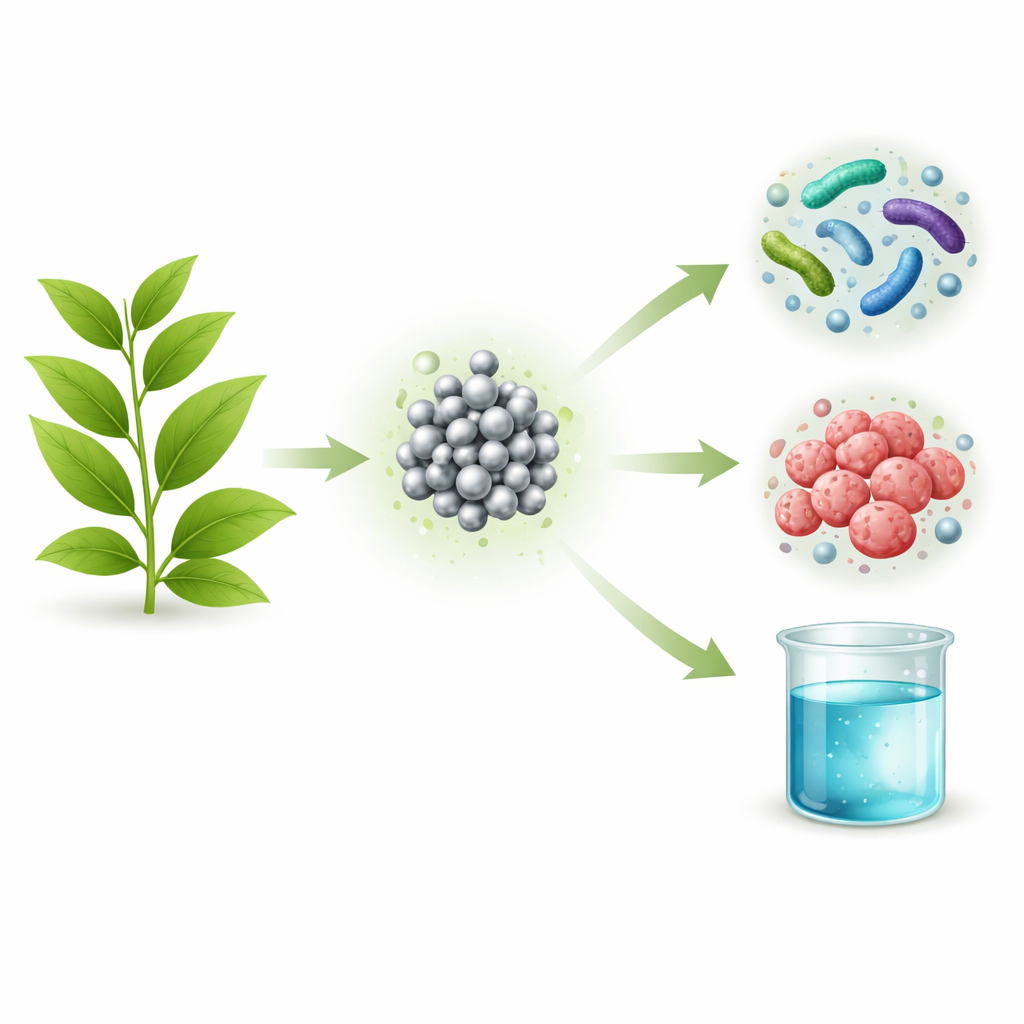
Imagine using everyday plants to make tiny particles that can fight germs, stress in our cells, even help clean polluted water. This study explores exactly that idea: scientists used the leaves of an underappreciated medicinal plant, Barleria gibsonii, to grow ultra-small silver particles in a simple water-based process. They then tested whether these plant-made particles could stop bacteria, protect against damaging molecules, harm cancer cells in the lab, and speed up the breakdown of a common dye pollutant. The work shows how one plant can power a whole toolbox of microscopic helpers, while avoiding harsh chemicals and energy-hungry methods.
A healing plant as a tiny factory
Barleria species are known in traditional medicine for easing infections and inflammation. The leaves are packed with natural compounds such as phenols and flavonoids—molecules that easily donate electrons and can grab onto metal surfaces. The researchers collected B. gibsonii leaves from the wild in India, washed, dried, and boiled them in water to make a simple tea-like extract. Tests confirmed the extract contained high levels of these active ingredients. That chemical richness made the leaf brew a good candidate to act like a miniature factory: helping to transform dissolved silver salt into solid silver particles and then wrapping them in a protective plant-based coating.
Cooking up green silver particles
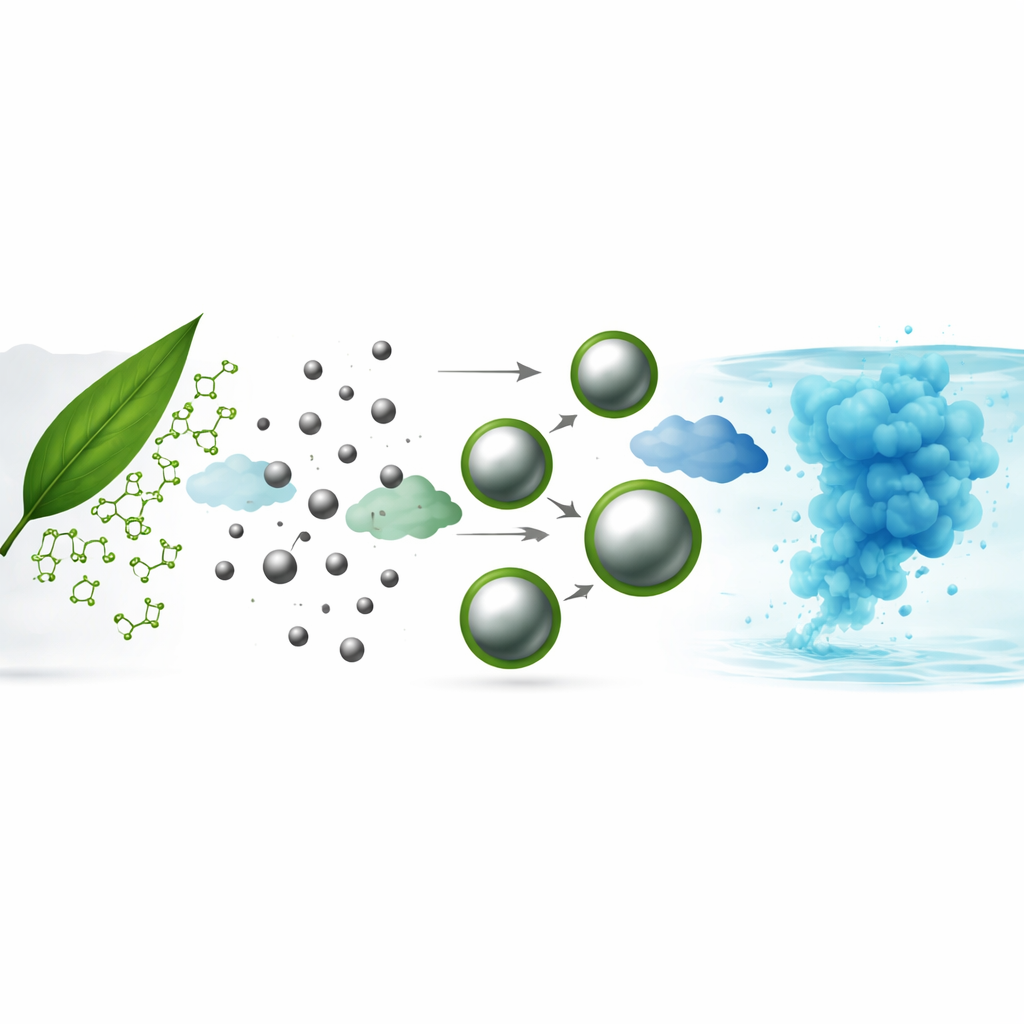
To turn silver ions into solid particles, the team carefully adjusted the recipe. They mixed equal volumes of leaf extract and a silver salt solution, then varied the silver strength, acidity, temperature, and reaction time. The best combination turned out to be a moderate silver dose, strongly alkaline conditions, a high temperature, and a short heating period. Under those conditions, the pale solution quickly darkened to brown—a visual sign that silver atoms were clumping into particles. Light-based measurements showed a clear, stable signal typical of silver nanoparticles, confirming successful formation without adding any extra industrial chemicals.
What these tiny particles look like
To see what they had made, the scientists turned to a suite of microscopes and material tests. X-ray measurements showed that the particles had the crystal structure expected for metallic silver, with sizes on the order of a few dozen billionths of a meter. Electron microscopes revealed mostly round particles, well separated but sometimes slightly clustered, matching the size estimates. Other techniques showed that plant compounds from the extract stuck to the particle surfaces, forming a thin organic shell. When the particles were suspended in water, they carried a negative electrical surface charge, which helped them repel one another and stay evenly spread out rather than clumping together.
Fighting germs, cancer cells, and pollution
The plant-made silver particles turned out to be busy workers in biological tests. In petri dishes, they stopped the growth of both common foodborne bacteria and a major hospital germ at low doses, in some cases rivaling a standard antibiotic. In a test-tube model of antioxidant power, they neutralized harmful unstable molecules, although the plain plant extract itself was even stronger in that particular task. When placed on a line of human breast cancer cells, the nanoparticles sharply reduced cell survival at moderate doses, outperforming the crude extract and approaching the strength of a known chemotherapy drug tested under the same conditions. Finally, when added to a vivid blue dye solution along with a helper chemical, the particles dramatically sped up the fading and breakdown of the dye, clearing the color in minutes and hinting at uses in water treatment.
What this could mean for everyday life
For non-specialists, the message of this work is that a common shrub can help create a multi-purpose silver powder in water, without complicated equipment or toxic ingredients. These Barleria-driven nanoparticles show promise as germ fighters, lab tools for attacking cancer cells, and tiny catalysts that help scrub certain pollutants from water. The study also lays out important caveats: all the health tests were done only in cell dishes, not in animals or people, and the impact of releasing such particles into the environment is not yet known. Still, the findings point toward a future where we use the chemistry of plants not just for herbal remedies, but as gentle factories that shape the metals we already rely on into smarter, more sustainable microscopic tools.
Citation: Ali, S.S.M., Dharmadhikari, K., Saiyed, K.I. et al. Ecofriendly synthesis of silver nanoparticles using Barleria gibsonii and evaluation of antibacterial antioxidant cytotoxic and catalytic activities. Sci Rep 16, 8281 (2026). https://doi.org/10.1038/s41598-026-37330-3
Keywords: green nanotechnology, silver nanoparticles, medicinal plants, antibacterial materials, environmental remediation