Clear Sky Science · en
The relationship between secondary school exam performance and lifestyle behaviors at the onset of university education
Why everyday habits and past grades belong in the same story
Many young adults wonder whether the way they live day to day has anything to do with how well they did in school. This study follows that curiosity into the real world, asking a simple question with big implications for students, parents, and educators: are the exam scores teenagers earn at the end of secondary school quietly linked to the health and lifestyle patterns they show when they first arrive at university?

Looking at students on the brink of adult life
The researchers focused on 397 first- and second-year university students in Lithuania, mostly women, aged 19 to 24. These students had completed national graduation exams in Mathematics, Native Language (Lithuanian), a Foreign Language, and Biology a few years earlier. At university entry, the team measured simple physical health markers such as body mass index and waist size, took blood pressure, and asked detailed questions about physical activity, sitting time, sleep quality, mood, stress, and feelings of happiness. They also collected information on smoking and alcohol use, how often students ate breakfast, and how frequently they consumed foods ranging from fresh vegetables and fruit to sweets, sweetened drinks, fast food, and starchy sides like potatoes and pasta.
What moved with grades, and what did not
Contrary to popular belief, being more physically active, sitting less, or sleeping better at the start of university did not line up in a clear way with how well students had done in their high school exams. Measures of perceived stress, depression, and energy levels also showed no consistent connection with earlier academic results. Instead, the clearest links appeared between past grades and specific lifestyle patterns, particularly around smoking, drinking, body weight, and what students routinely put on their plates and into their coffee cups.
Food, cigarettes, and drinks in the spotlight
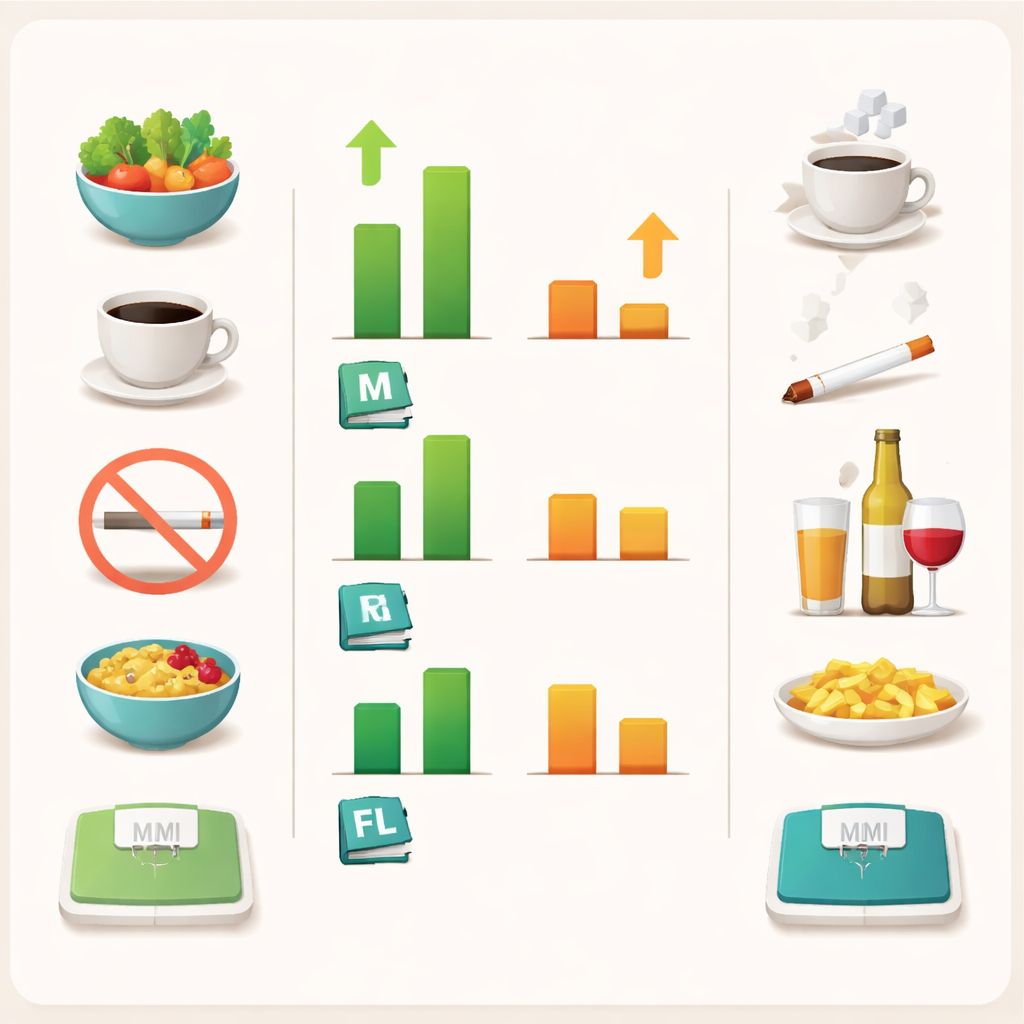
The analysis found that students who did better in secondary school Mathematics tended, a few years later, to report not smoking and using less sugar in their coffee or tea. For Biology, higher past scores went hand in hand with more frequent consumption of fresh and canned vegetables, regular breakfast eating, and less sugar added to hot drinks; a higher body mass index was linked to lower Biology performance. In Native Language, women generally outperformed men, and higher scores were associated with greater self-reported happiness at university entry. Foreign Language results told a different story: men did better than women, and better scores were associated with drinking alcohol less often and eating boiled potatoes less frequently. Across subjects, exam performance showed modest but systematic ties to diet choices and harmful habits, rather than to broad measures of movement or sleep.
Boys, girls, and how lifestyle links differ
Gender differences were a notable part of the picture. Women scored higher in their Native Language exams, while men scored higher in Foreign Language. Men in the study also had higher body mass index, blood pressure, and waist size, but reported being more physically active and, on average, sleeping slightly better and feeling less stressed. They ate more red and processed meat, fried potatoes, sugary drinks, and fast food than women. These contrasts suggest that academic strengths and lifestyle profiles may cluster differently for young men and women, even when they share the same classrooms and campuses.
What this means for students and parents
For non-specialists, the takeaway is not that vegetables magically raise Biology scores or that skipping sugar guarantees better Math grades. The study cannot prove cause and effect, partly because the health data were collected after the exams. Instead, it shows that young people who once did well in school are more likely to arrive at university with slightly healthier patterns—smoking less, drinking less, eating more vegetables, and starting the day with breakfast—and with a brighter sense of happiness. Academic success appears to sit within a broader web of everyday choices and well-being, rather than depending on a single habit. Supporting teenagers in building balanced diets, avoiding tobacco and heavy drinking, and nurturing emotional well-being may therefore help them not only feel better, but also fit more comfortably into the patterns often seen in successful students.
Citation: Majauskiene, D., Aukstikalnis, T., Istomina, N. et al. The relationship between secondary school exam performance and lifestyle behaviors at the onset of university education. Sci Rep 16, 6536 (2026). https://doi.org/10.1038/s41598-026-37324-1
Keywords: academic performance, student lifestyle, diet and health, smoking and alcohol, university students