Clear Sky Science · en
Effects of wireless local area network exposure on testicular morphology and VEGF levels
Wi‑Fi in Everyday Life
Wireless internet has become so woven into daily life that most of us never think about the invisible waves carrying our data. Yet these same signals pass through our bodies as we work, stream, and sleep. This study asks a question many people quietly worry about: can long‑term exposure to Wi‑Fi–like electromagnetic fields subtly damage the male reproductive system, at least in an animal model?
How the Study Was Set Up
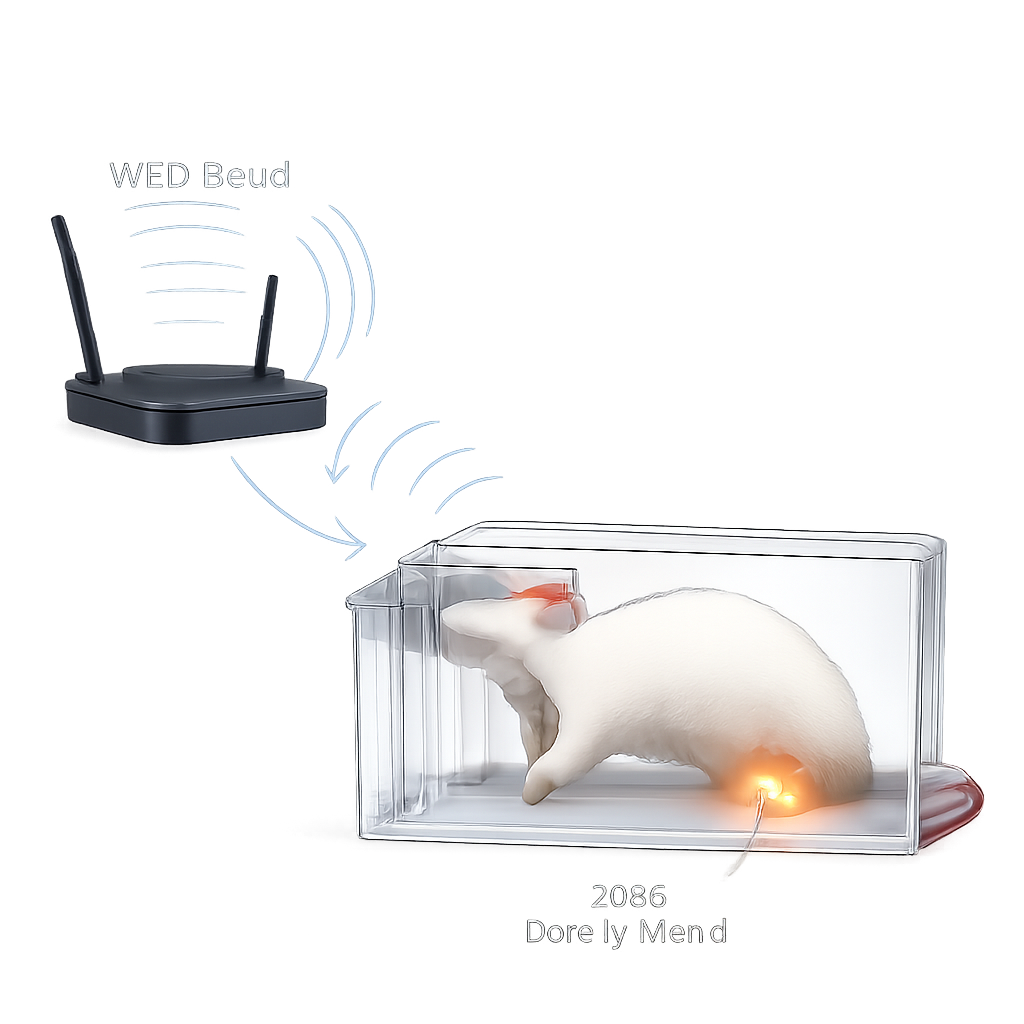
To explore this, researchers worked with 24 adult male rats, dividing them into two equal groups. One group served as the control and was placed in a restraining device each day but experienced no added electromagnetic field. The other group spent one hour per day for 60 consecutive days in front of an antenna emitting 2.45‑gigahertz microwave radiation—the same frequency used by common Wi‑Fi routers—at a low power level comparable to everyday exposure. After two months, the scientists examined the animals’ testicular tissue under the microscope and measured the levels of specific genes and proteins involved in blood vessel growth and tissue health.
A Closer Look Inside the Testes
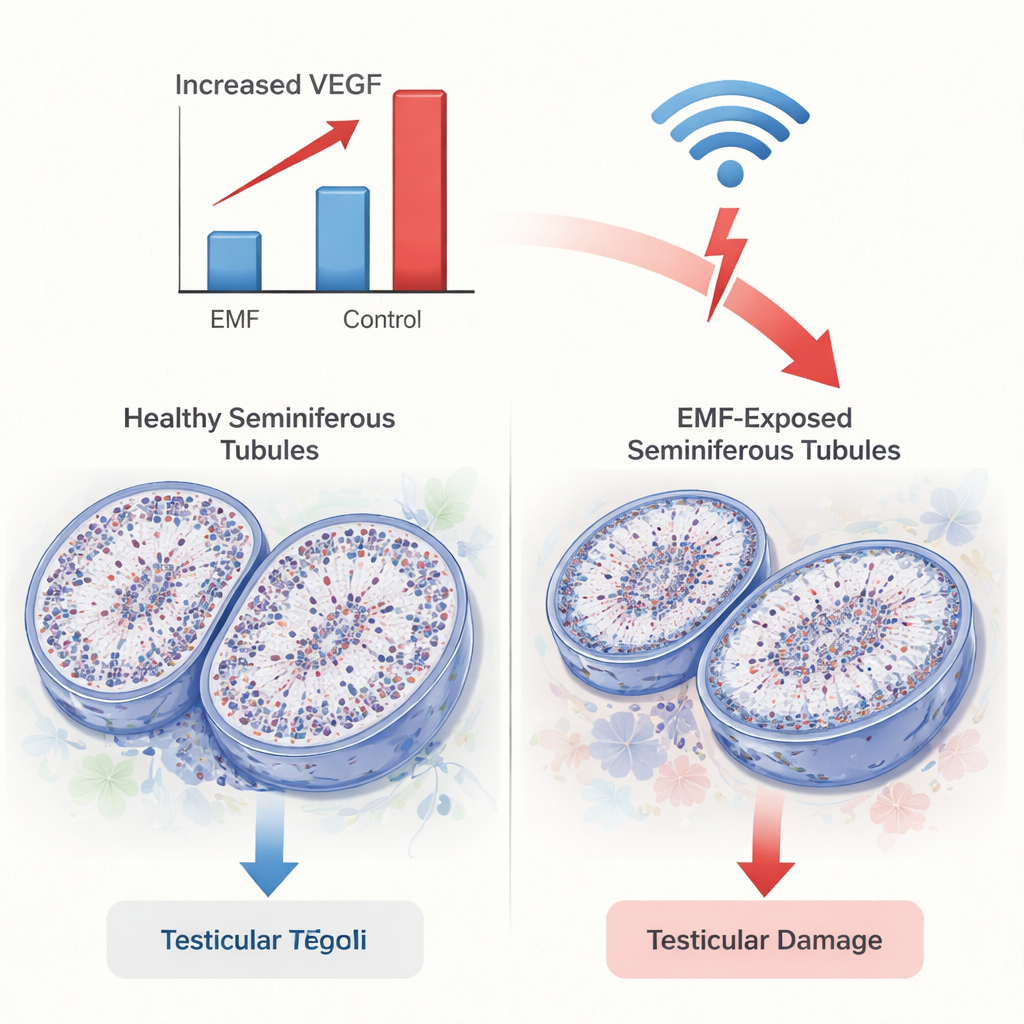
The team focused on structures called seminiferous tubules, where sperm cells develop, and on support cells known as Sertoli cells that nurture these developing cells. Compared with the unexposed rats, those subjected to the Wi‑Fi‑like field had noticeably smaller tubule diameters, thinner walls, and lower tubule density per unit area of tissue. The number of Sertoli cells was also reduced. Together, these structural changes suggest that the microscopic environment needed to produce healthy sperm had been compromised, even though the animals otherwise appeared normal.
Key Chemical Signals That Changed
Beyond structure, the researchers studied a signaling molecule called VEGF (vascular endothelial growth factor), which helps regulate blood vessel growth and tissue permeability and is important for maintaining healthy sperm production. They measured both VEGF gene activity and the amount of VEGF protein in the testicular tissue. In the exposed rats, VEGF gene expression was more than four times higher, and VEGF protein levels were also significantly elevated. By contrast, the activity of another gene, HIF1A, often responsible for turning on VEGF in low‑oxygen conditions, did not change. This pattern points to a rise in VEGF that is triggered by some pathway other than the usual oxygen‑sensing route.
What May Be Driving the Damage
Drawing on earlier work, the authors suggest that chronic exposure to electromagnetic fields could provoke oxidative stress and low‑grade inflammation in the testes. These stresses are known to stimulate VEGF through alternative biochemical routes involving inflammatory messengers and enzymes, without needing HIF1A. In this view, Wi‑Fi‑like radiation does not simply “heat up” tissue; instead, it may nudge cellular signaling networks in ways that encourage tissue remodeling and, ultimately, damage. The consistent combination of higher VEGF levels with shrunken, thinned tubules and fewer support cells strengthens the idea that the electromagnetic field altered the testicular micro‑environment in a harmful direction.
What This Means for People
For lay readers, the message is not that Wi‑Fi has been definitively proven to harm human fertility, but that in rats, months of daily exposure at a common wireless frequency were enough to disrupt the fine structure of the testes and push key signaling molecules toward a damage‑linked pattern. The study suggests that electromagnetic fields may impair the male reproductive system by changing chemical signals and tissue architecture, rather than through dramatic, immediate effects. Because we rely so heavily on wireless technologies, the authors argue that more research is needed, especially in humans and at realistic exposure levels, to clarify how safe long‑term, everyday use truly is.
Citation: Çakmak, E., Bilgici, B., Engiz, B.K. et al. Effects of wireless local area network exposure on testicular morphology and VEGF levels. Sci Rep 16, 6387 (2026). https://doi.org/10.1038/s41598-026-37323-2
Keywords: Wi-Fi exposure, electromagnetic fields, male fertility, testicular health, VEGF signaling